Best Bi-Directional Scan Tool for DIY Mechanics: Stop Guessing and Testing Parts

Stop firing the parts cannon at check engine codes. Here is why modern home mechanics need a bi-directional scan tool for EPB service, ABS bleeding, and active component testing.
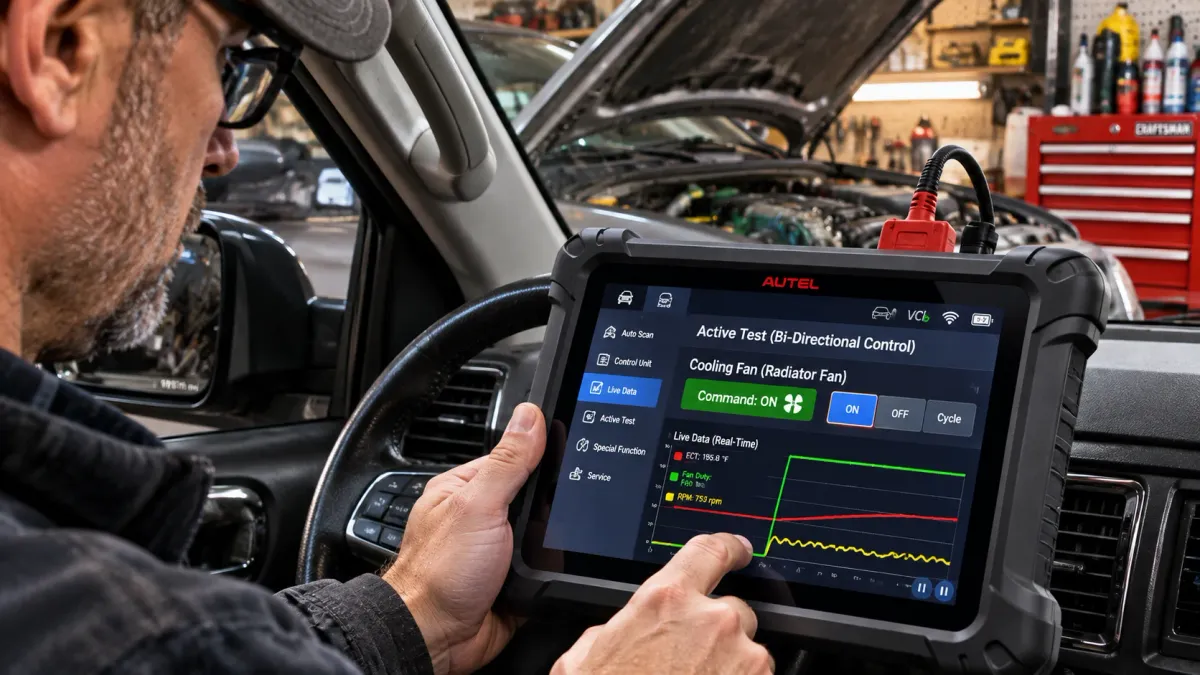
Table of Contents6 Sections
- 01.Code Readers vs. Bi-Directional Scanners: Listening vs. Commanding
- 02.The 3 Must-Have Functions for Modern Cars (2018+)
- 03.Two Proven DIY Bi-Directional Scanners
- 04.The Subscription Trap: What Happens When Updates Expire?
- 05.Unlocking Modern Vehicles: The Security Gateway (SGW)
- 06.Diagnostic Workflow: How to Stop Wasting Money
You walk out to your truck on a freezing Tuesday morning, and the check engine light glares back at you from the dash cluster. The engine shakes rough at idle, throwing a generic P0300 random misfire code on your $25 pocket reader. You run down to the auto parts store, buy four new spark plugs for $60, and spend an hour installing them. The shake remains. You drive back, buy four ignition coils for $180, and swap them in the driveway. The misfire code returns on your test drive. Next, you swap the purge valve for $50.
You just fired a $290 parts cannon at your truck, and you fixed nothing.
In my repair shop in Columbus, Ohio, I watch backyard mechanics make this exact mistake every month. We live in an era where modern cars run on complex Controller Area Networks (CAN bus). Generic code readers only listen passively to federally mandated emissions chatter. They cannot command the vehicle to isolate a faulty component. If you work on anything built in the last fifteen years, a bi-directional diagnostic tablet pays for itself on your first weekend brake job or misfire diagnosis.
Code Readers vs. Bi-Directional Scanners: Listening vs. Commanding
Under SAE International J1979 standard diagnostic protocols, generic scan tools are restricted to reading standard emissions-related P-codes. Every cheap code reader under $80 functions like a doctor who only listens to your pulse through a closed door. It queries the engine control module (ECM) over generic OBD2 protocols and pulls basic P-codes. It tells you that the computer detected a problem, but it cannot interrogate the vehicle subsystems to pinpoint why.
A bi-directional scanner communicates in two directions. It reads data from every onboard module, and it sends direct software commands through the vehicle communication network. Technicians call this an active test or actuator test.
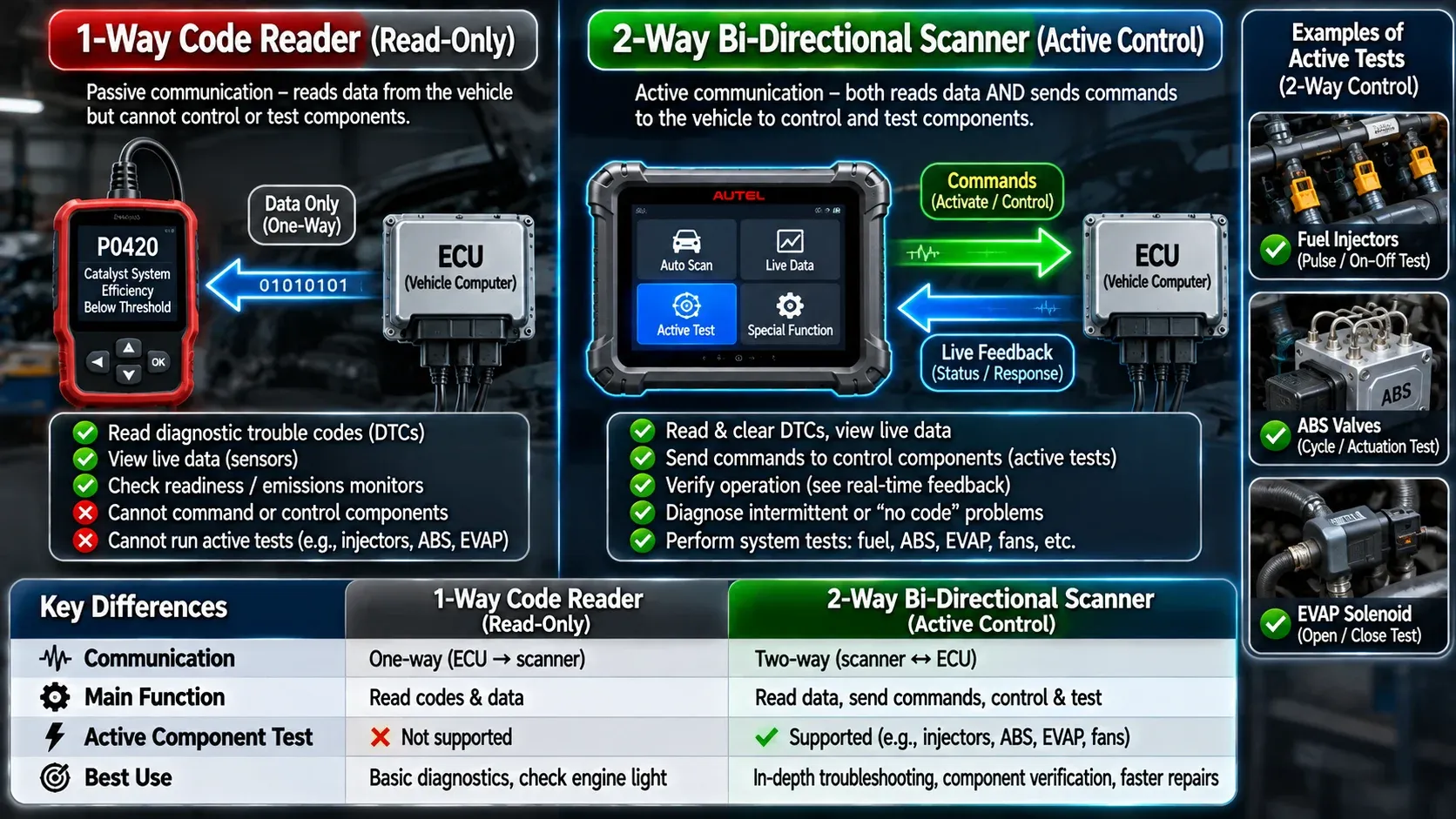
Technical automotive diagnostics infographic comparing generic 1-way code reader vs active 2-way bi-directional scanner, showing one-way passive data flow reading trouble codes vs active two-way command flow controlling fuel injectors, ABS valves, and EVAP solenoids, modern high-tech UI styling.
Consider a faulty air conditioning system. When your AC blows warm air, a generic reader reveals nothing if the compressor clutch circuit lacks a fault code. With a bi-directional tablet, I tap the screen and send a direct command: Compressor Clutch Relay: ON. If the compressor snaps forward and engages, I verify that the clutch coil, relay wiring, and mechanical compressor work properly. The fault sits upstream in the cabin switch or pressure transducer. I pinpoint the broken component in sixty seconds without pulling a single wire harness.
The 3 Must-Have Functions for Modern Cars (2018+)
Modern automotive engineering phased out purely mechanical systems. Even routine maintenance tasks now require software authorization from the chassis computers. If you attempt these repairs with hand tools alone, you risk catastrophic component damage.
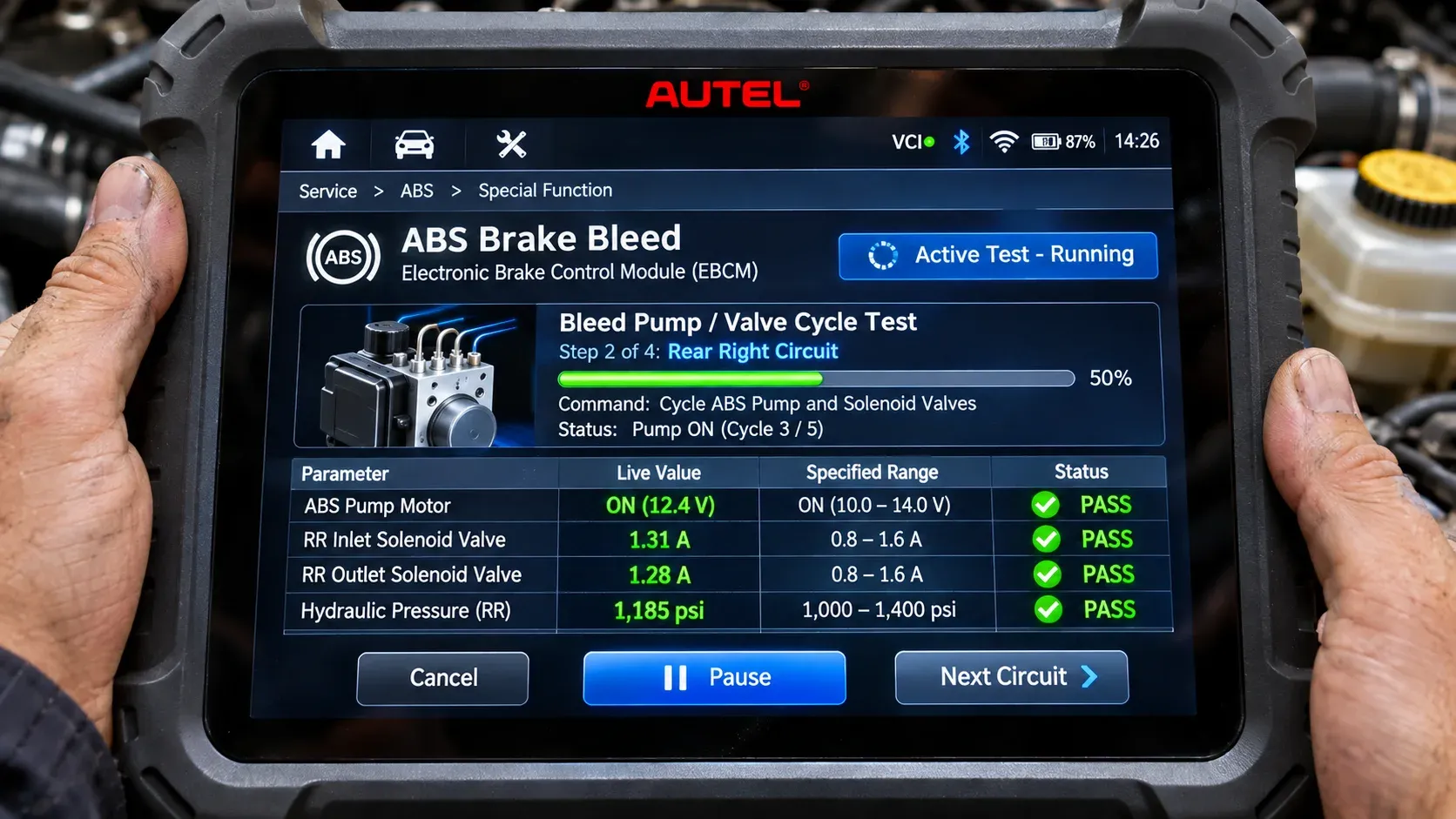
Macro shot of high-resolution diagnostic scanner screen interface displaying an active ABS brake bleed pump cycle test, showing real-time solenoid valve pressure readings and pass/fail status bars, automotive mechanic hands holding rubberized case, crisp digital display.
1. Electronic Parking Brake (EPB) Service Retraction
Virtually every modern crossover, sedan, and truck features electric servo motors bolted to the rear brake calipers. When you engage the parking brake, that motor spins an internal worm screw that mechanically locks the caliper piston against the brake rotor.
If you slap a standard C-clamp or disc brake compression tool onto that piston without retracting the motor, you will shear the internal plastic planetary gears inside the caliper. I have seen DIYers crack $800 caliper housings because they tried to muscle a motorized piston back into its bore. A bi-directional tool sends an EPB service command that runs the electric motors in reverse, retracting the screw mechanism completely. Once the motor finishes its cycle, the piston slides back smoothly with gentle hand pressure.
2. ABS Automated Hydraulic Bleeding
Air bubbles love to hide inside the precision valving and accumulator passages of an anti-lock braking system (ABS) pump. If you introduce air into your brake lines during a caliper rebuild or master cylinder replacement, standard pedal-pumping will never dislodge those micro-bubbles.
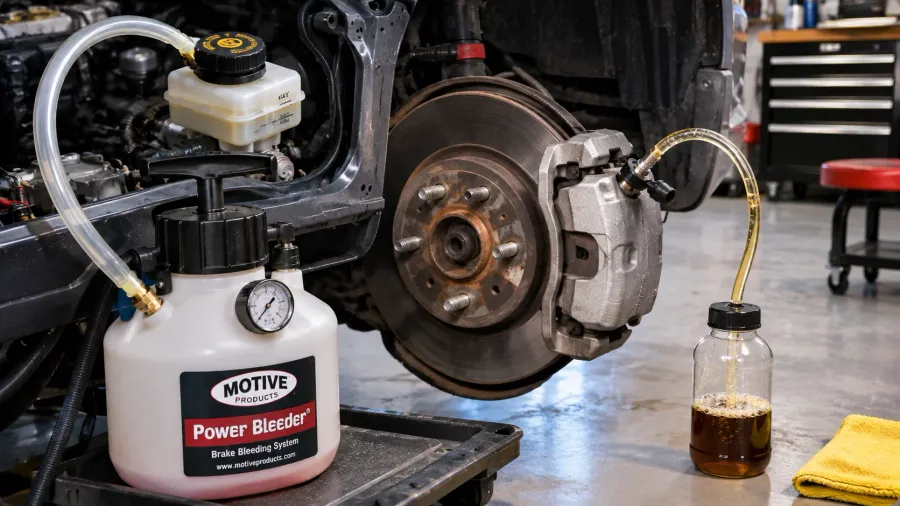
An automated ABS bleed routine cycles the internal solenoid valves and spins the high-pressure return pump while you operate the bleeder screw. This fluid cycling flushes stubborn trapped air pockets out of the valve block and pushes them down to the caliper bleeder nipples. You can pair this routine with a dedicated pressure bleeder like the ones I covered in our one-man brake bleeder guide to achieve a rock-solid brake pedal on the first pass.
3. Battery Management System (BMS) Registration
Modern vehicles manage alternator charging output using smart battery monitors on the negative terminal. As a lead-acid or AGM battery ages, its internal resistance increases. The vehicle computer gradually raises charging voltage to compensate for that chemical decay.
If you drop a brand-new battery into the vehicle without registering it in the computer, the alternator continues blasting high charging voltage into the fresh battery cells. That overcharging cooks the electrolyte and destroys your new $220 battery within eighteen to twenty-four months. A quick battery registration procedure resets the charging tables, ensuring proper alternator output and preserving your battery life.
Automotive Diagnostic Tools Comparison
Compare root causes, mechanical trade-offs, and estimated costs at a glance.
Generic Engine P-Codes
Transmission / ABS / SRS
Active Actuator Tests
EPB Brake Service Mode
Automated ABS Bleed
Battery Coding (BMS)
Live Sensor PID Graphing
Two Proven DIY Bi-Directional Scanners
You do not need to drop $3,000 on a commercial Snap-on or Mac Tools diagnostic rig to maintain your household fleet. The sweet spot for garage hobbyists sits between $350 and $450. At this price point, you get robust Android tablets with dedicated vehicle software libraries that cover Asian, European, and domestic brands.
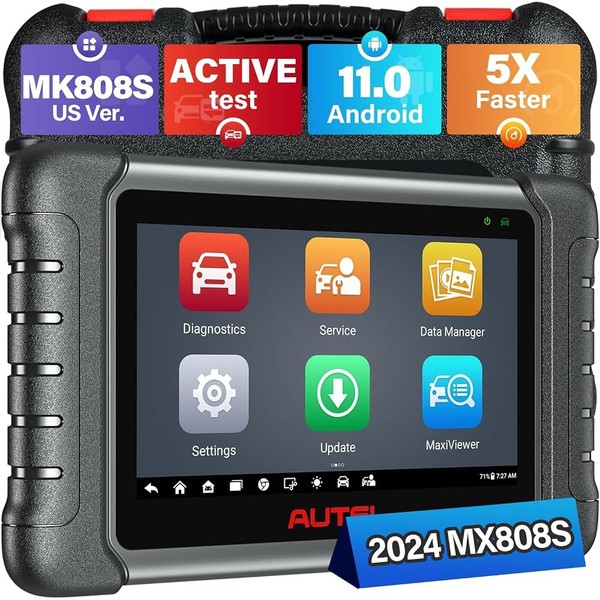
Autel MaxiCOM MK808S Diagnostic Tablet Scanner
Best For: DIY mechanics who want rock-solid reliability, fast screen transitions, and foolproof wired stability.
- +Blazing fast Rockchip RK3566 quad-core processor with Android 11 OS
- +Comprehensive bi-directional control covering over 150 vehicle makes
- +Exceptional EPB, ABS bleed, SAS calibration, and BMS service functions
- +Clean, intuitive menu layout that minimizes setup frustration
- -Requires a physical 16-pin cable tethered to the OBD2 port
- -Free software updates expire after 12 months (tool keeps working)
The Autel MaxiCOM MK808S represents the benchmark for wired diagnostic tablets. It handles bi-directional commands smoothly without freezing mid-test. I keep this unit on my primary workbench because its wired connection eliminates Bluetooth pairing drops when you run high-draw tests like fuel pump cycling.
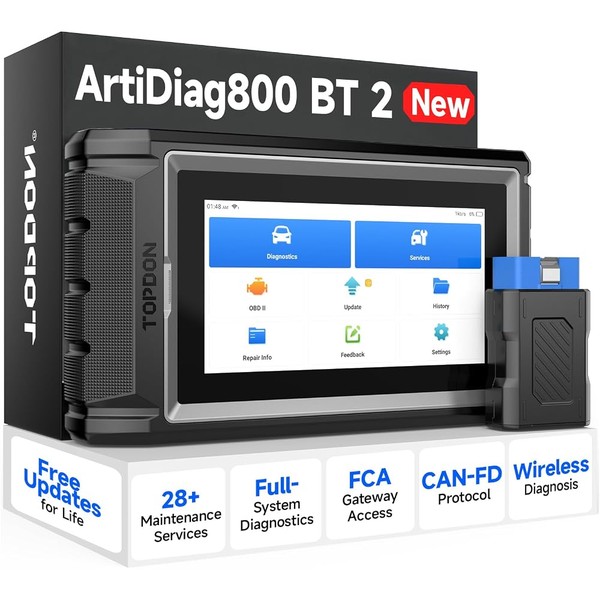
TOPDON ArtiDiag800 BT Wireless Diagnostic Scanner
Best For: Home mechanics who want wireless convenience without paying recurring annual software subscription fees.
- +Bluetooth VCI dongle lets you walk around the vehicle during tests
- +Lifetime free software updates on all core diagnostic databases
- +Generous 6-inch touchscreen with responsive PID live data graphing
- +Excellent European vehicle adaptation and maintenance resets
- -Bluetooth VCI can lose connection if you step outside a 25-foot perimeter
- -Slightly slower boot time compared to hardwired tablets
The TOPDON ArtiDiag800 BT wins big on ownership costs. Unlike competitors that nudge you into subscriptions after year one, TOPDON provides free lifetime software updates for this model. The wireless dongle proves handy when you want to actuate the cooling fans while standing right over the radiator shroud.
The Subscription Trap: What Happens When Updates Expire?
Tool truck sales reps love scaring home mechanics into believing that an aftermarket scanner turns into a paperweight once its update period ends. Let me dispel that myth directly.
When your one-year or two-year free update window closes on an Autel or Launch diagnostic tool, the scanner does not lock you out. Every software profile, bi-directional actuator test, and service reset routine currently installed on the device continues functioning permanently.
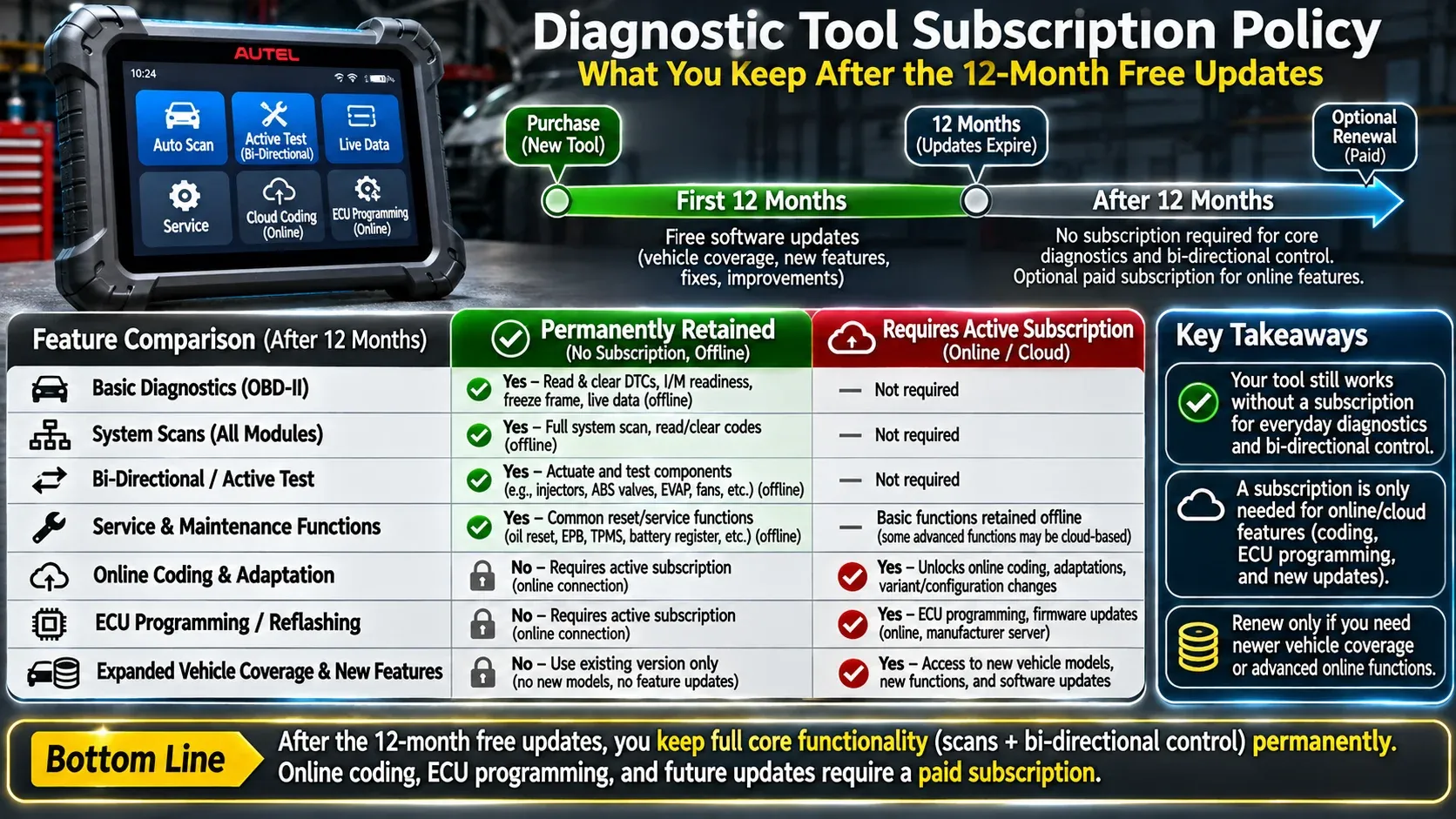
Comparative subscription policy infographic for automotive diagnostic tools, showing timeline after 12 months free updates, green check column showing permanently retained offline bi-directional actuation and standard system scans vs locked online cloud coding features, clean modern chart.
If you own a 2017 Ford F-150, a 2020 Honda CR-V, and a 2021 Toyota Camry, you never need to pay another dime after your first year of ownership. Your scanner will diagnose and service those three vehicles indefinitely. The only reason to renew a software license ($120 to $180 annually) is if you trade in your truck for a model year that came off the assembly line after your last update download.
Unlocking Modern Vehicles: The Security Gateway (SGW)
If you own a 2018 or newer Chrysler, Dodge, Jeep, RAM, or Alfa Romeo (FCA group), you face an extra hurdle called the Security Gateway Module (SGW). Fiat Chrysler installed a cyber-security firewall behind the dashboard to block unauthorized devices from transmitting commands over the CAN bus.
When you connect any bi-directional scanner to the standard OBD2 port on an SGW-equipped vehicle, the tool reads diagnostic trouble codes normally. However, the firewall blocks you from sending commands like EPB retraction or clearing proprietary faults.
To bypass this restriction, you have two choices:
- AutoAuth Software Account: You register your scanner with AutoAuth ($50 annual fee) and let the tablet unlock the firewall over your home Wi-Fi network.
- Hardware 12+8 Bypass Cable: You buy a $15 physical 12+8 pin bypass cable. You reach behind the instrument cluster or center console, unplug the two factory harness connectors from the SGW box, and plug the bypass cable directly into your scanner. This physical bridge bypasses the firewall entirely, giving you full bi-directional control without an online subscription.
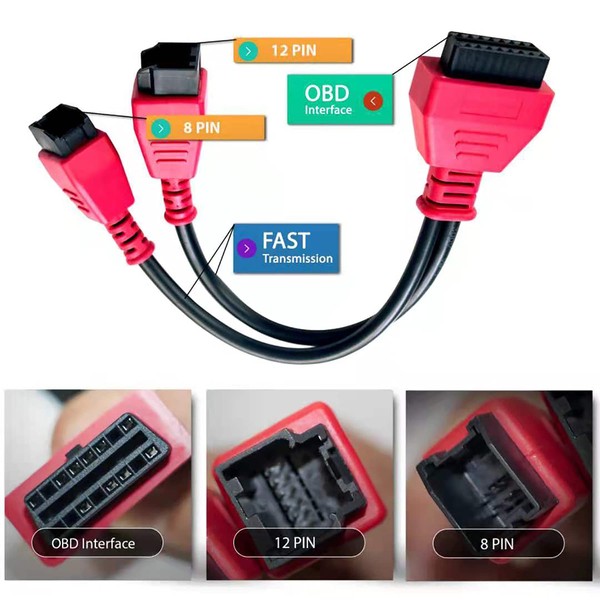
Autel 12+8 Pin Security Gateway Adapter Cable
Best For: Owners of late-model RAM trucks and Jeep Wranglers who refuse to pay recurring cloud access fees.
- +Bypasses factory SGW module on 2018+ Chrysler, Jeep, RAM, and Dodge vehicles
- +Restores full bi-directional actuation, code clearing, and calibration
- +Heavy-duty molded connectors withstand tight under-dash routing
- -Requires contorting under the steering column to unplug factory harness plugs
- -Only works on FCA platform vehicles
Diagnostic Workflow: How to Stop Wasting Money
When troubleshooting an unknown drivability issue, follow this three-step shop routine:
- Scan All System Modules: Never limit your scan to the ECM. An illuminated traction control light or transmission shudder often triggers from a faulty wheel speed sensor or throttle pedal position sensor logged inside the ABS module.
- Review Live Sensor PIDs in Real Time: Pull up live sensor graphing. If an oxygen sensor reads a flat 0.1 volts while your fuel trims climb to +25%, your engine is compensating for a vacuum leak or an unmetered air leak, not a defective sensor.
- Run Actuator Isolation Tests: Before you replace a part, command it to work. If you suspect an evaporative purge valve stays stuck open, cycle the valve with your scanner while feeling the vacuum port with your fingertip. If the valve clicks sharply and holds vacuum when commanded shut, stop unboxing a new part.
For shops equipped with 240V power and high-draw tools, keeping your vehicle battery charged during diagnostic key-on, engine-off sessions is critical. A vehicle computer will shut down or scramble an adaptation routine if battery voltage drops below 12.2 volts mid-flash. Check our guide on installing a 240V workshop subpanel to ensure your garage supports a clean, stable battery maintainer setup. When performing active actuator tests that require climbing under a raised vehicle, protect yourself by reviewing our guide on the safest double-locking jack stands, and combine bi-directional bleed commands with our pressure bleeding routine in the best one-man brake bleeder for home garages.
A capable bi-directional scan tool transforms vehicle repair from an anxious guessing game into an exact, methodical procedure. Pick a solid tablet, stop firing the parts cannon, and take full control of your garage repairs.

Hank Miller
Hank is a master craftsman and DIY mechanic based in Ohio. He tests workshop equipment, garage floor coatings, and power tools under brutal, real-world workshop conditions, with zero paid brand sponsorships.