Is QuickJack Actually Worth $1,500 for a Low-Ceiling Garage? 2-Year Real World Verdict

Trapped under an 8-foot garage ceiling with 3-inch unreinforced concrete? Here is what two years of wrenching on a QuickJack portable lift actually feels like.
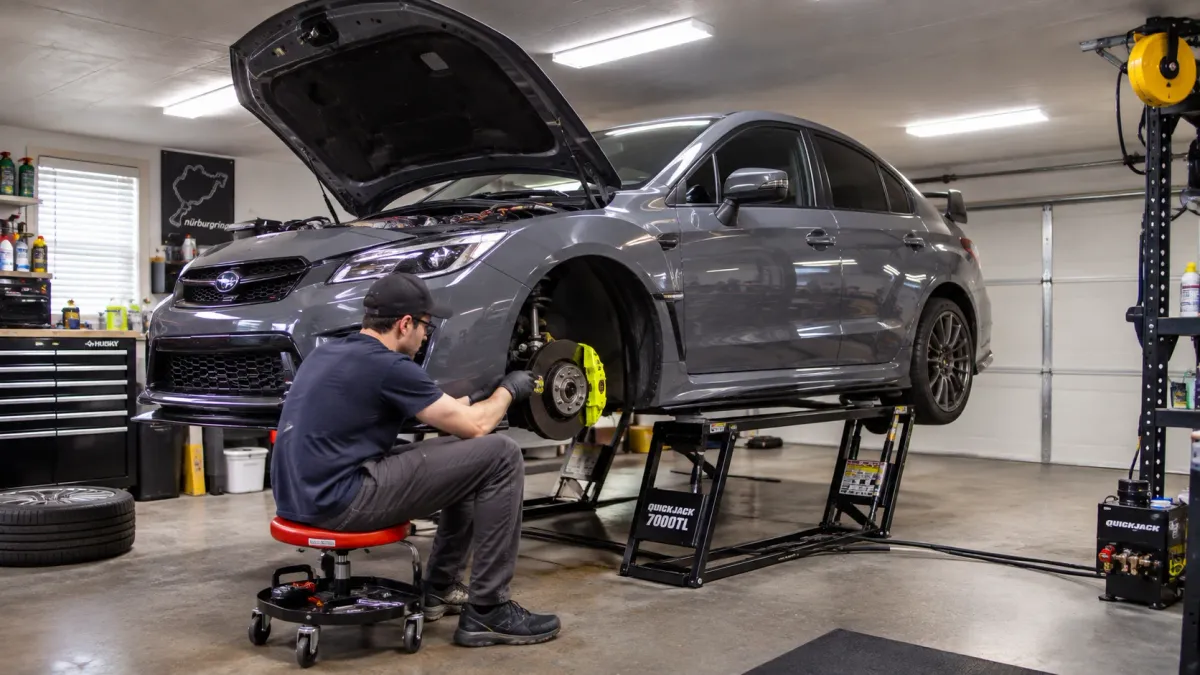
Table of Contents7 Sections
- 01.What QuickJack Excels At (The Good Stuff)
- 02.What It Sucks At (Real Gripes & Trade-Offs)
- 03.5000TL vs. 7000TL: Choosing the Right Model
- 04.The Non-Negotiable Safety Rules Nobody Reads
- 05.3 Expensive Mistakes Buyers Make with QuickJack
- 06.The Bottom Line on QuickJack
- 07.Coordinating Your Under-Car Service Workflow
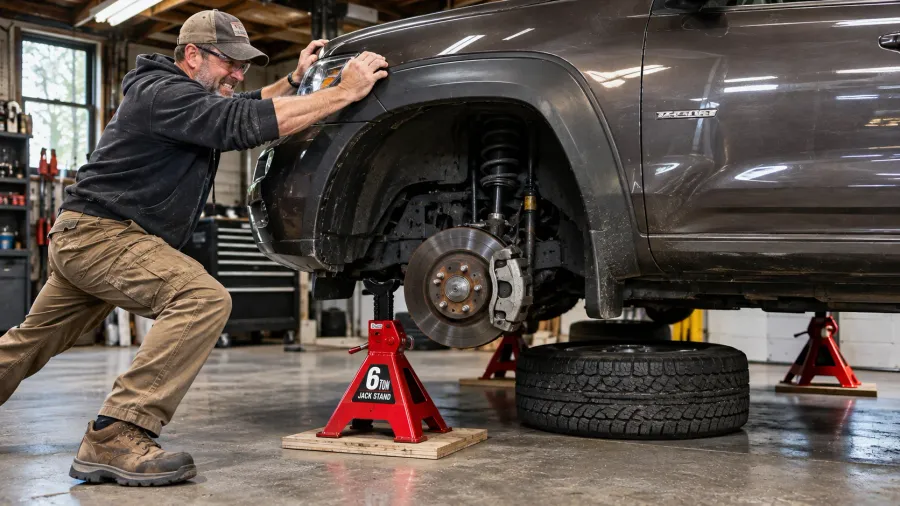
Every home mechanic dreams of bolting a commercial two-post vehicle lift to their shop floor until they stretch a tape measure to an 8-foot ceiling and discover their residential slab measures barely 3.5 inches of unreinforced concrete. That architectural dead end leaves you pumping a floor jack four separate times and balancing your chassis on jack stands every Saturday morning.
QuickJack markets their portable hydraulic frames as the definitive solution for suburban low-ceiling garages. After using one in my Ohio shop for two years through brake jobs, transmission drops, and suspension rebuilds, I can tell you the system delivers genuine value, but it is not the effortless magic portrayed in promotional videos.
Before you invest $1,500 of your hard-earned tool budget, consider how the frames handle in real workshops, what quirks frustrate owners daily, and whether your vehicles demand the 5000TL or 7000TL model.
Vehicle Lifting Options for Low Ceilings
Compare lift heights, floor requirements, and true setup effort before buying.
Floor Jack & Double-Locking Stands
Infrequent DIYers servicing one vehicle twice a year
- Zero storage footprint
- Lifts individual corners quickly for simple oil changes
- Demands 20 minutes of crawling to set 4 stands
- Limits creep clearance to 14 inches
QuickJack 7000TL Portable Hydraulic Lift
Active home mechanics maintaining SUVs, light trucks, and project cars
- Lifts all 4 wheels 24 inches in 30 seconds
- Leaves undercarriage completely open
- Frames weigh 98 lbs each
- Requires floor muscle to slide beneath chassis rails
MaxJax M6K Mid-Rise Two-Post Hybrid
Dedicated shops with 9 to 10-foot ceilings and verified thick concrete slabs
- Lifts vehicles 48 inches high
- Posts unbolt from floor anchors when finished
- Demands core-drilling into minimum 4.25-inch 3,000-PSI concrete
- Steep price
What QuickJack Excels At (The Good Stuff)
The primary reason to buy a QuickJack is achieving a true 24-inch lift height in a space where two-post lifts cannot fit. The revised “TL” series lifts three inches higher than the legacy SLX models, providing ample breathing room to roll around on a mechanic creeper without banging your nose on the exhaust heat shield.
QuickJack relies on an open-center design. Traditional mid-rise scissor lifts position cross braces directly underneath the middle of your vehicle, blocking access to drive shafts, catalytic converters, and transmission pans. QuickJack keeps the two lifting frames separated along the rocker panels, leaving the entire center tunnel clear from radiator to rear differential.
When you finish your project, you slide the frames together beneath your parked car, hang them on wall hooks with optional brackets, or roll them upright against a garage stud wall.
What It Sucks At (Real Gripes & Trade-Offs)
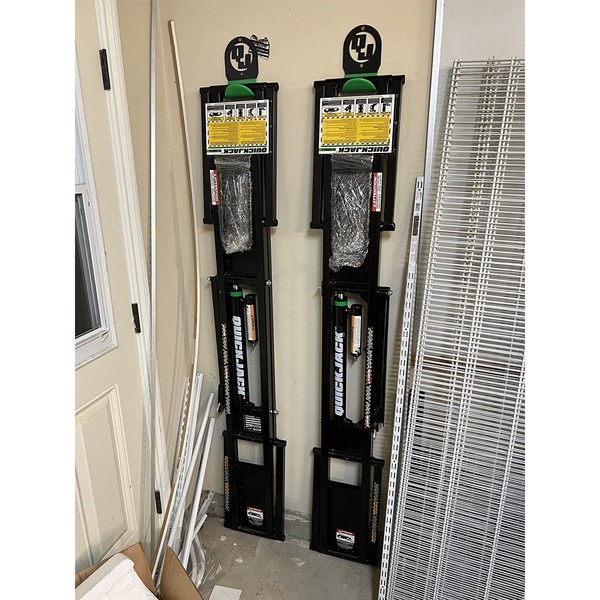
QuickJack Wall Hanger Bracket Set (Heavy-Duty Steel Pair)
Best For: Hanging QuickJack lift frames vertically against garage wall studs
Est. Price: $79.00
"QuickJack frames eat floor space when parked in the bay; these dedicated wall brackets free up valuable walking and parking room when the lift is idle."
- +Laser-cut heavy-gauge steel supports up to 100 lbs per hanger safely
- +Keeps heavy frames off your shop floor and out of foot-traffic paths
- +Mounts directly into standard 16-inch center wall studs with structural lag screws
- -Lifting 95-pound frame rails onto high wall hooks requires decent upper body strength
- -Requires solid 2x4 framing studs; cannot be mounted into hollow drywall alone
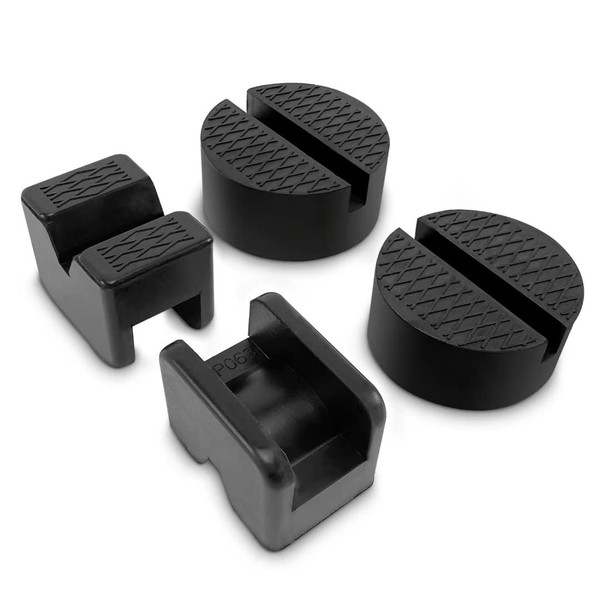
Universal Slotted Urethane Pinch Weld Jack Pad Protectors (4-Pack)
Best For: Protecting modern unibody pinch welds and rocker panels from crushing
Est. Price: $19.99
"Lifting a unibody sedan on bare flat rubber blocks crushes pinch welds; these slotted pucks transfer vehicle weight to solid floor pans safely."
- +Deep center slot cradles factory pinch welds securely without bending sheet metal
- +High-durometer vulcanized rubber cushions vehicle weight under full lift load
- +Sits squarely on top of standard QuickJack rubber contact blocks
- -Can slip off alignment if not centered carefully before raising pressure
- -Rubber shows surface wear after several years of heavy mechanical use
Marketing videos show a smiling mechanic sliding lightweight frames beneath a car with one hand. In reality, wrestling heavy steel frames across pitted garage concrete builds a sweat before you turn a single wrench.
- Legitimate physical effort: The bare metal frames of the 7000TL weigh roughly 98 pounds each. While small urethane wheels help you pivot them into position, you still lift and drag significant dead weight across raw concrete twice per job.
- Hydraulic air bleeding headaches: During initial setup, bleeding air bubbles out of the dual hydraulic cylinders requires patience. If you fail to bleed air completely, one frame rises faster than the other, causing the vehicle to tilt as you lift.
- Short reach on long-wheelbase vehicles: Standard QuickJack frames measure 70.75 inches long. If you service a full-size crew cab pickup or electric vehicle with lift points spaced far apart, the rubber blocks cannot span the distance without spending an extra $260 on steel frame extension adapters.
5000TL vs. 7000TL: Choosing the Right Model
Both models hold strict Automotive Lift Institute (ALI) certification standards for automotive lifts, meaning their mechanical safety lock bars undergo destructive proof testing well beyond rated working capacities.
Do not buy the lighter 5000TL model to save $150 if you own mid-size SUVs, crossovers, or half-ton pickup trucks.
The 5000TL caps out at 5,000 pounds, leaving zero safety margin on modern family haulers like a Ford Explorer or Toyota 4Runner once you factor in fuel weight and cargo. Step up to the QuickJack 7000TL.
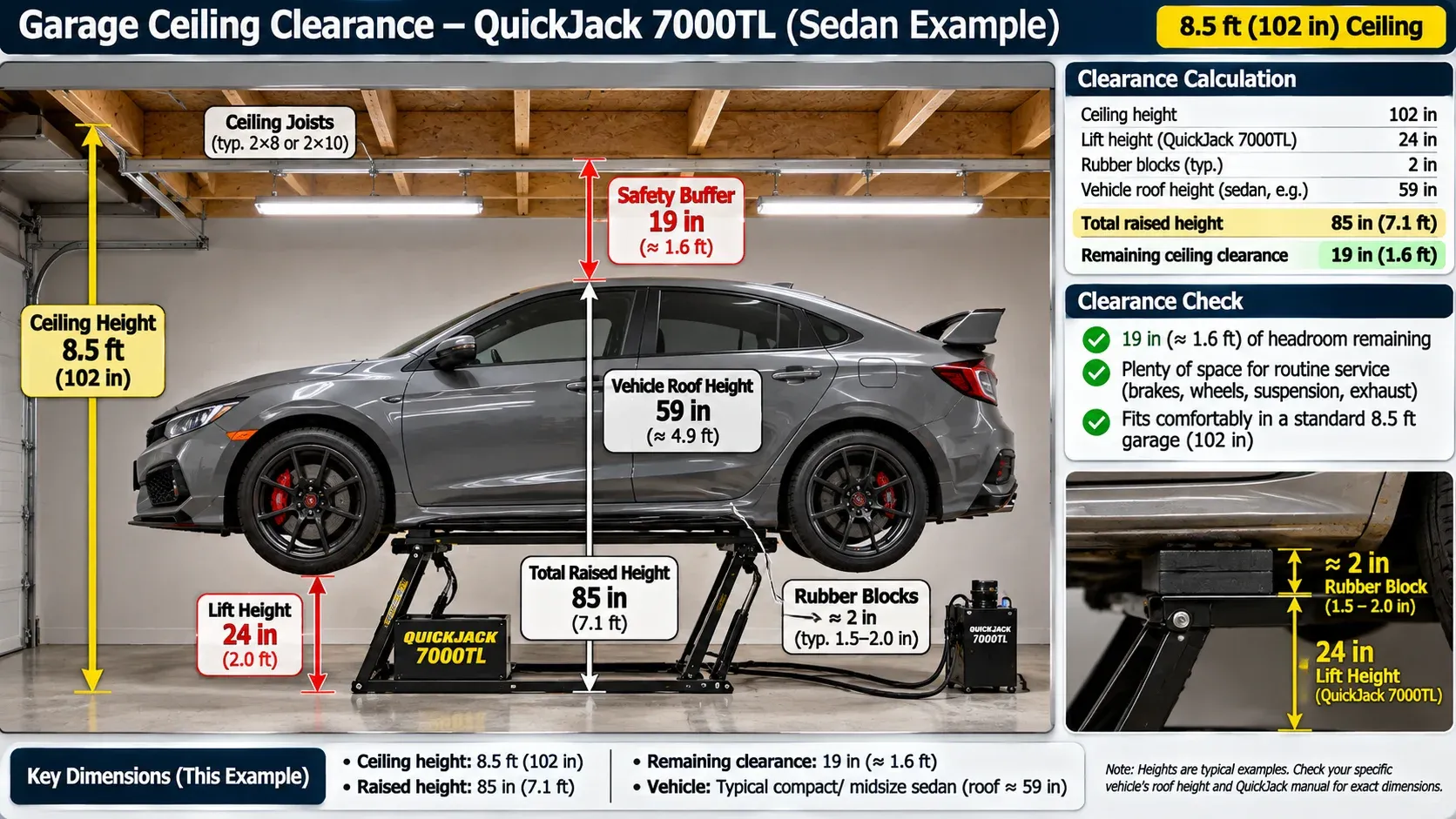
Technical architectural cross section diagram showing garage ceiling clearance calculations for QuickJack portable lift, showing 8.
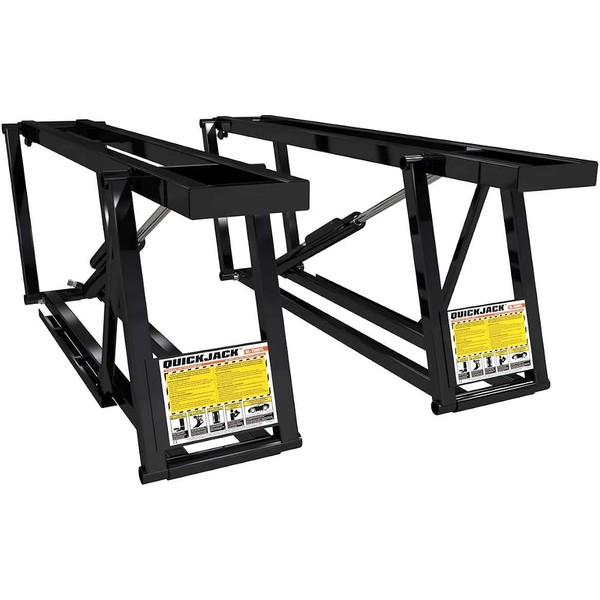
QuickJack 7000TL 110V Portable Car Lift System
Best For: Lifting sedans, SUVs, and half-ton pickups safely under low garage ceilings
Est. Price: $1,799.00
"The definitive lifting solution for suburban mechanics with 8-foot ceilings. It transforms suspension and brake jobs into comfortable seated work."
- +7,000-lb lifting capacity handles heavy half-ton pickups and electric battery packs
- +TL series delivers 24 inches of lift height for comfortable creeper access
- +Dual-position automatic safety lock bars mechanically hold load without hydraulic pressure
- -Heavy 98-lb frame weight makes moving and positioning frames a physical workout
- -Quick-disconnect hydraulic fittings leak a few drops of fluid if disconnected under back-pressure
Choose the 110V AC power unit over the 12V battery clip option. Connecting alligator clips to car batteries introduces voltage drop issues and clutters your engine bay with wires, while the 110V electric pump plugs straight into your shop wall outlet and provides consistent, steady hydraulic flow.
The Non-Negotiable Safety Rules Nobody Reads
Lifting a 5,000-pound vehicle inside a tight garage requires strict mechanical discipline. Never cut corners on these three setup rules:
- Keep frames parallel within 2 inches: Both steel frames must sit parallel to each other beneath the vehicle rocker panels. If you splay the frames outward in a “V” shape to catch wide lift points, side loading forces can kick the frames sideways under full vehicle weight.
- Always lower onto the mechanical lock bars: The hydraulic cylinders lift the car, but they must never hold the load while you crawl underneath. Once you reach full height, reverse the pump valve and lower the vehicle down until the solid steel lock cams rest firmly in the frame notches.
- Use slotted pinch-weld rubber blocks: Unibody passenger cars feature thin sheet metal seams along the rocker panels. Flat rubber blocks crush these pinch welds flat. Invest in slotted rubber pucks that cradle the vertical flange safely.
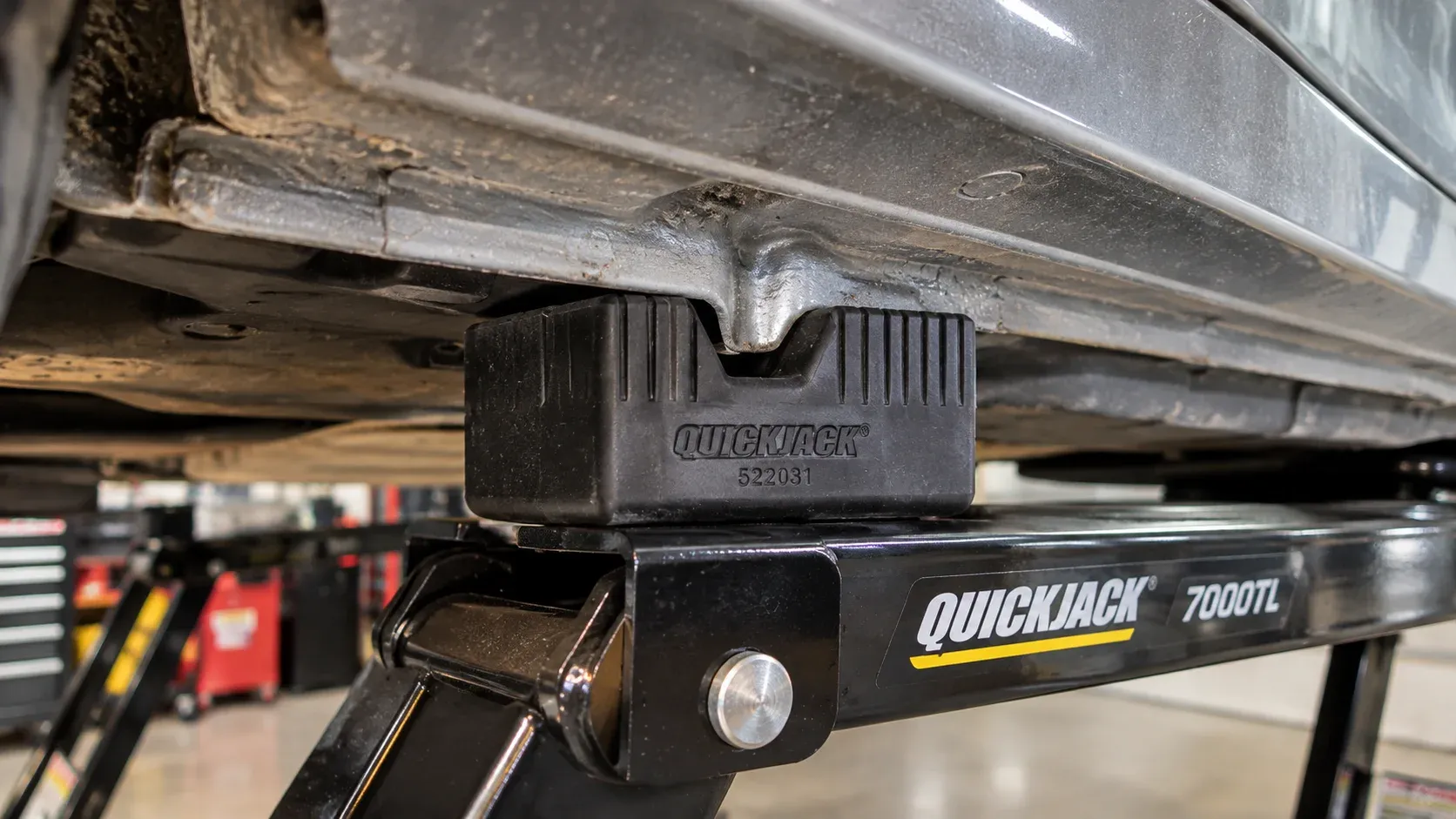
Detailed macro undercarriage photo showing QuickJack grooved urethane rubber block perfectly cradling a vehicle factory pinch weld jacking point beneath the rocker panel, no metal-on-metal bending, clean professional garage lift demonstration, realistic mechanical details.
3 Expensive Mistakes Buyers Make with QuickJack
Avoid these common operator errors:
- Disconnecting hydraulic hoses under trapped pressure: If you release the quick-disconnect fittings while residual line pressure remains in the hoses, you blow out internal O-rings and spray automatic transmission fluid across your floor.
- Forgetting ground clearance on lowered sports cars: QuickJack collapsed height measures 3.5 inches. If you drive a lowered track car, your front bumper air dam will hit the frame before it slides under the pinch weld. Drive your front tires onto a pair of 2x10 wooden boards to gain the extra inch of clearance you need.
- Storing frames outdoors in damp weather: The hydraulic cylinders and pivot bushings feature durable finishes, but moisture wicks into lock pins and quick-coupler ball bearings over winter. Keep your frames indoors on hanging wall hooks.
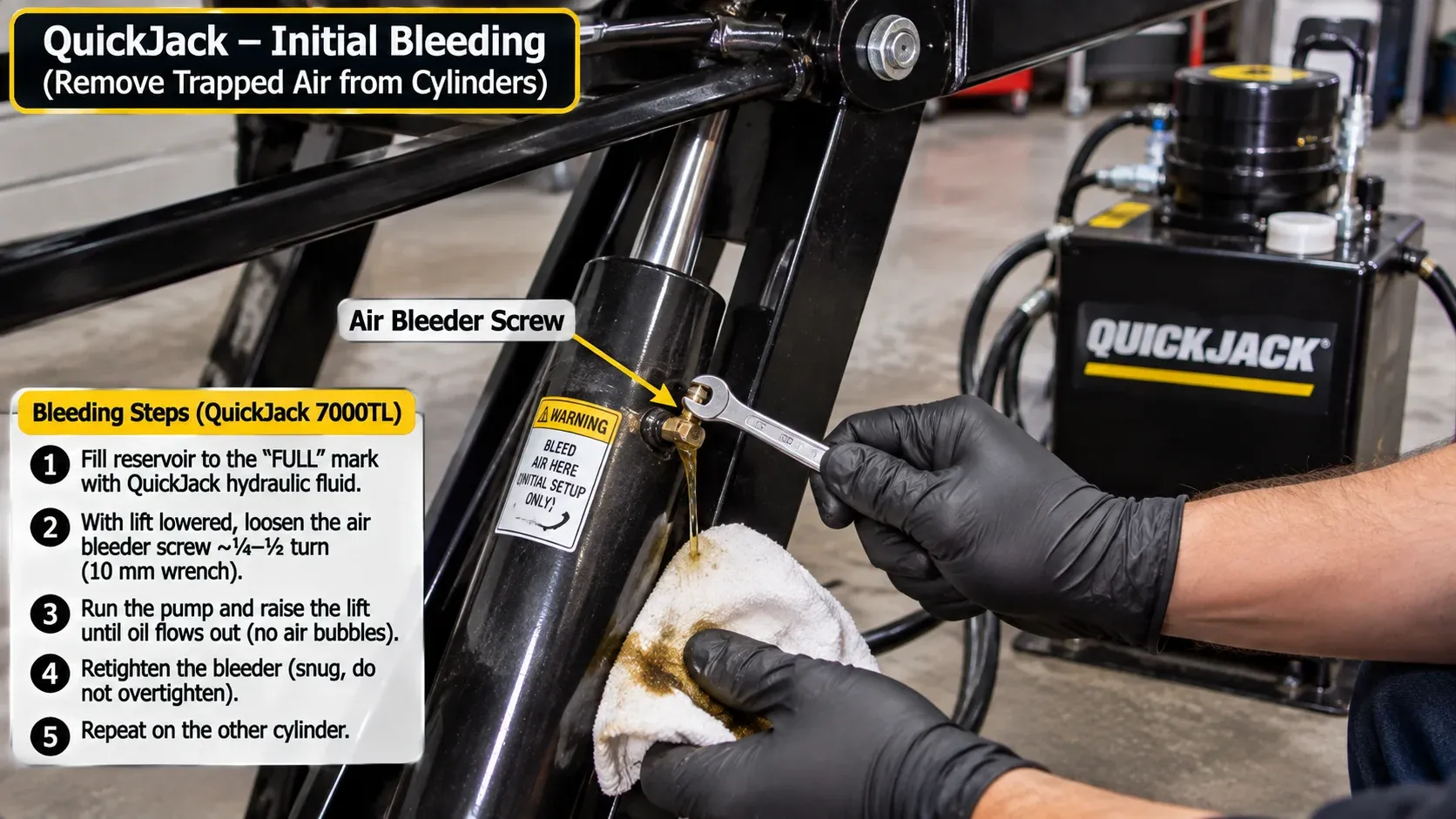
Hands of a mechanic using an open-end wrench to loosen the air bleeder screw on a QuickJack hydraulic cylinder during initial system bleeding, clean rag catching oil drop, hydraulic pump unit in frame, crisp informative instructional photography.
The Bottom Line on QuickJack
If you only change engine oil twice a year, skip QuickJack and stick with a dependable 3-ton floor jack. You will save $1,600 and avoid wrestling heavy frames out of storage for 15-minute chores.
If you regularly swap winter tires, rebuild suspension control arms, flush brake fluid, or pull transmissions, the QuickJack 7000TL pays for itself in physical joint relief and saved shop hours. It provides safe, rock-solid stability under an 8-foot ceiling that jack stands can never match.
Coordinating Your Under-Car Service Workflow
Operating a low-profile lift changes how you approach automotive repairs in a low-ceiling workshop.
Always keep mechanical backups ready by comparing frame contact stability with our guide on the safest double-locking jack stands.
Take advantage of 24 inches of clear frame access to flush your hydraulic lines with our guide on the best one-man brake bleeder for home garages.
And to eliminate messy drain pan maneuvering beneath the frames, service your engine using our top-side routine in vacuum oil extractors vs. drain pans.
Hank Miller
Hank is a master craftsman and DIY mechanic based in Ohio. He tests workshop equipment, garage floor coatings, and power tools under brutal, real-world workshop conditions, with zero paid brand sponsorships.