Stop Spraying WD-40 on Your Garage Door: The 10-Minute Lube Routine for Whisper-Quiet Operation

Spraying standard WD-40 into your garage door tracks attracts abrasive grit and ruins your rollers. Learn the 3 golden zones to lube and the 2 zones to never touch.
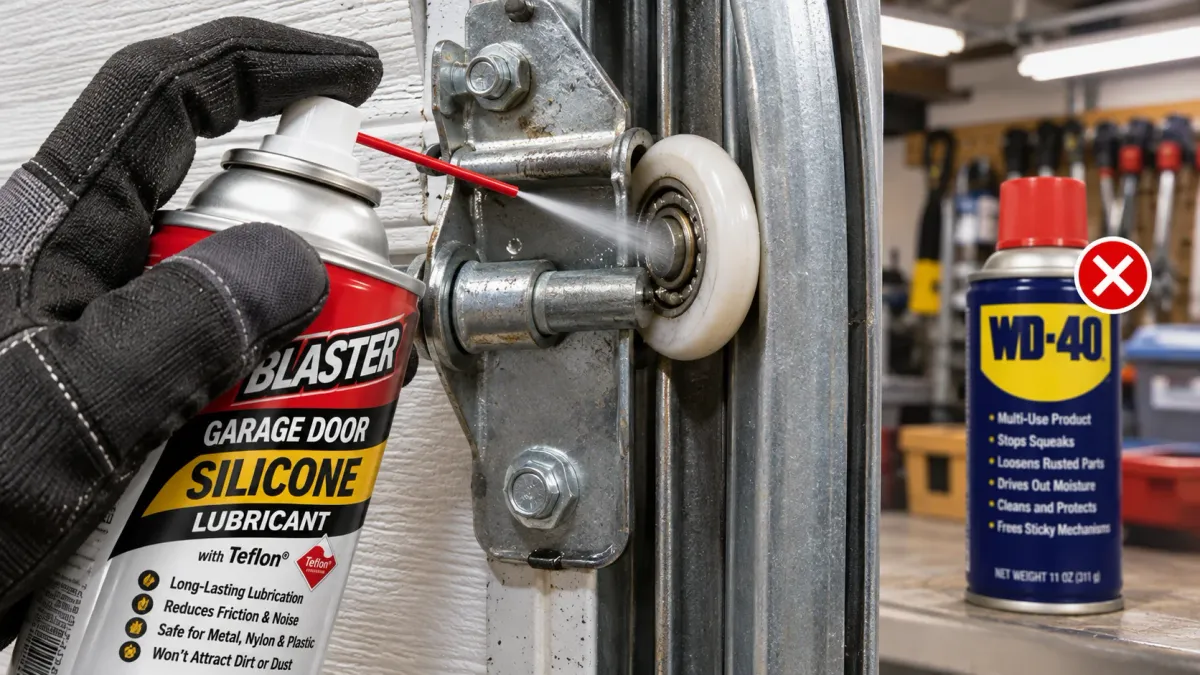
Table of Contents5 Sections
Every morning at 6:00 AM across suburban neighborhoods, someone presses an opener button and sends a shuddering metal screech through two floors of living space. That sound rattles bedroom floorboards, wakes light sleepers, and drives homeowners straight to their chemical shelf for the familiar blue and yellow can.
Grabbing a can of classic WD-40 Multi-Use and spraying it down the curved steel tracks seems logical when you want quick relief. You hear a temporary quiet for forty-eight hours, and then the door starts grinding louder than ever while black grease drips onto your vehicle hood.
I spent years servicing shop overhead assemblies and residential bay doors. In this guide, I break down the solvent chemistry that wrecks garage door tracks, the exact three zones that demand high-pressure lubrication, and the lethal hardware bracket you must never unbolt.
The WD-40 Blunder: Solvent vs. Lubricant Physics
The DASMA technical guidelines for residential garage door lubrication explicitly recommend non-silicone synthetic penetrating oils or specialized white lithium lubricants, warning against solvents that dissolve factory bearing greases.
Classic WD-40 stands for Water Displacement, 40th formula. Technicians originally formulated it as a volatile solvent carrier with a light mineral oil base to prevent surface corrosion on rocket skins, not as a boundary lubricant for heavy cycling mechanisms.
When you spray classic WD-40 onto metal parts, the light solvent dissolves factory grease and immediately flushes it away. Within three to five days, the volatile organic solvents evaporate into thin air, leaving behind an ultra-thin petroleum film with almost zero film strength.
That residual oily film functions as a magnet for airborne concrete dust, saw powder, and pet hair. Instead of a slick bearing surface, your track turns into a sticky grinding compound that chews up steel wheels and overworks your electric opener motor.
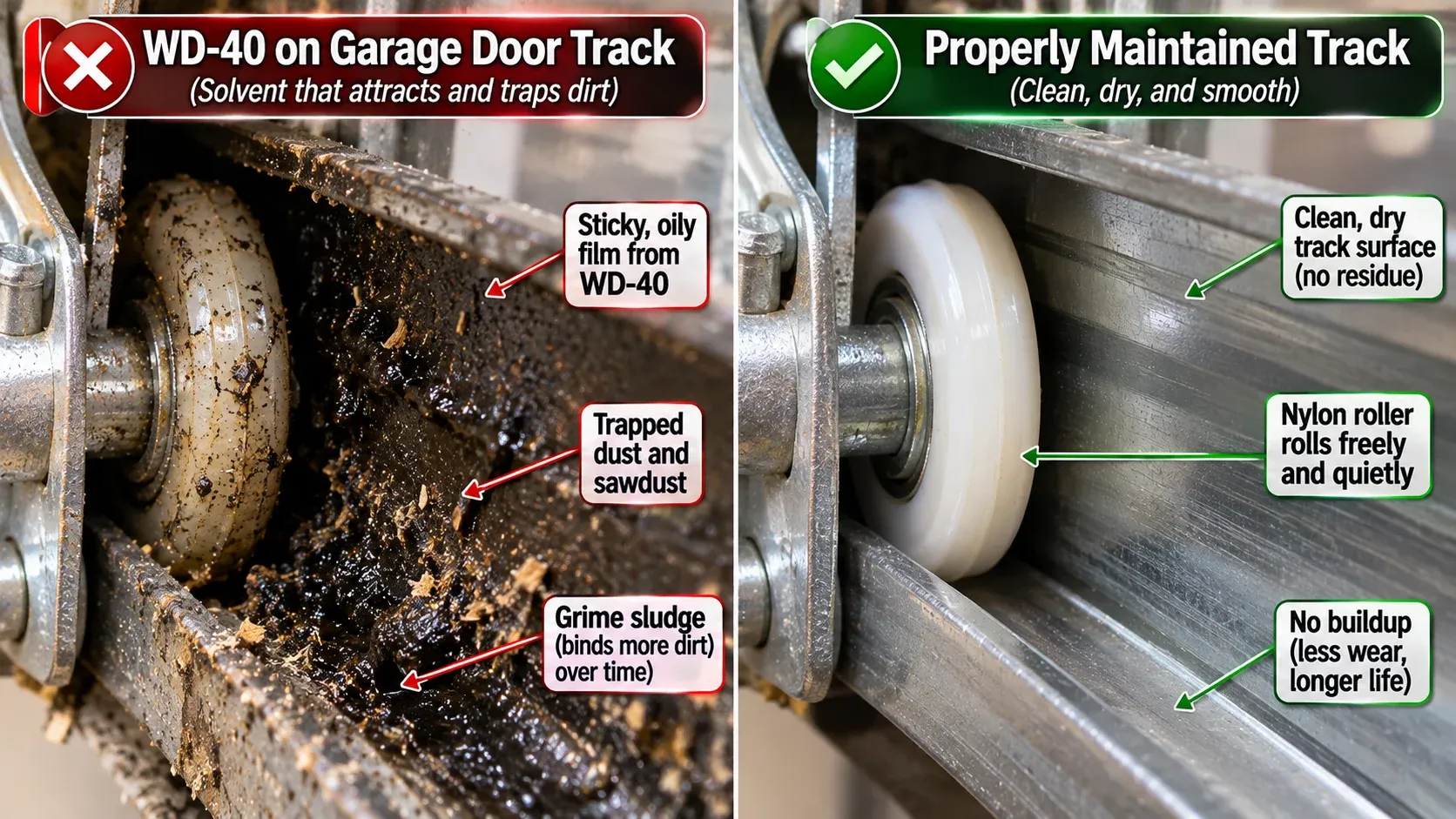
Side-by-side macro photo comparison of garage door track interiors: left track coated in sticky black grime sludge and trapped sawdust caused by spraying WD-40 solvent, right track pristine clean and dry with smooth rolling nylon roller, sharp industrial detail.
Garage Door Lubricant Comparison: What Works vs. What Destroys Tracks
Comparing common workshop sprays across film strength, cold-weather stability, and dust attraction.
WD-40 Multi-Use Product
Displacing moisture on wet tools only
- Great for rusted padlock freeing
- Evaporates in days and forms black grinding sludge
White Lithium Grease (Aerosol)
Mild climate garage hinge pins
- High film strength under heavy pressure
- Hardens like cold candle wax during northern winters
Professional Silicone Door Lube (3-IN-ONE)
All residential hinges, rollers, and torsion springs
- Remains fluid down to -40 degrees Fahrenheit
- Requires light reapplication every 6 months
The 3 Golden Zones to Lube (And 2 Zones to NEVER Touch)
When lubricating your torsion springs, spray along the full width of the coils. If you notice your door still lifts heavily or sags, read my guide on garage door single vs dual torsion spring conversion to verify whether your springs have reached the end of their fatigue life.
A residential sectional garage door weighs between 130 and 350 pounds. Gravity, torsion balance, and friction interact at dozens of pivot points across the travel cycle. Applying the correct lubricant to the wrong location causes catastrophic tracking failures.
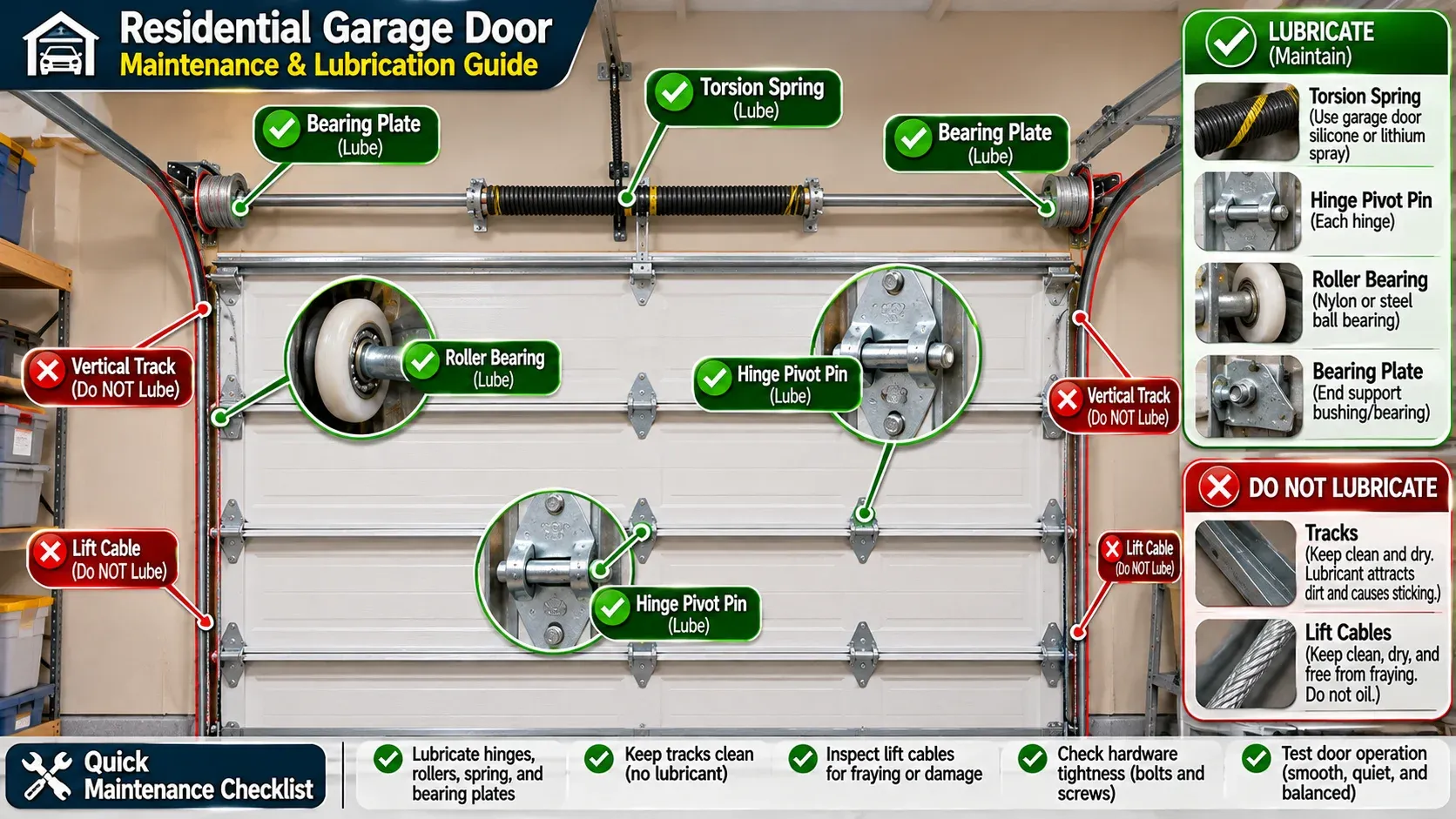
Full diagram of a residential sectional garage door with color-coded maintenance callouts, green checkmarks on hinge pivot pins, roller ball bearings, torsion spring coils, and bearing plates, red warning crosses on vertical tracks and lift cables, clean technical guide illustration.
Zone 1: Steel Hinge Pivot Points (MUST Lube)
Every sectional panel joint hinges on heavy stamped steel brackets. As the door bends over the radiused curve of the upper track, these pins rotate under significant shearing friction.
Spray a quick two-second burst of specialized silicone lubricant directly at the hinge pivot pin and the interior roller stem sleeve. Cycle the door manually to allow the fluid to penetrate between the inner and outer metal sleeves.
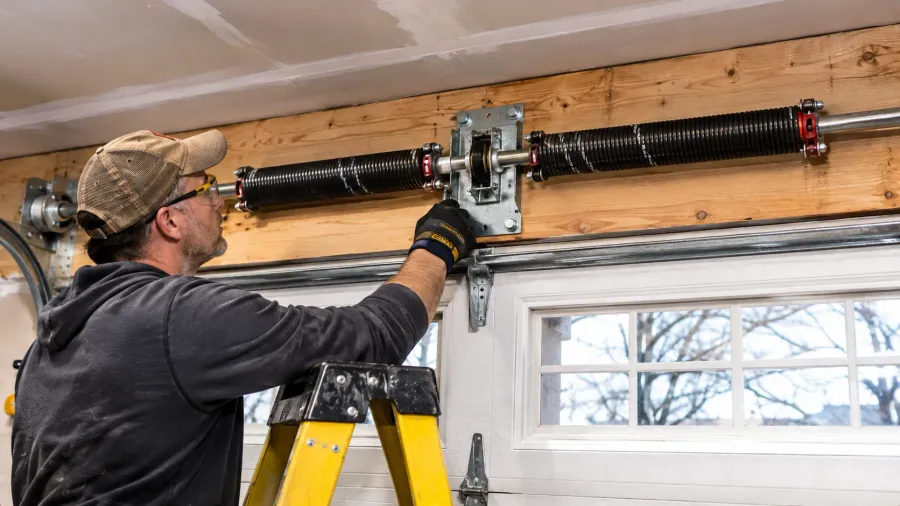
Zone 2: Torsion Spring Coils (MUST Lube)
The large steel torsion spring mounted on the header above your door stores hundreds of inch-pounds of potential energy. As the spring winds and unwinds, individual steel coils rub tightly against each other, generating friction, rust, and loud metallic chatter.
Run a steady bead of silicone spray across the entire length of the torsion spring coils. Take an old shop rag and wipe the excess so the oil coats between the coils without dripping onto parked vehicles.
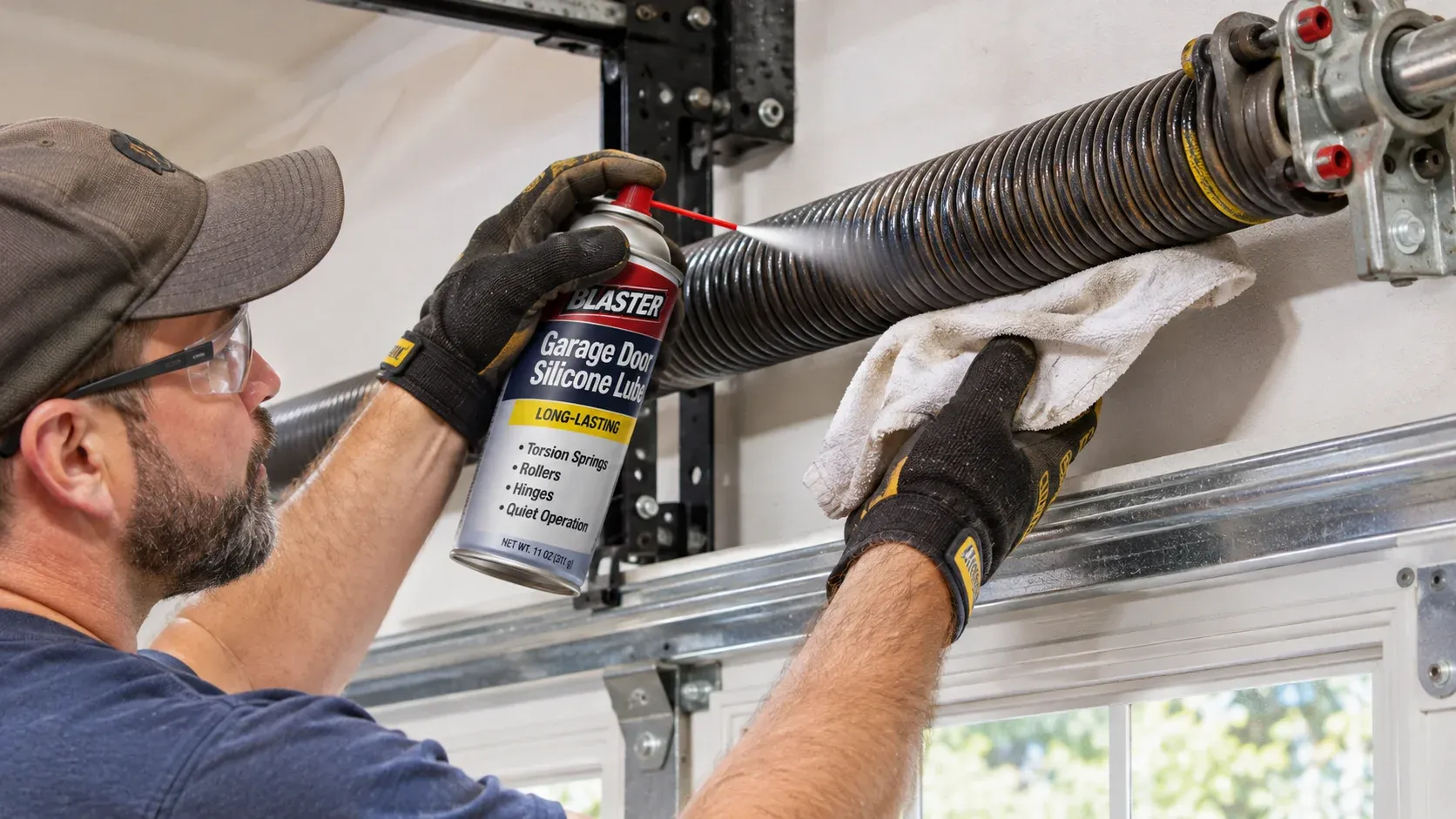
A homeowner lubricating the overhead garage door torsion springs, holding a shop rag beneath the coiled steel spring while applying an even bead of silicone garage lube from a spray can, clean garage setting, natural daylight, crisp focus on spring coils.
Zone 3: Roller Stem Shafts and Bearings (MUST Lube)
Direct your spray straw straight into the ball bearings inside each roller wheel. If you run factory unsealed steel rollers, flush the metal cage thoroughly to push out grit.
Coat the horizontal roller stem where it slides back and forth inside the hinge sleeve. This allows the door panels to float laterally without binding against the vertical tracks.
Banned Zone 1: The Vertical and Curved Tracks (NEVER Lube)
Your garage door rollers are engineered to roll along the tracks, not slide. When you spray lubricant inside the track channels, you eliminate friction, forcing the roller wheels to skid flat across the metal lip.
Skidding wears flat spots into round wheels and causes the door to rack crookedly in the frame. Tracks must stay dry and clean; wipe them down with a clean rag dampened with non-chlorinated brake cleaner to strip old sludge.
Banned Zone 2: The Lift Cables (NEVER Lube)
Aircraft-grade galvanized lift cables wind around the aluminum drums at each upper corner. Lubricating these braided wire cables makes them slick, increasing the risk of the cable slipping off the grooved drum and dropping one side of the door.
Inspect cables visually for frayed strands or rusty discoloration, but leave their surfaces completely dry.
Safety Warning: The Bottom Bracket Death Trap
Sectional garage doors feature a heavy steel bracket bolted to the bottom left and right corners. These two brackets anchor the lift cables that carry the full counterbalancing load of the overhead torsion springs.
Never touch, loosen, or remove the lag screws or nuts holding these bottom brackets to the door frame while the spring holds tension. Backing those bolts out releases hundreds of pounds of explosive torsional force instantly, which can shatter fingers or fracture forearms.
If your bottom roller bearing fails or locks up, call an experienced door technician or clamp the track securely while unloading the spring tension with winding bars. DIY lubrication requires only spraying the roller stem and wheel bearing from the side; you never need to loosen a single bolt on that bracket.
The $35 Secret Weapon: 13-Ball Bearing Nylon Rollers
Most builder-grade homes ship with cheap unsealed steel rollers or plain plastic wheels without bearings. These cheap wheels rattle inside the metal tracks like a freight train, echoing directly into bedrooms situated above the garage ceiling.
Upgrading to commercial-grade nylon rollers equipped with sealed 13-ball steel bearings cuts operational sound by up to 75 percent. The resilient nylon tire cushions impact against the steel track seams, while the sealed ball race prevents dust from penetrating the lubricant.
You can swap out all ten rollers on a standard seven-foot door in about fifteen minutes. Work panel by panel with the door closed: unbolt one hinge at a time, slide out the old steel roller, insert the new nylon roller stem, and retighten the hinge bolts before moving to the next bracket.
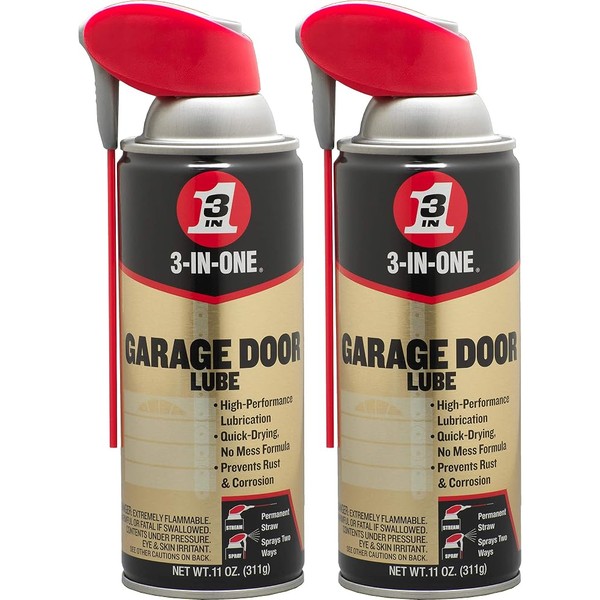
3-IN-ONE Professional Garage Door Lubricant (Smart Straw)
Best For: Hinges, torsion springs, and roller stems
Est. Price: $8 - $11
"The industry standard boundary lubricant for quiet, smooth door cycling without creating abrasive black sludge inside your tracks."
- +Dries to a non-tacky film that never attracts concrete dust
- +Smart Straw switches from precision stream to fan spray instantly
- +Maintains viscosity down to -40 degrees Fahrenheit without gumming
- -Requires reapplication every six months in harsh climates
- -Can leave minor drips if oversprayed on overhead springs
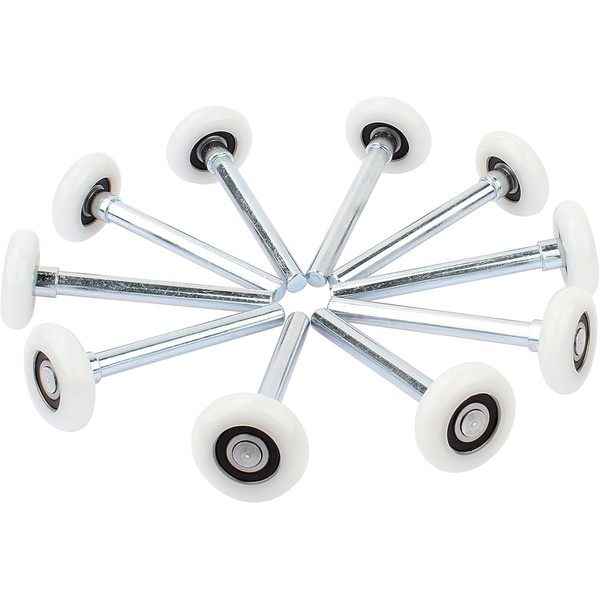
DURA-LIFT Ultra-Quiet 2-Inch 13-Ball Bearing Nylon Rollers (10-Pack)
Best For: Eliminating metal-on-metal tracking noise
Est. Price: $34 - $39
"A 15-minute DIY hardware upgrade that transforms a deafening steel track into a whisper-quiet overhead system for less than $40."
- +Sealed 13-ball bearing race keeps out abrasive shop dust
- +Durable nylon wheel dampens vibration transferred to house framing
- +Direct drop-in replacement for standard 2-inch residential tracks
- -Requires proper safety precautions when servicing bottom panel rollers
- -Slightly tighter fit in severely bent or dented tracks
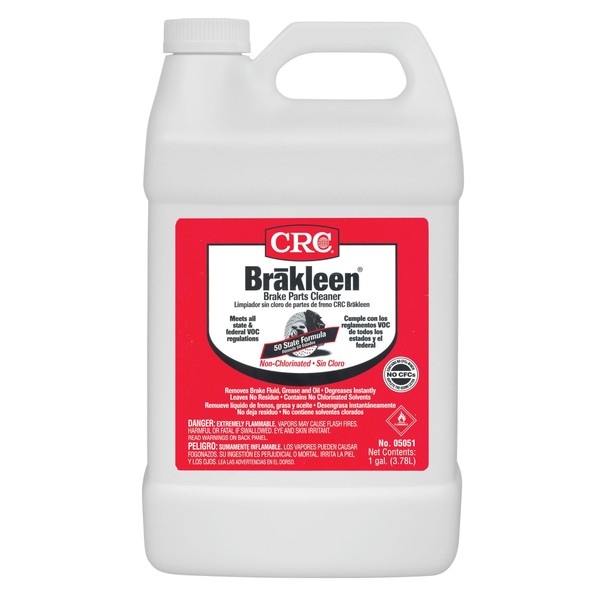
CRC Brakleen Non-Chlorinated Brake Parts Cleaner
Best For: Stripping old grease and sludge from dry tracks
Est. Price: $6 - $8
"The fastest solvent for stripping away years of bad WD-40 applications and restoring bare, dry steel tracks."
- +Rapidly cuts hardened oil, road salt, and abrasive sludge
- +Leaves absolute zero oily residue behind on steel surfaces
- +Fast evaporation keeps shop downtime under five minutes
- -Strong chemical odor requires garage doors opened for cross-ventilation
- -Avoid spraying directly on painted exterior door faces
Your 10-Minute Semi-Annual Service Plan
Set a reminder every spring and autumn to service your door mechanisms before seasonal temperature swings stress the mechanical hardware.
First, disconnect your automatic opener by pulling the red emergency release cord down and back. Lift the door manually to waist height; it should stay balanced without crashing down or snapping upward, confirming that your spring tension remains correct.
Second, wipe the interior track channels clean using an old shop rag sprayed with brake cleaner to remove built-up road grime and old pet hair.
Third, lubricate each hinge pivot, the spring coils, and the roller stems with dedicated silicone lubricant, wipe away any drips, and re-engage the automatic trolley.
If you also notice rainwater or drafts seeping under your door during heavy downpours, inspect your bottom weatherstrip and check out our guide on how to stop water coming under your garage door. And if your door tracks run smoothly but the ceiling motor still hums loudly through the floor joists, review our complete breakdown on garage door opener drive systems to explore wall-mount jackshaft alternatives.
Hank Miller
Hank is a master craftsman and DIY mechanic based in Ohio. He tests workshop equipment, garage floor coatings, and power tools under brutal, real-world workshop conditions, with zero paid brand sponsorships.