Why PVC Pipe Is a Ticking Time Bomb for Compressed Air (And 3 Safe Garage Alternatives)

Using Schedule 40 PVC for compressed air creates an explosive shrapnel hazard banned by OSHA. Learn the rupture physics, drop-leg moisture layouts, and safe aluminum alternatives.
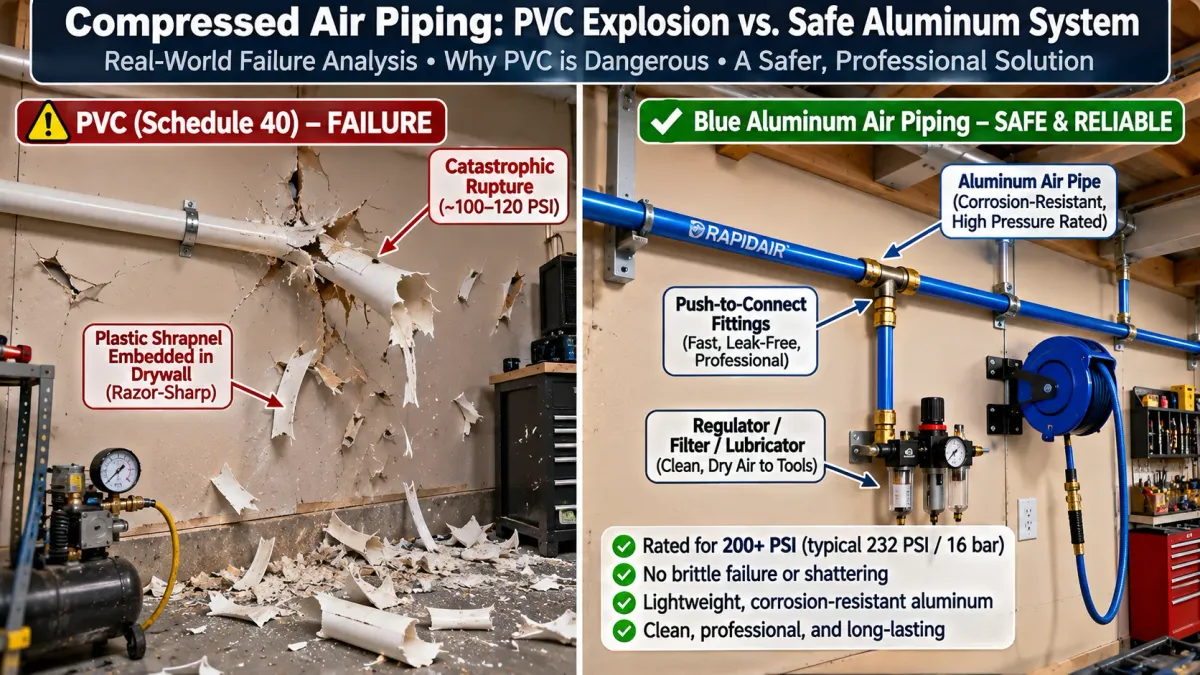
Table of Contents5 Sections
You flip the power switch on your two-stage stationary air compressor, walk over to your workbench, and hear a deafening report like a twelve-gauge shotgun firing inside your garage. The white plastic Schedule 40 PVC pipe running along your ceiling joists has detonated into razor-sharp plastic shards that pierce the drywall fifteen feet away and miss your face by inches.
Homeowners frequently reach for white plumbing PVC when plumbing their first garage air system. Plastic plumbing pipe is cheap, glues together in minutes, and carries a printed pressure rating of 450 PSI on the side of the pipe.
What those DIY plumbing tutorials never tell you is that plumbing pressure ratings apply exclusively to liquid water, not compressed air. Operating an air compressor through rigid PVC piping creates a fragmentation bomb in your workshop, which is why the Occupational Safety and Health Administration (OSHA) banned plastic PVC piping for compressed air systems decades ago.
I inspected industrial air headers and piped commercial mechanic shops across Ohio for twenty years. In this guide, I explain the violent rupture physics separating liquid water from compressed air, show you why compressor oil accelerates PVC failure, and break down three safe, code-compliant workshop piping alternatives you can install in an afternoon.
The Physics of Rupture: Water vs. Compressed Air
The OSHA Safety Hazard Information Bulletin on PVC pipe in compressed air systems warns that thermoplastic materials shatter violently when pressurized with compressible gases. Water does not store expansion energy; air acts like an explosive bomb inside rigid plastic.
To understand why PVC is lethal for compressed air, you must examine the physical difference between an incompressible liquid and a compressible gas under pressure.
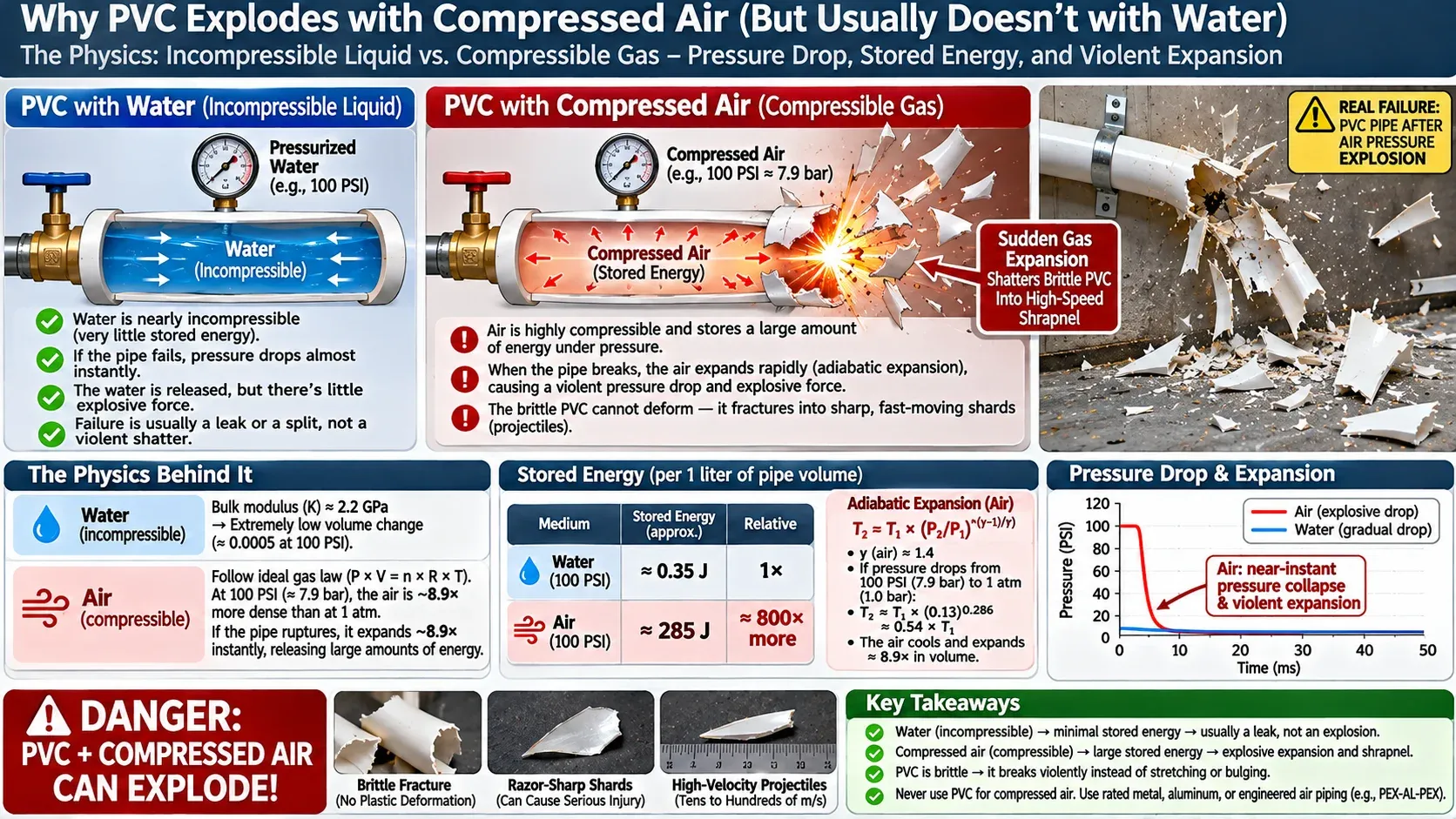
Technical physics infographic illustrating the explosion mechanics of PVC pipe under compressed air vs water, showing incompressible liquid pressure drop vs explosive adiabatic gas expansion shattering brittle plastic into high-speed projectile shrapnel shards, warning callouts.
Water is an incompressible fluid. When a PVC water pipe develops a hairline crack under 60 PSI of household water pressure, the pressure drops to zero in a single millisecond. The pipe splits, water sprays out in a localized stream, but the plastic pipe remains intact because liquid water stores zero mechanical expansion energy.
Compressed air behaves like a giant, coiled steel spring packed with massive potential kinetic energy. Air molecules are squeezed tightly together inside the pipe under 125 to 150 PSI of pressure.
When a microscopic fatigue crack forms in a pressurized PVC air line, the compressed air expands violently toward the rupture point. Instead of splitting cleanly, the brittle plastic shatters into dozens of jagged, razor-sharp shards that accelerate outward at supersonic speeds, acting exactly like shrapnel from an explosive shell.
The Chemical Culprit: How Compressor Oil Destroys PVC
Beyond the physical danger of stored pneumatic energy, PVC suffers from chemical incompatibility with standard workshop air compressors.
Reciprocating air compressors utilize petroleum or synthetic oil in their crankcases to lubricate pistons and cylinder walls. During normal operation, microscopic droplets of aerosolized oil blow past the piston rings, mix with hot compressed air, and travel downstream into the piping system.
Polyvinyl chloride (PVC) and Chlorinated Polyvinyl chloride (CPVC) are thermoplastic polymers held together by chemical plasticizers that give the pipe rigidity and impact resistance. Compressor oil aerosols chemically react with these plasticizers, leaching them out of the polymer matrix over several months.
As plasticizers leach away, the interior wall of the PVC pipe becomes brittle and chalky. Combined with the cyclical thermal swings of hot summer garage air and mechanical vibration from the compressor pump, the brittle pipe experiences catastrophic failure under normal operating pressures.
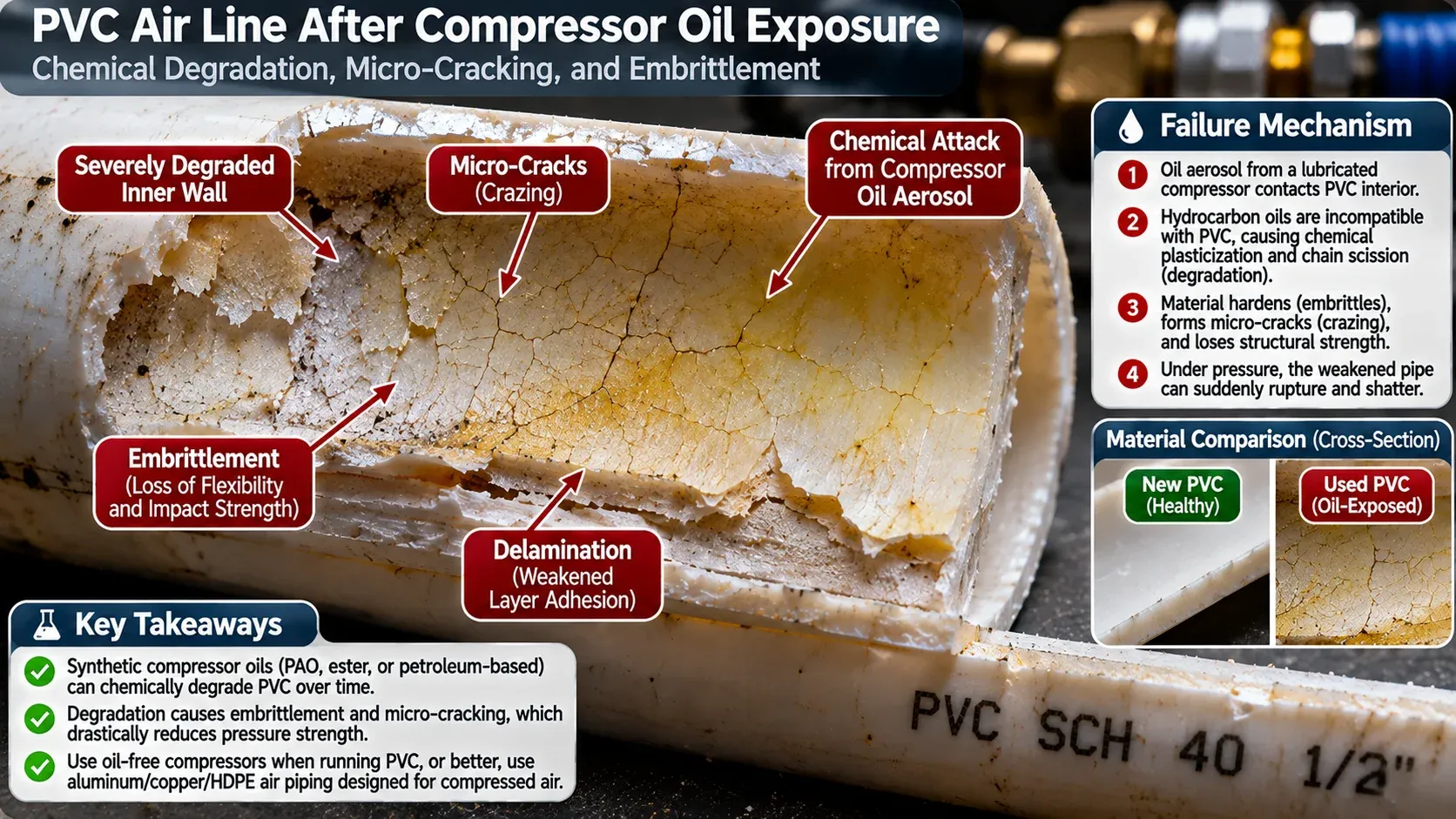
Macro cross section photo of the interior wall of a used PVC air line, showing severe chemical degradation, micro-cracking and embrittlement caused by synthetic compressor oil aerosol exposure, labeled technical callouts showing compromised structural integrity.
Workshop Compressed Air Piping Comparison: Safety & Installation Demands
Analyze pipe materials across explosion hazards, moisture resistance, and installation difficulty.
Rigid white Schedule 40 or Schedule 80 PVC / CPVC plumbing pipe
Black iron pipe with threaded cast-iron fittings
Semi-rigid multi-layer aluminum composite tubing (RapidAir MaxLine)
The Gold Standard: RapidAir MaxLine (Semi-Rigid Tubing)
When you mount your compressor station, ensure your electrical circuit handles the motor start spike cleanly. Read my full walkthrough on wiring a serious garage workshop subpanel to size your dedicated 240V compressor breaker and wire run properly.
If you want a professional, code-compliant air distribution system that you can install in a single afternoon without buying expensive pipe-threading machinery, use semi-rigid multi-layer composite tubing like RapidAir MaxLine.
MaxLine tubing features a three-layer composite construction: an inner core of smooth High-Density Polyethylene (HDPE), a central seamless layer of malleable aluminum, and an outer protective HDPE jacket.
This engineering design delivers immense workshop advantages:
- Shrapnel-Proof Safety: Rated for 200 PSI working pressure at 73 degrees Fahrenheit, the inner aluminum core will never shatter or fragment; in an extreme over-pressure event, the tube merely splits and vents air safely.
- Hand-Bendable Routing: You unroll the continuous tubing and bend smooth 90-degree corners around wall studs and ceiling joists by hand, eliminating dozens of leak-prone elbow fittings.
- Zero Internal Rust: The smooth polyethylene liner produces zero rust scale, delivering clean, dry air that protects pneumatic nailers, impact wrenches, and automotive paint guns.
Connecting MaxLine requires only a simple deburring tool and standard wrenches to tighten double O-ring nickel-plated brass compression fittings that guarantee an airtight seal for decades.
The Moisture Trap Blueprint: Piping Layout & Drop Legs
A properly piped garage compressed air system must manage the liquid water naturally produced when warm atmospheric air is compressed into a storage tank. Without a dedicated piping slope and water traps, that moisture travels down the hose line and ruins pneumatic tools and paint finishes.
Execute this proven layout to trap 95 percent of moisture without an expensive refrigerated air dryer:
First, pitch your main overhead delivery pipe with a continuous slope of 1/8-inch per ten feet, angled away from the compressor toward a low point at the far end of the garage. Gravity forces condensed moisture droplets to trickle along the bottom of the pipe toward a dedicated drain valve.
Second, use top-takeoff connections for every wall drop. When branching an airline down to a tool station, connect your tee fitting facing straight up into the air, routing a loop that rises three inches before dropping down the wall. This allows dry air to rise into the branch line while heavy liquid water flows past along the bottom of the main trunk.
Third, terminate every wall drop with a six-inch vertical extension called a drip leg positioned beneath the quick-disconnect tool port. Liquid water drops into this bottom extension by gravity, allowing you to open a brass ball valve at the bottom of the drop leg and drain water out of the system in two seconds.
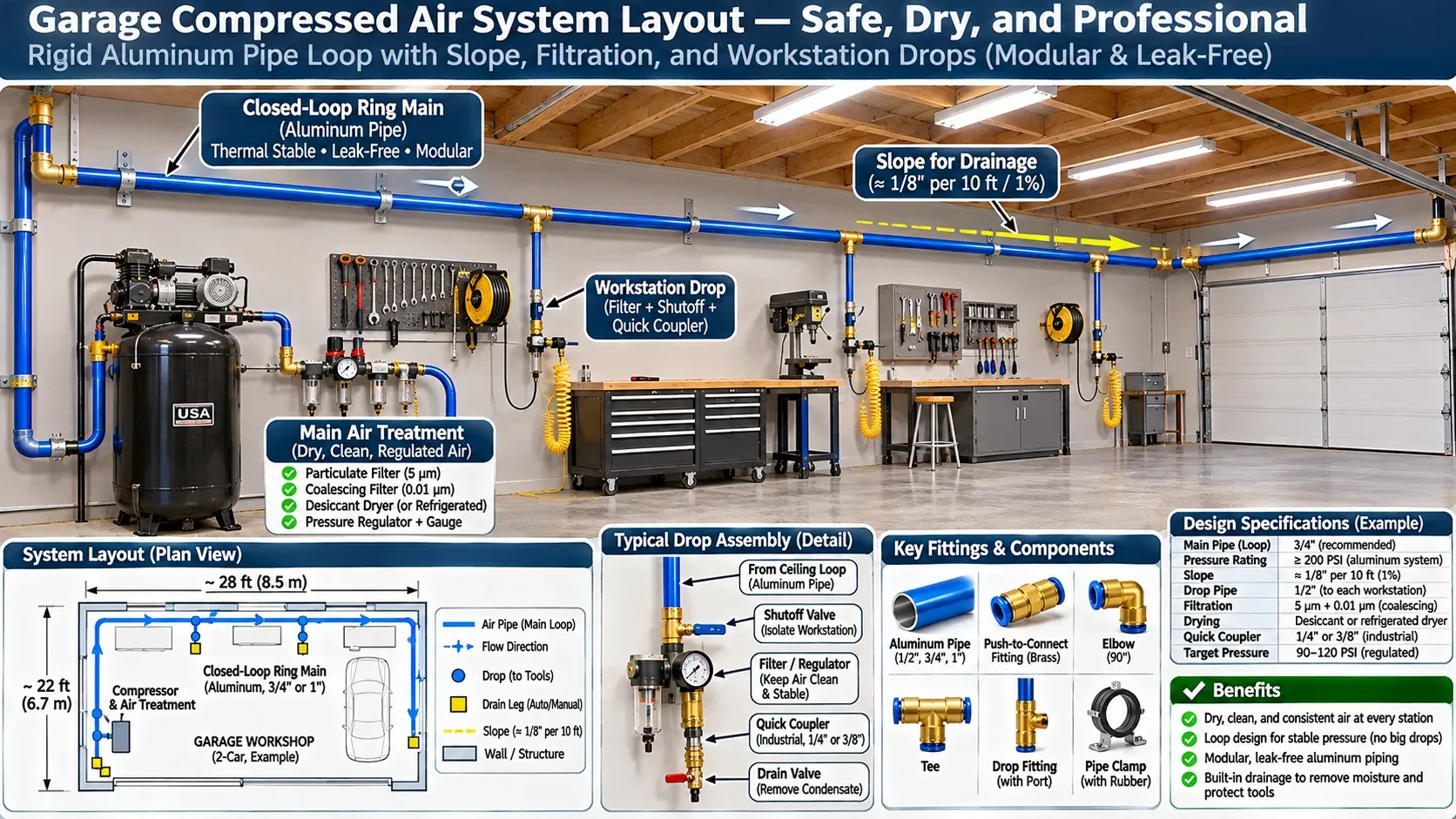
CAD architectural layout of a safe garage compressed air loop system using modular blue aluminum piping, showing rigid ceiling perimeter loop with slope, drain drop legs at each tool workstation, moisture filter manifold, push-to-connect brass fittings, clean technical blueprint.
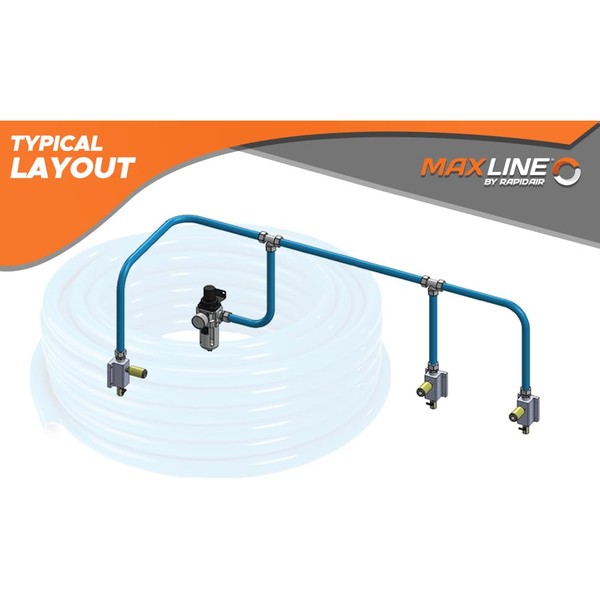
RapidAir MaxLine 1/2-Inch 100-Foot Master Kit (M7500)
Best For: Complete two-car garage workshop air distribution
Est. Price: $165 - $195
"The industry-standard DIY compressed air distribution kit, delivering industrial safety, zero rust, and clean tool drops."
- +Multi-layer HDPE-aluminum-HDPE tubing bends by hand and holds its shape
- +Includes 100 feet of 1/2-inch tubing, three aluminum wall outlet blocks, and fittings
- +100 percent corrosion-resistant and completely safe against explosive burst failures
- -Roll is stiff when first unpacked; unrolling requires weighting on floor
- -Requires careful deburring of pipe ends to seat O-rings properly
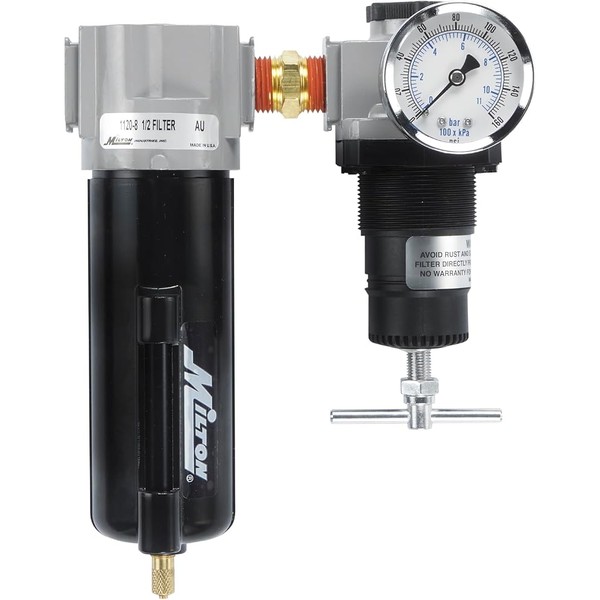
Milton 1/2-Inch NPT Heavy-Duty Piggyback Filter Regulator
Best For: Separating moisture and regulating line pressure at the compressor
Est. Price: $75 - $95
"An essential primary filtration block that strips moisture and regulates line pressure before air enters your shop piping."
- +Combines 40-micron particulate moisture filter and pressure regulator in one unit
- +High-flow 1/2-inch NPT ports deliver unchoked air to high-demand tools
- +Durable metal bowl guard protects sight glass from workshop impacts
- -Requires manual twist-drain operation to purge collected water bowl
- -Must be mounted strictly vertically to ensure proper water separation
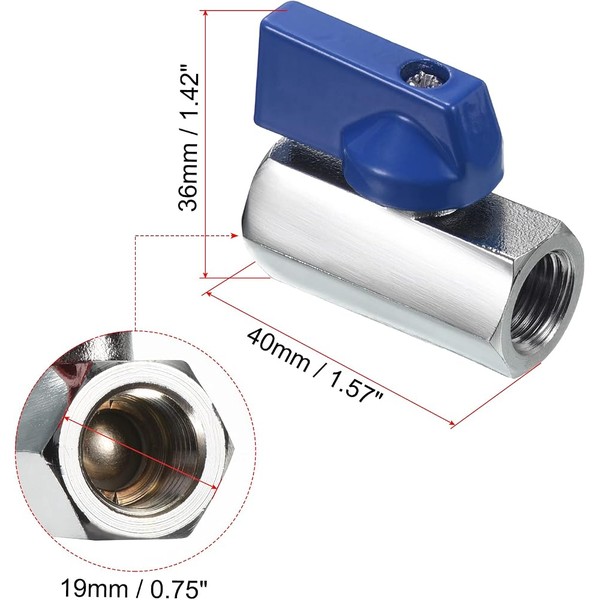
Solid Brass 1/4-Inch NPT Mini Ball Drain Valves (3-Pack)
Best For: Draining condensate moisture from bottom drop legs
Est. Price: $12 - $16
"Inexpensive, reliable ball valves for the base of every airline drop leg, making routine moisture drainage effortless."
- +Heavy forged brass body with PTFE seats guarantees leak-free sealing
- +Quarter-turn lever handle opens smoothly to blast out collected moisture
- +Compact 1/4-inch male NPT threads fit standard drop-leg manifold bases
- -Air blast can spit water mist; place a small catch rag beneath valve when opening
- -Must be checked and drained weekly during humid summer operations
Building Out Your Complete Compressed Air Setup
Once you install a safe, corrosion-free air header system along your garage framing, connect your equipment to maximize workflow and safety.
Verify that your compressor delivers adequate CFM flow for your air tools by reading our sizing guide on what size air compressor you actually need for a 1/2-inch impact wrench.
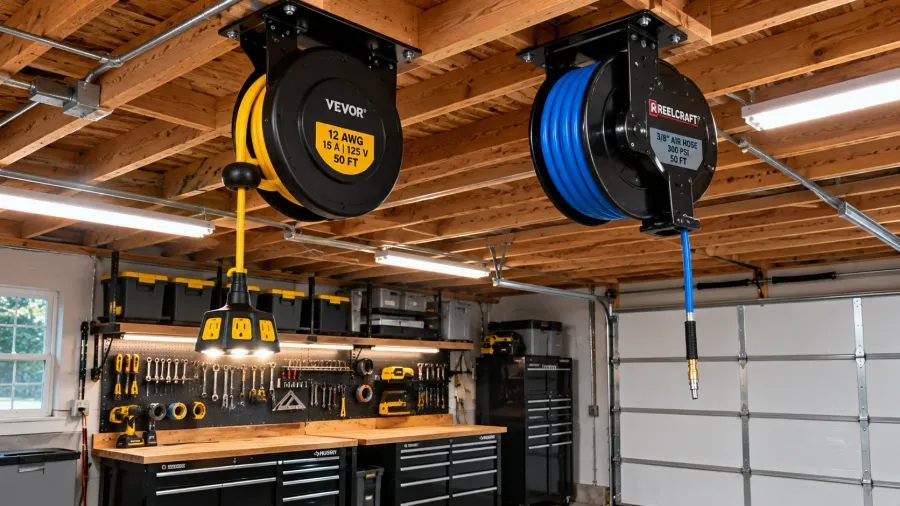
Keep air hoses up off the concrete floor to prevent tripping hazards by terminating your main overhead air drops with retractable equipment from our guide on overhead retractable cord and hose reels.

Hank Miller
Hank is a master craftsman and DIY mechanic based in Ohio. He tests workshop equipment, garage floor coatings, and power tools under brutal, real-world workshop conditions, with zero paid brand sponsorships.