Best Garage Floor Mat for Snow and Mud: Containment Mats vs. Squeegees (Save Your Drywall)

Winter slush and road salt can destroy garage concrete and rot bottom drywall. Here is why raised-edge vinyl containment mats beat cheap felt rugs every winter.
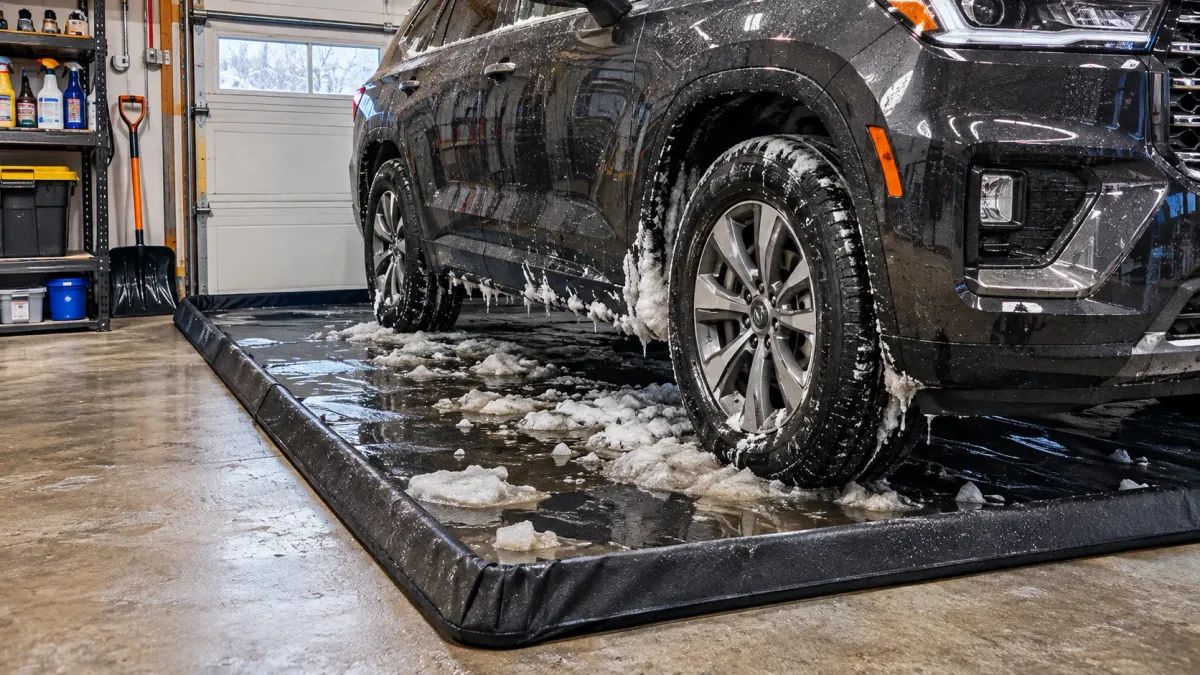
Table of Contents6 Sections
Around 10:00 PM on a freezing January night in Ohio, you hear the quiet, heavy thuds inside your garage. That is the sound of thirty pounds of road slush, frozen grit, and highway salt dropping off your truck wheel wells onto the concrete slab.
By 6:30 AM the next morning, that frozen mass turns into seven gallons of salty, murky brine. It creeps across the floor, slips underneath your metal tool cabinets, and wicks straight up into the bottom edge of your drywall.
Most homeowners tackle this winter mess with cheap felt rolls or a basic floor squeegee. Both solutions fail under serious snowfall. To protect your concrete from pitting and keep your wall framing dry, you need a true containment barrier that locks meltwater in place until you remove it.
The Chemistry of Road Salt: Why Slush Destroys Concrete and Drywall
Road crews do not spread gentle table salt on winter highways; they spread aggressive chemical blends. The American Concrete Institute (ACI 201.2R Guide to Durable Concrete) documents how deicing salts accelerate osmotic pressure and surface scaling on unprotected concrete slabs. When that slurry melts off your vehicle chassis, it triggers two destructive mechanical reactions inside your garage.
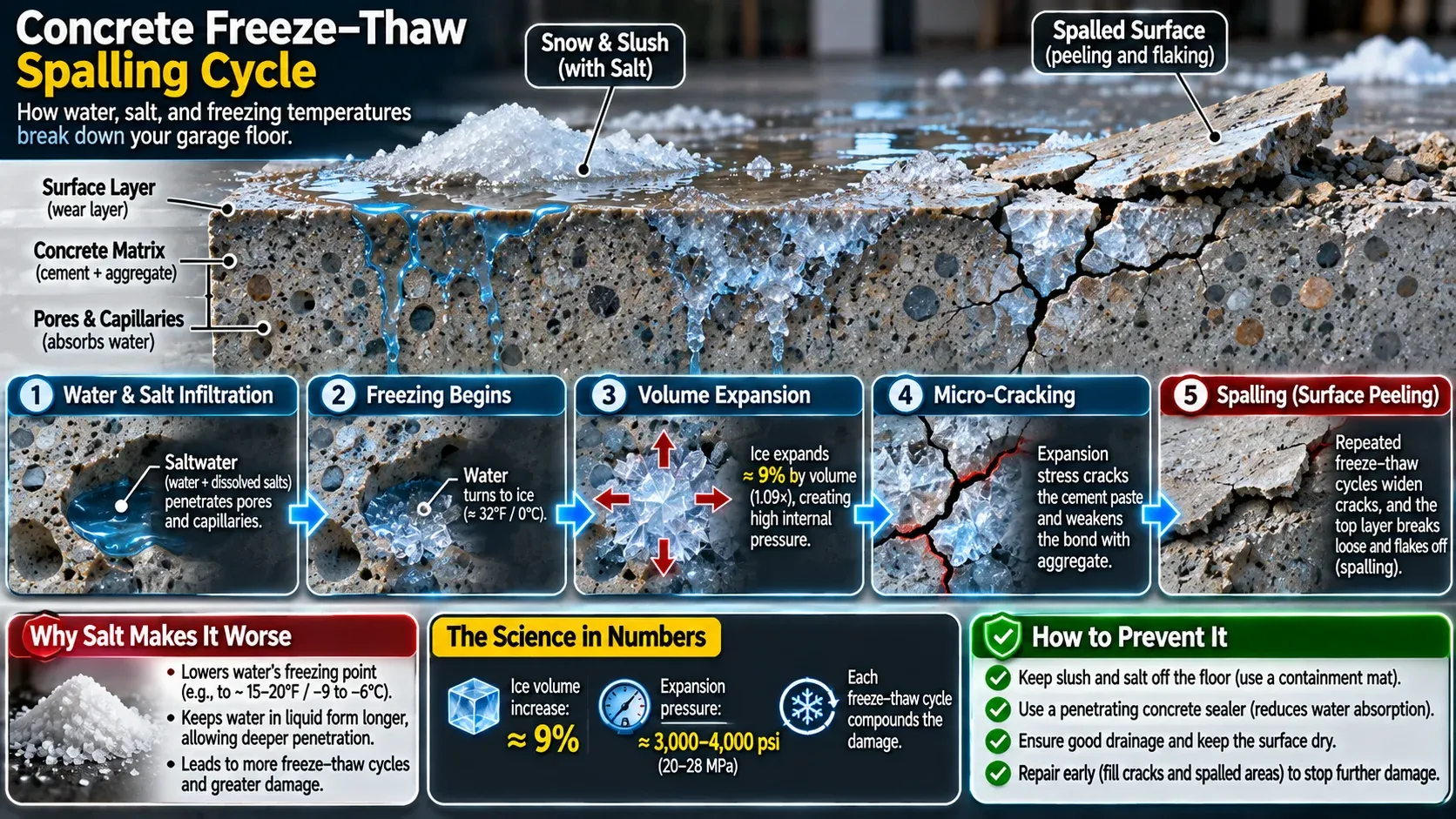
Scientific cross section infographic of concrete freeze-thaw spalling cycle, showing saltwater slush penetrating concrete surface, freezing into expansive ice crystals expanding 9% by volume, fracturing micro-aggregate and peeling top surface, labeled educational callouts.
First, concrete is naturally porous. The dissolved salt lowers the freezing temperature of water, increasing the number of freeze-thaw cycles the slab experiences every winter. As the brine soaks into the concrete capillaries and refreezes, water expands by roughly nine percent. This internal hydrostatic pressure shatters the top paste layer of your floor, producing unsightly flaking, pitting, and concrete dusting.
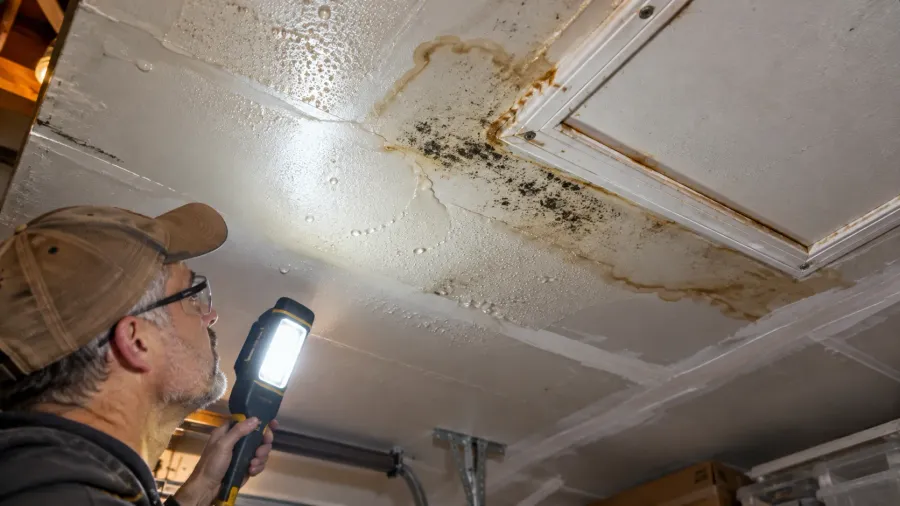
Second, gypsum drywall acts like a giant sponge. If meltwater reaches your wall base, drywall wicks moisture upward through capillary action. Within forty-eight hours, paper backing mildews, bottom plates rot, and baseboard fasteners rust out. Fixing rotted bottom plates and replacing waterlogged drywall easily costs $1,200 to $2,500.
The Big-Box Trap: Why Felt and Flat Rubber Mats Fail
When winter weather arrives, home improvement retailers display rolls of grey polyester absorbent felt and flat ribbed rubber runners. Both products disappoint under heavy snow conditions.
Fabric felt mats claim to absorb snowmelt. In reality, they hold less than two gallons of liquid before saturating completely. Once saturated, overnight sub-freezing temperatures freeze the wet fabric into a solid sheet of ice. The mat sticks to your concrete floor like a frozen hockey puck, making it impossible to clean or sweep.
Flat ribbed rubber mats provide slightly better grip, but they lack perimeter containment dams. As eight gallons of slush liquefies under your warm engine block, water flows through the channels and spills straight over the edges. Gravity carries the dirty brine toward your back wall or under your workbenches.
Winter Slush Floor Protection Comparison
Absorbent Fabric/Felt Rolls
Flat Ribbed Rubber Runners
Daily Squeegee Routine Only
Raised-Edge PVC Containment Mat
How Raised-Edge Containment Mats Work
A proper winter containment mat functions like a durable, shallow swimming pool parked directly under your car. The core consists of heavy-duty, commercial-grade PVC vinyl fabric.
Around the entire perimeter, rigid snap-on plastic berm strips slide onto the edge of the fabric. These plastic edges elevate the perimeter walls roughly 1.18 inches off the ground.
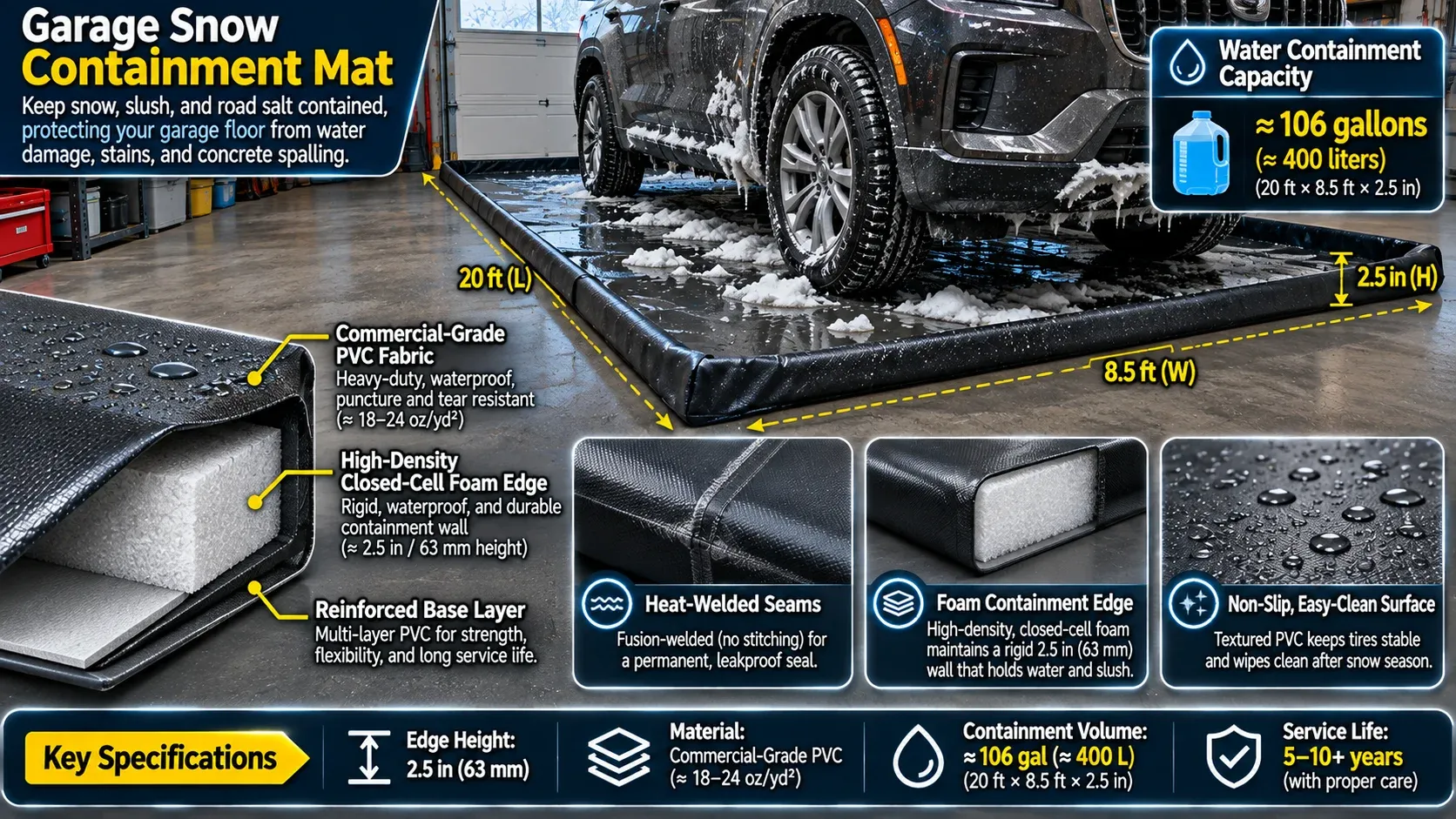
A heavy-duty garage snow containment mat, showing multi-layer construction: commercial grade PVC fabric, high-density closed-cell foam containment edges, heat-welded seams, dimension callouts indicating water containment volume.
A standard 7.5-foot by 20-foot containment mat safely traps over 50 gallons of liquid. All melted snow, road sand, and dissolved salt remain trapped inside the vinyl basin. Your adjacent drywall, workbenches, and tool carts stay completely dry.
Always select 50 mil thickness rather than cheaper 20 mil variants. Passenger tires pick up sharp gravel chips and road debris during snowy commutes. A 20 mil mat punctures under heavy tire friction, while a 50 mil commercial PVC sheet withstands aggressive all-terrain treads and heavy vehicle weights without tearing.
The 2-Minute Morning Cleanout Routine
Trapping fifty gallons of dirty road slush solves the first half of the winter problem. You still need an efficient method to dispose of the sludge without dousing your driveway in ice.
Here is the exact morning routine I follow in my Columbus workshop:
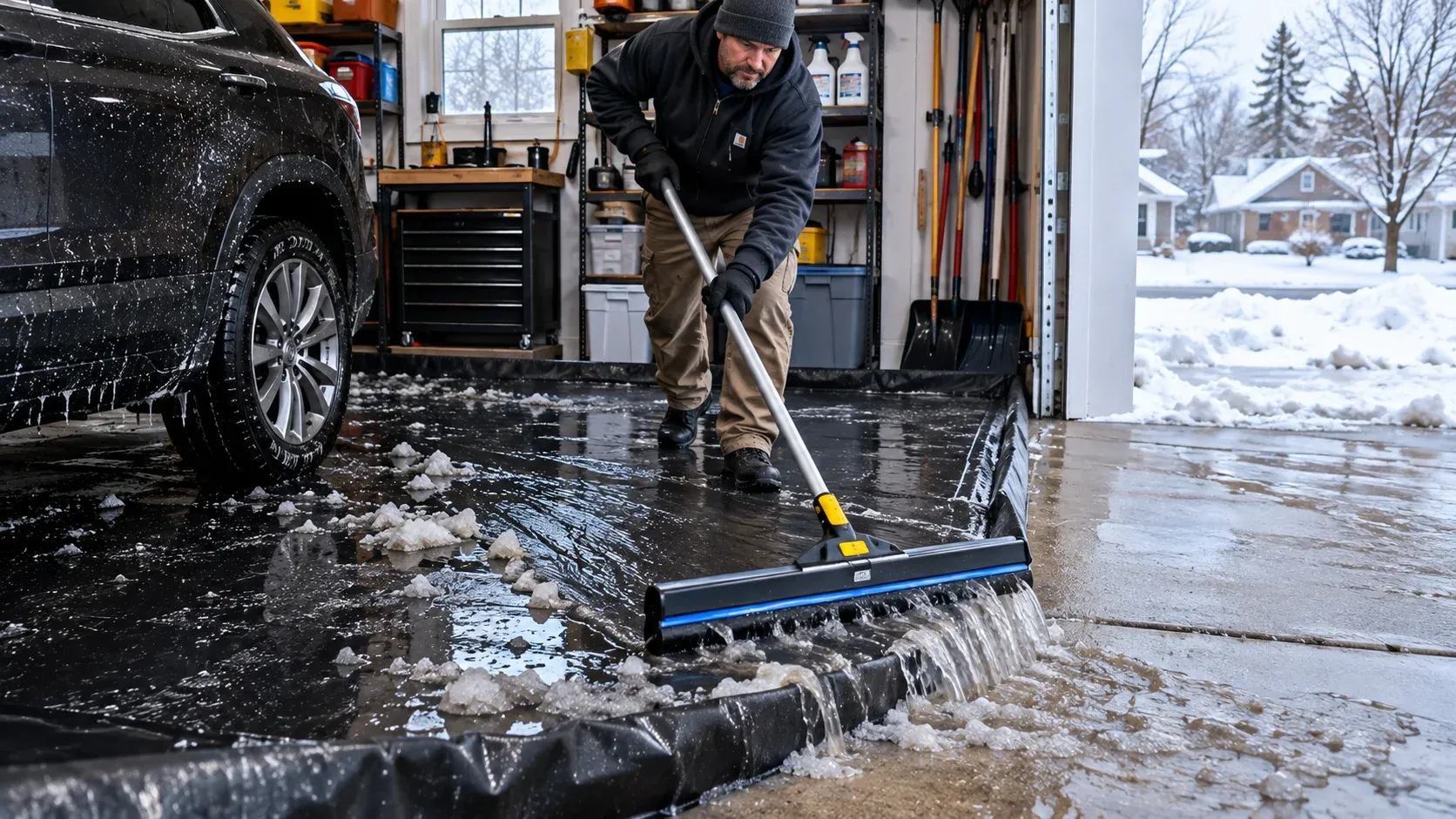
A winter garage: homeowner using a wide 24-inch foam blade floor squeegee smoothly pushing pooled meltwater and slush across a PVC containment mat out through the open garage door onto the driveway, fast clean morning routine.
The 2-Minute Morning Slush Evacuation Routine
Daily morning protocol to push accumulated salt brine and melting snow out of the garage.
Release Door-Side Snap Berms
15 secPop off the two rear plastic snap-on berm pieces closest to the overhead garage door to open the drainage channel.
Deploy Double-Foam Squeegee
15 secTake a 30-inch commercial double-foam rubber blade floor squeegee positioned at the far interior edge of the containment mat.
Sweep Slush Over Apron
60 secPush melted salt sludge and grit in two smooth passes straight forward out across the door threshold apron.
Lock Snap Berms Down
30 secSnap the two heavy-duty plastic berm corners firmly back into place to restore the sealed 60-gallon water basin.
All road salt, mud, and water removed before it can seep under sill plates or wick into garage drywall.
If your driveway slopes backward toward the house, or if your door threshold sits higher than the slab, avoid pushing slush outside. Instead, use a compact wet/dry shop vacuum or an inexpensive utility transfer pump to suck the brine out of the mat corners. You can pump the liquid directly into a shop utility sink or floor drain without creating an outdoor ice rink. If your garage floor drain emits sewer smells during winter, check our guide on eliminating garage floor drain odors.
Products That Survive Tough Winters
A dependable winter floor setup requires three specific components: a heavy-gauge containment mat, a high-volume squeegee, and industrial hold-down tape.
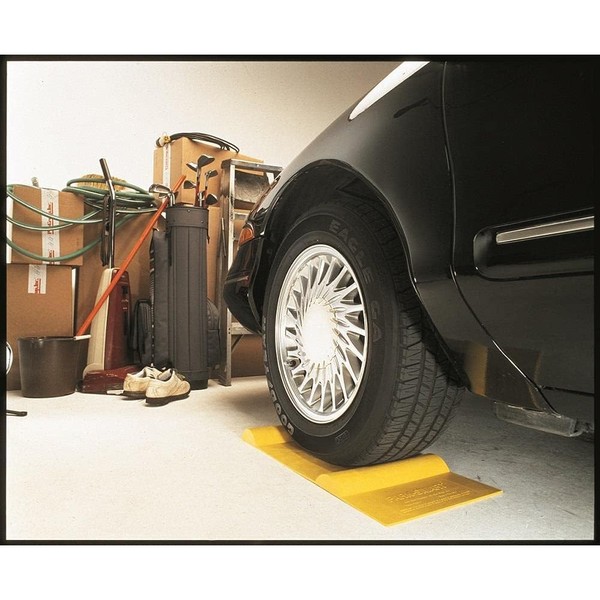
Park Smart Clean Park 50 Mil Heavy Duty Garage Mat
Best For: Homeowners in heavy snow belts who want maximum protection against concrete spalling and salt damage.
- +Thick 50 mil commercial-grade PVC resists punctures from gravel and studded tires
- +Snap-on 1.18-inch raised plastic berms contain up to 60 gallons of snow slush
- +Available in generous sizes (7.5' x 20' and 9' x 22') to fit full-size pickup trucks
- +Prevents salt brine from contacting concrete slab and rotting drywall bottom plates
- -Material arrives rolled stiff and requires warm weights or sun exposure to flatten
- -Requires careful tape placement at front corners to prevent tire curling
The Clean Park 50 mil mat remains the gold standard in the Midwest. The snap-together perimeter edges hold their shape through deep snow cycles, and the PVC vinyl handles heavy SUV curb weights without stretching.

Moss 30-Inch Heavy Duty Double Foam Floor Squeegee
Best For: Quick morning slush removal without tearing vinyl mat surfaces.
- +Dual closed-cell foam blades contour around floor ridges and vinyl wrinkles
- +Wide 30-inch sweep clears a full-size containment mat in four easy passes
- +Resists tears when gliding across grit, sharp gravel, and salty sludge
- -Requires a separate threaded wooden or fiberglass commercial handle
- -Too wide for tight spaces behind workbenches
Never use a stiff single-blade rubber squeegee on a vinyl containment mat. The rigid rubber catches on vinyl creases and skips over dirty puddles. A double-foam closed-cell squeegee conforms to slight floor irregularities, moving liquid brine in clean, single strokes.
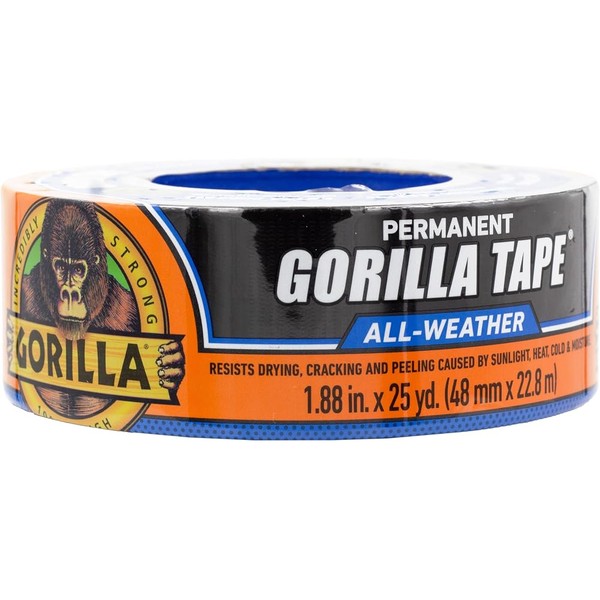
Gorilla Heavy Duty Waterproof Duct Tape
Best For: Anchoring the leading edge and four corners of containment mats.
- +Double-thick adhesive bonds firmly to clean concrete and vinyl underside
- +Waterproof backing resists sub-zero temperatures and freezing runoff
- +Prevents vehicle drive wheels from bunching up the entry edge of the mat
- -Leaves sticky residue on bare concrete that requires mineral spirits to dissolve
- -Must be applied to a completely dry floor to achieve maximum bond
Anchor the Leading Edge Before Parking
The biggest complaint with containment mats is fabric bunching. When you steer your front tires onto a loose mat, tire friction pushes the vinyl forward like a gathered bedsheet.
To eliminate bunching, clean the concrete slab thoroughly with brake cleaner or isopropyl alcohol before winter arrives. Apply four-inch strips of Gorilla Waterproof Tape beneath the four corners of the mat and along the leading drive-on lip. The tape secures the vinyl firmly against the concrete, allowing your vehicle tires to roll smoothly over the berm without dragging the fabric.
To prevent outdoor snowdrifts from blowing under your overhead door and filling your containment mat from the outside, install a heavy-duty rubber threshold seal as detailed in our guide on stopping water coming under garage doors. If winter salt brine has already left your slab soft and chalky, harden the surface using our guide on why your garage concrete never stops dusting.
Keep the salt off your concrete, lock the slush inside a durable barrier, and clear it in two minutes every morning. Your drywall and garage slab will thank you for years to come.

Hank Miller
Hank is a master craftsman and DIY mechanic based in Ohio. He tests workshop equipment, garage floor coatings, and power tools under brutal, real-world workshop conditions, with zero paid brand sponsorships.