Polyaspartic vs Epoxy Clear Topcoat: The Real Reason Garage Floors Turn Yellow

Clear epoxy topcoats turn an ugly yellow brown where sunlight hits the garage door apron. Here is why aliphatic polyaspartic protects decorative flake floors permanently.
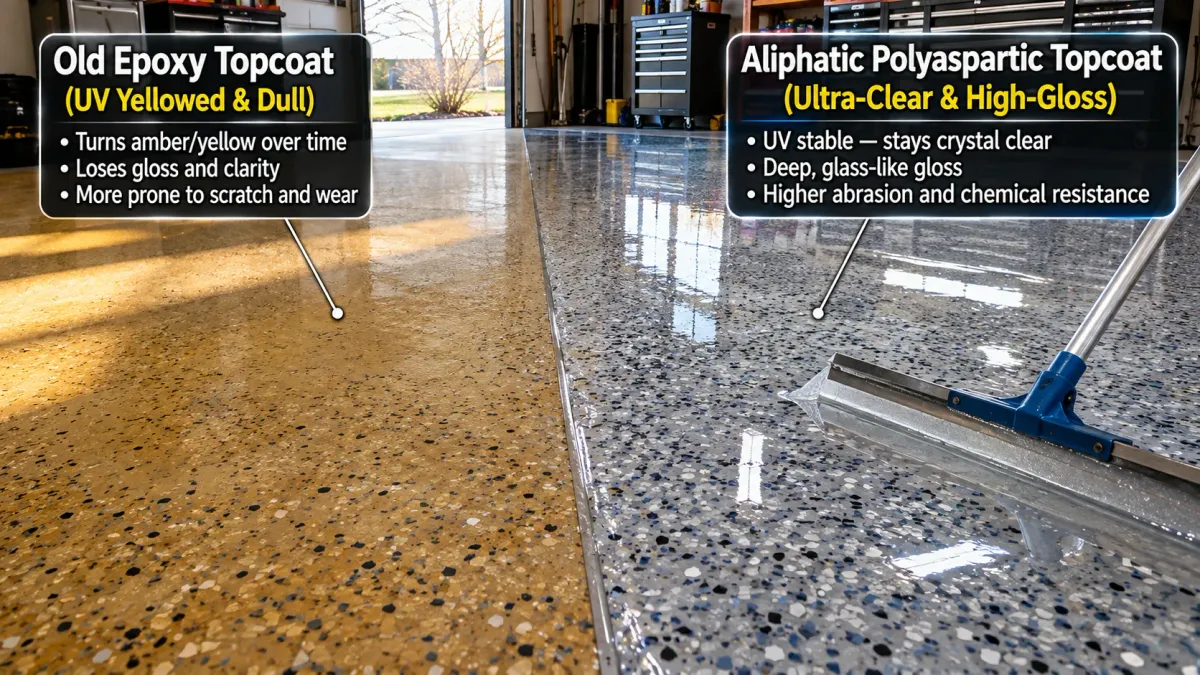
Table of Contents5 Sections
You spend an entire holiday weekend transforming your garage floor. You rent a heavy concrete grinder, vacuum the slab clean, roll down a tinted primer base, and broadcast forty pounds of decorative grey-and-black vinyl chips across the wet resin. Finally, you roll on the clear topcoat included in your box kit.
For the first six months, your garage looks like a high-end auto showroom.
Then summer arrives. You leave your garage door open on sunny afternoons while working on lawn mowers and building shelves. By October, you step back and notice an ugly brown-yellow band stretching across the first two feet of your floor right beneath the door opening. The clear coat inside the dark back corner looks fine, but the sunlit apron looks like yellowed, aged lacquer.
That discoloration is not dirt, and you cannot scrub it out. Your clear coat suffered polymer breakdown from ultraviolet light.
If you want a flawless, high-gloss flake floor that resists sun fade, hot tire marks, and dropped tools, you must understand the chemical differences between aromatic epoxy and aliphatic polyaspartic clear coats.
Chemical Breakdown: Aromatic Epoxy vs. Aliphatic Polyaspartic
According to the Association for Materials Protection and Performance (AMPP) protective coatings standards, aliphatic polyaspartic coatings retain 100% UV stability and flexible elongation, whereas standard aromatic epoxies chalk and turn amber under sunlight.
The word “epoxy” gets tossed around as a catch-all term for garage floor paint. In reality, standard clear epoxies and polyaspartic polyureas belong to completely different chemical families with starkly different physical properties.
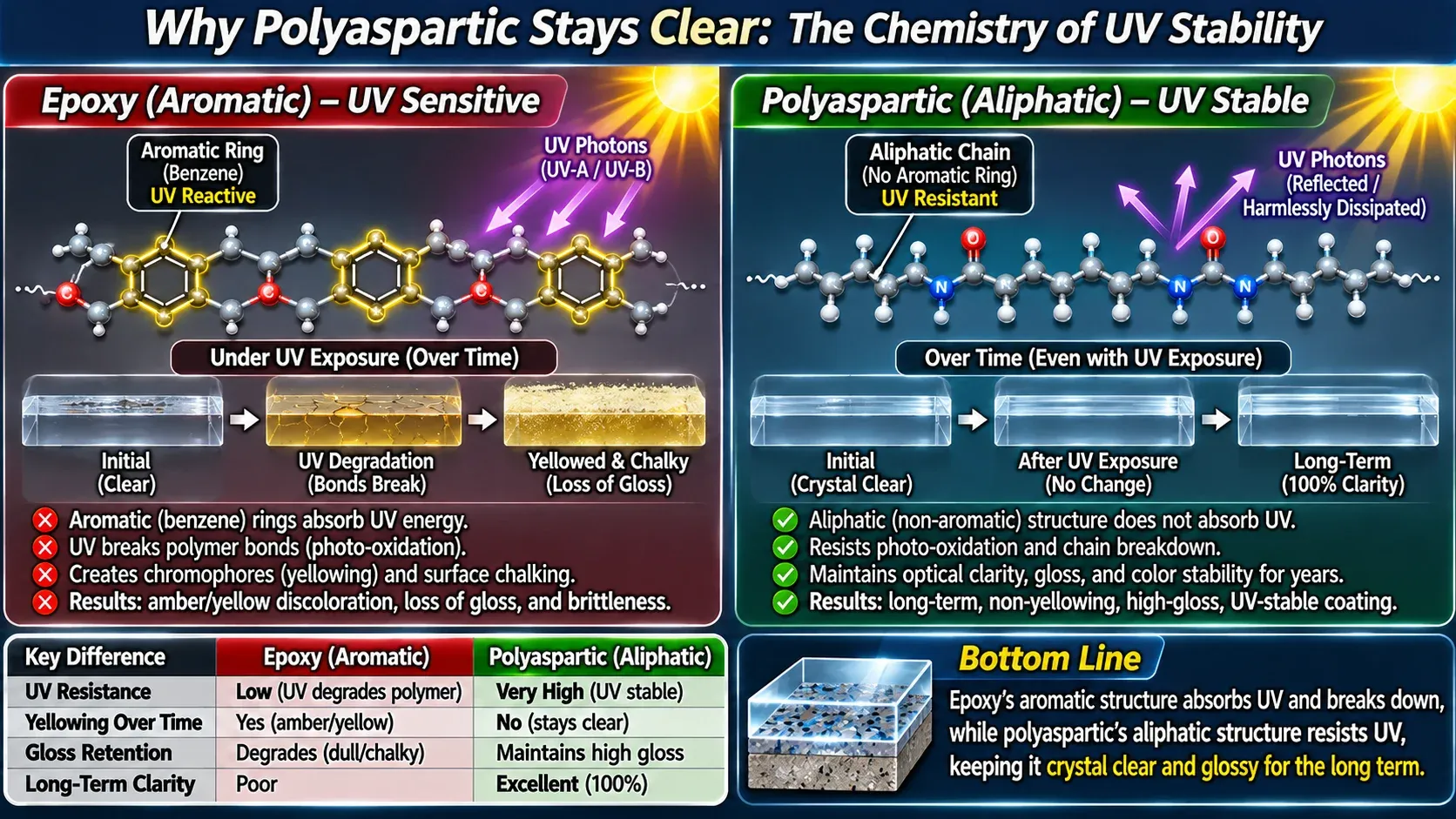
Chemical molecular infographic comparing UV stability of floor coatings, left showing aromatic epoxy polymer chains degrading under sunlight UV photons turning yellow and chalky, right showing aliphatic polyaspartic molecular lattice repelling UV energy maintaining 100% optical clarity, clean scientific visual.
Standard DIY clear epoxies utilize aromatic resin formulations containing benzene rings. When ultraviolet rays from direct sunlight strike aromatic molecular chains, those bonds snap and reform into quinoid light-absorbing structures. Chemists call this process photodegradation or ambering. Even if you never open your garage door to direct sun, UV bounce from bright driveways degrades aromatic epoxy over time.
Aliphatic polyaspartic polyurea utilizes saturated straight-chain aliphatic isocyanates that contain zero aromatic rings. Ultraviolet photons pass straight through the polymer lattice without breaking molecular bonds. An aliphatic topcoat remains optically clear for fifteen to twenty years without yellowing.
Beyond UV stability, polyaspartic delivers an impressive 4H pencil hardness rating. It flexes microscopically under thermal shock while offering nearly four times the abrasion resistance of standard epoxy. When you roll a hydraulic floor jack loaded with a pickup truck across a polyaspartic surface, the steel wheels will not gouge the finish.
The Myth of the “1-Day Polyaspartic Only” Floor
Franchise coating companies aggressively advertise “1-Day Polyaspartic Slabs,” claiming they apply primer, color base, chips, and topcoat in six hours. Homeowners assume that if polyaspartic works great as a clear topcoat, it must be the best material for the primer base coat too.
That assumption leads to expensive failures.
Polyaspartic cures through chemical reaction with ambient humidity. In warm weather, it cures rapidly, often within twenty to thirty minutes. Because it cures so fast, it cannot wet out and penetrate deep into the porous microscopic pores of a concrete slab.
Epoxy, by contrast, cures slowly over twelve to sixteen hours. A low-viscosity, 100% solids epoxy base coat penetrates 1/16-inch to 1/8-inch into prepared concrete capillaries, forming an unbreakable mechanical anchor.
The proven strategy used by industrial coating contractors is the Hybrid System:
- Lay down a slow-curing, 100% solids epoxy primer that grips the concrete substrate.
- Broadcast color flakes to complete rejection (broadcast until the wet epoxy cannot hold any more chips).
- Seal the entire chip bed under a heavy layer of clear aliphatic polyaspartic topcoat.
This hybrid approach gives you maximum concrete adhesion on the bottom and lifetime UV clarity on top. To understand why skipping proper slab preparation causes coatings to fail under driving tires, read our breakdown on why cheap garage epoxy peels under hot tires.
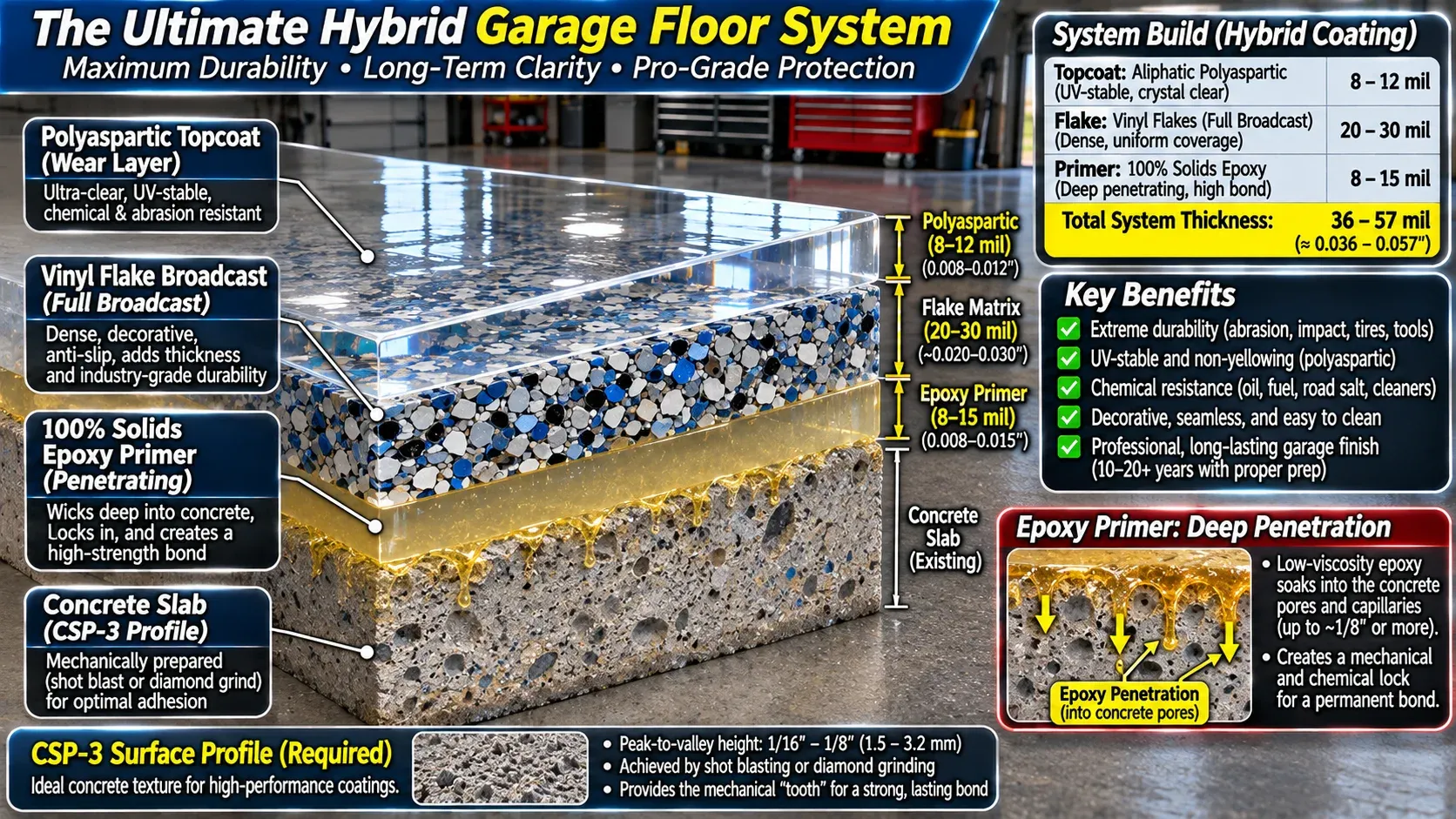
3D architectural cross section diagram of the ultimate hybrid garage floor coating stack: base concrete slab CSP-3 profile, 100% solids epoxy primer penetrating deep into pores, dense broadcast vinyl flake matrix, finished with ultra-durable crystal clear polyaspartic wear layer, labeled mil thickness callouts.
Clear Topcoat Performance Breakdown
UV Sunlight Stability
Hot Tire Pickup Resistance
Scratch & Abrasion Rating
Cure Time to Foot Traffic
Chemical / Brake Fluid Hold
The Slippery Trap: Why Non-Skid Additives Are Mandatory
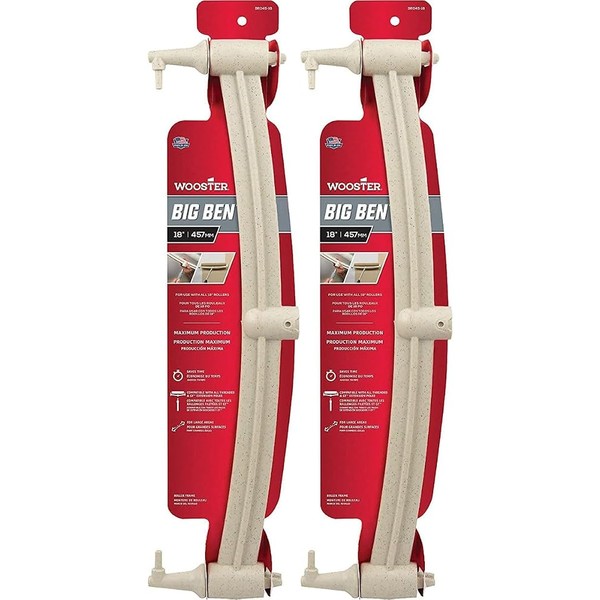
Wooster Brush 18-Inch Epoxy Glide Roller & Heavy-Duty Frame Kit
Best For: Rolling fast-curing polyaspartic coatings evenly without lap marks or lint shedding
Est. Price: $38.50
"Polyaspartic topcoats set up in under 30 minutes; an 18-inch industrial roller lets you back-roll an entire two-car floor before the clear coat begins to skin over."
- +Extra-wide 18-inch roller cuts application time in half, beating polyaspartic pot-life timers
- +Shed-resistant woven fabric prevents loose fibers from embedding in crystal clear topcoats
- +Rigid dual-arm steel frame maintains uniform downward pressure across the entire roller width
- -Demands a heavy-duty threaded extension pole (broom handles will flex and snap)
- -Requires an oversized 18-inch roller tray or 5-gallon paint bucket grid
A freshly cured polyaspartic clear coat cures into an ultra-smooth, glass-like finish. When that surface is bone dry, tennis shoes grip it adequately.
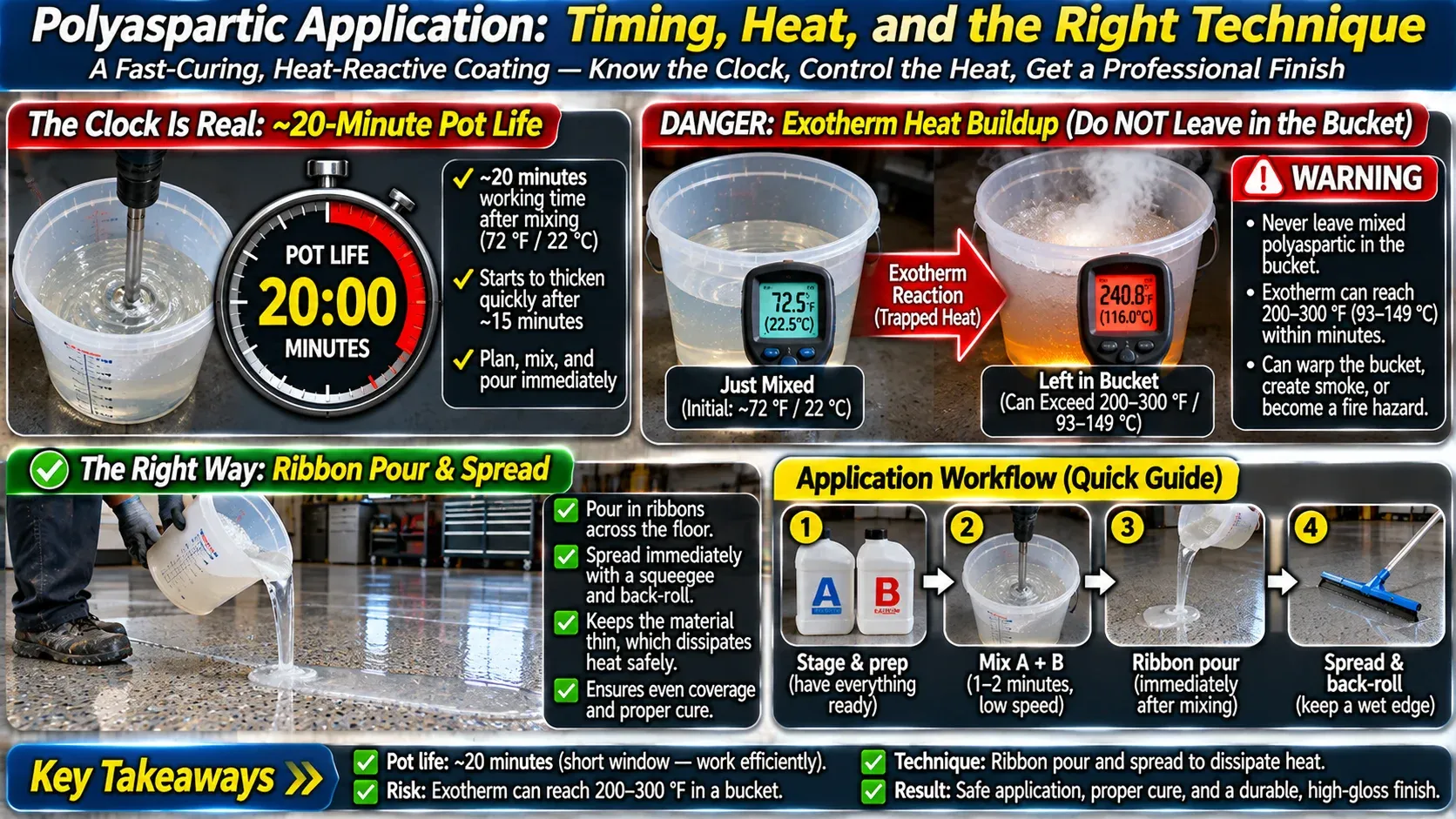
Application technique comparison chart for polyaspartic coatings, countdown clock graphic showing 20-minute working pot life, visual showing dangerous exotherm heat buildup if left in bucket vs correct ribbon pour technique spreading material across floor to dissipate heat, clear warnings.
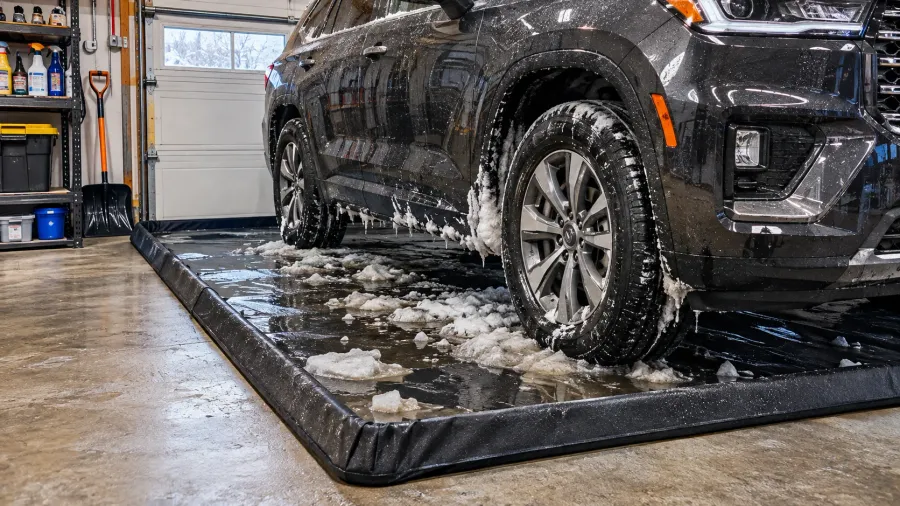
However, the moment you drive a rain-soaked vehicle into the garage, or drag winter snow inside, that glassy surface turns into an ice rink. The coefficient of friction drops close to zero, creating a dangerous slip hazard for your family.
You must incorporate a slip-resistant aggregate into your topcoat application. You have two proven options:
1. Aluminum Oxide (46 to 60 Mesh)
Aluminum oxide is a crushed ceramic mineral second only to diamond in raw hardness. It never breaks down under heavy rubber tire grinding or steel floor jack caster traffic. It provides maximum traction in working automotive shops where oil drips and soapy water hit the floor frequently.
2. Micronized Polymer Beads (SharkGrip)
Micronized polypropylene beads are tiny, translucent plastic spheres that suspend evenly throughout the liquid resin. Because the beads are round and smooth, they provide secure traction without feeling like coarse sandpaper under bare feet or socked feet.
DIY Application Pitfalls: Pot Life and Flash Curing
Applying polyaspartic requires disciplined speed. Unlike paint, polyaspartic is an exothermic, moisture-reactive chemical.
Follow these application rules to ensure success:
- Never Let Resin Sit in the Mixing Bucket: Once you blend Part A and Part B with a low-speed mechanical mixer for two minutes, immediately dump the resin out across the floor in long, ribbon-like stripes. Spreading the liquid across the cool concrete dissipates the exothermic heat and gives you 25 to 30 minutes of workable roller time.
- Work as a Two-Person Team: One person pulls the puddle forward using a flat, professional-grade squeegee to set a uniform wet film thickness of 8 to 10 mils. The second person wears spiked aerator shoes and immediately cross-rolls the material with a 3/8-inch lint-free microfiber roller.
- Control Environmental Humidity: Do not apply polyaspartic when relative humidity exceeds 85% or when temperatures fall below 45°F. Excess ambient humidity can cause moisture blisters or cloudy micro-hazing within the clear film.
Topcoat Products That Deliver Professional Results
To lock in your flake broadcast, use commercial-grade clear resins and proven safety traction media.
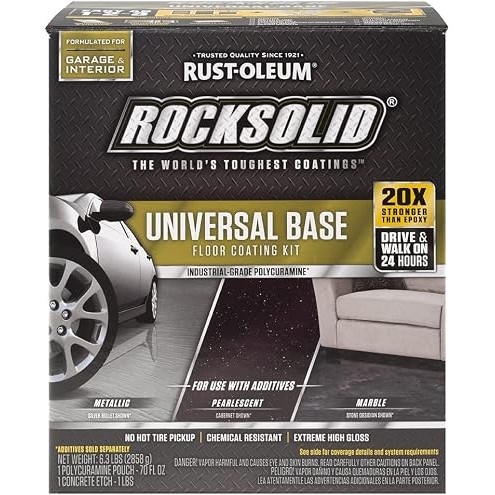
Rust-Oleum RockSolid Polycuramine Clear Top Coat
Best For: DIYers seeking an accessible, retail-packaged polyaspartic-hybrid clear coat.
- +Proprietary polycuramine blend delivers 20x the strength of standard epoxy
- +Impervious to hot tire pickup, motor oil, road salt, and harsh solvents
- +Zero VOC formula produces virtually zero noxious chemical odors during cure
- +Walkable in 8 to 10 hours and open to full vehicle parking in 24 hours
- -Requires fast application; pot life drops quickly on hot summer days
- -Kit coverage estimates are optimistic; order 25% extra for full flake coverage
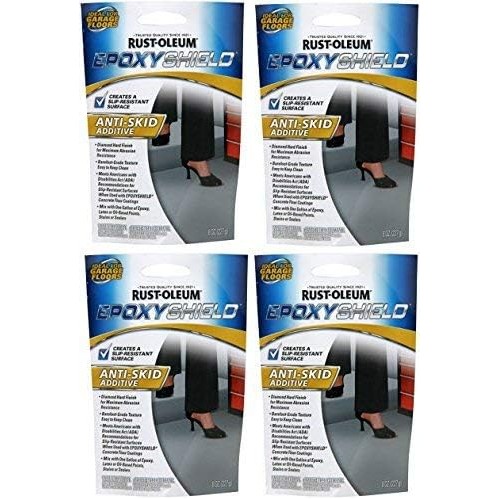
Rust-Oleum Anti-Skid Floor Coating Additive (Aluminum Oxide)
Best For: Working workshops, rainy climates, and winter snow areas requiring maximum traction.
- +Hardened aluminum oxide particles provide aggressive wet slip resistance
- +Does not alter the high-gloss clarity of clear topcoats when properly mixed
- +Withstands continuous vehicle tire turning without stripping away from resin
- -Can catch and pull threads on standard cotton string mops during cleaning
- -Requires constant stirring during application to prevent particles settling
If you want a modern interlocking modular tile floor instead of liquid chemical coatings, check our detailed comparison of Swisstrax versus epoxy coatings. Before locking down your topcoat, ensure you chase and repair all fractures using our guide on how to fix cracks in concrete garage floors before epoxy, and treat unpainted zones as explained in why garage concrete never stops dusting.
Protect your decorative flake investment. Seal your garage slab with an aliphatic polyaspartic topcoat, add proper anti-skid media, and your floor will maintain crystal-clear showroom gloss through decades of tough garage use.
Hank Miller
Hank is a master craftsman and DIY mechanic based in Ohio. He tests workshop equipment, garage floor coatings, and power tools under brutal, real-world workshop conditions, with zero paid brand sponsorships.