The Real-World Truth About Swisstrax: What Influencers Hide (Dirt Underneath & Floor Jacks)

Instagram photos show pristine SwissTrax tiles, but ignore the dried sludge beneath. Learn the realities of under-tile dirt, clacking noise, and floor jack hazards.
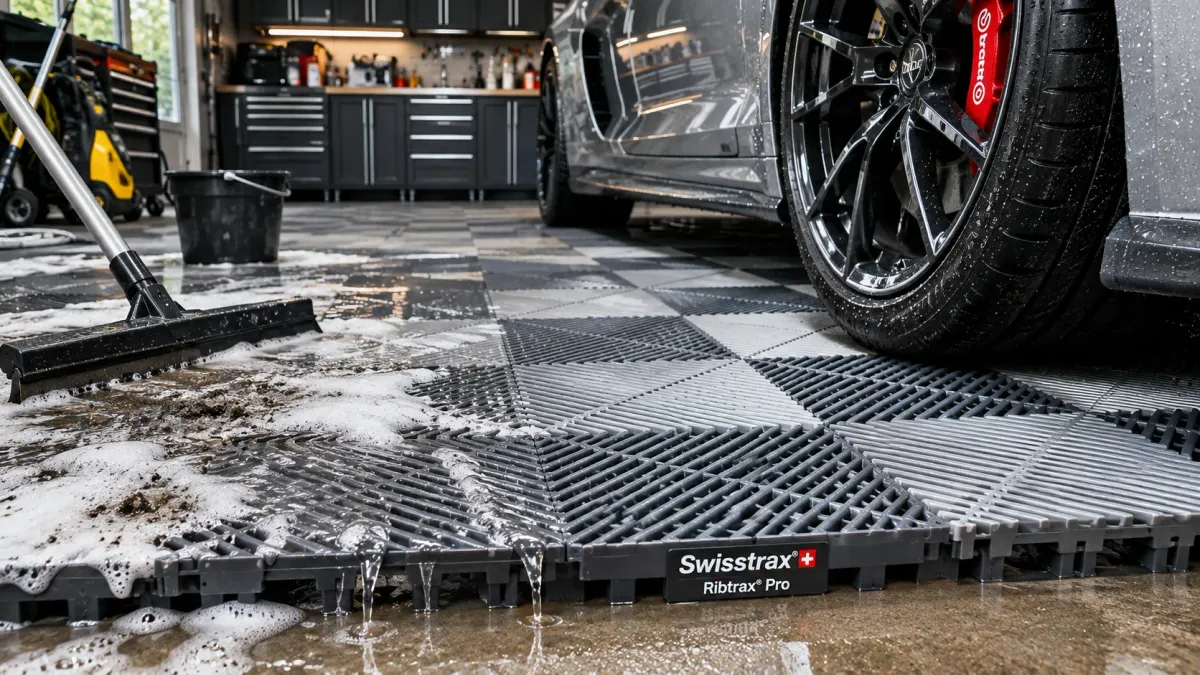
Table of Contents5 Sections
You browse garage transformation channels on social media, admire the checkerboard patterns of vibrant modular polypropylene floor tiles, and imagine your cluttered concrete bay transformed into a clean automotive showroom. You see promotional videos claiming that dirt and water magically disappear through open-profile grid channels, leaving your floor pristine forever.
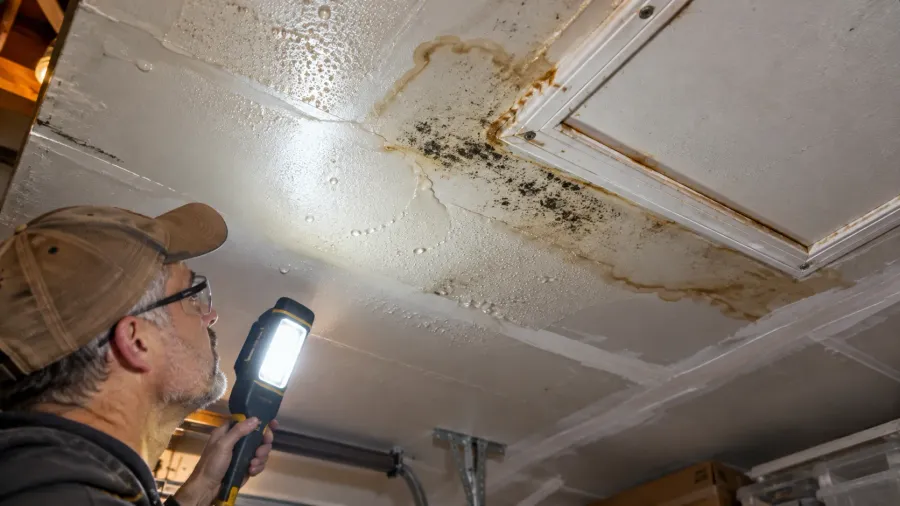
What those pristine marketing videos never show you is what happens eighteen months later when you drop a tiny 10mm socket through the plastic grid, kneel down with a flashlight, and discover two seasons of dried road grime, pulverized autumn leaves, and dried dog hair caked directly onto the concrete underneath.
I installed, abused, and disassembled modular plastic flooring systems across commercial fleet bays and residential home shops for years. In this guide, I share what Swisstrax Ribtrax tiles genuinely do well, expose the three major functional trade-offs that online influencers hide, and give you the mechanical rules for safely using hydraulic floor jacks on open plastic grids.
What Swisstrax Gets Right (Why It Beats Cheap Epoxy)
Manufactured from virgin polypropylene tested under ASTM D638 standard test method for tensile properties of plastics, these modular tiles withstand over 60,000 pounds of rollover weight without cracking or crushing.
Before dissecting the drawbacks, let us acknowledge the core engineering strengths that make modular open-ribbed tiles like Swisstrax Ribtrax Pro wildly popular among residential garage owners.
First, modular tiles are 100 percent immune to ground moisture failures. If your concrete slab suffers from vapor transmission or cold sweating, paint and epoxy coatings will blister, lift, and peel under hot tires within six months.
Plastic tiles do not bond to the concrete; they float freely on interlocking mechanical clips. Moisture vapor transpires freely through the open grid channels and evaporates into the air without damaging the tile structure.
Second, installation requires zero toxic chemicals, commercial diamond floor grinders, or acid-etching solutions. Two people with a rubber mallet and a jigsaw can transform a standard two-car garage slab in four hours.
Third, the open self-draining ribs elevate your footwear above liquid slush. Snow, winter road brine, and rainwater drip off vehicle fenders straight through the 0.75-inch tall ribs, allowing your shoes to stay completely clean and dry while walking across the floor.
Garage Flooring Showdown: Open Ribbed Tiles vs. Solid Tiles vs. Solid Epoxy
Comparing sub-surface cleaning demands, jack stand safety, moisture tolerance, and install labor.
Open-Ribbed Tiles (Swisstrax Ribtrax Pro)
Garages parked wet in winter or slabs with severe moisture issues
- 100% immune to moisture peeling and hot tire pickup
- Traps fine dirt underneath that requires periodic leaf-blower flushing
Solid Interlocking PVC Tiles (RaceDeck / Tuff-Tile)
Clean woodworking shops and assembly areas with no standing slush
- Hoses clean and allows rolling small wheeled creepers smoothly
- Can trap standing water beneath tiles if unsealed perimeter edges leak
Professional Multi-Coat Epoxy/Polyaspartic
Dry, sound slabs where homeowners demand easy dust mopping
- 100% seamless liquid barrier with zero sub-floor cleaning ever
- Demands intensive diamond grinding and fails on wet sweating slabs
Gripe #1: The “Out of Sight” Dirt Trap Underneath
The central marketing pitch of ribbed modular tiles claims that dirt falls through the floor and out of sight. That statement is technically true, but dirt does not vanish into thin air.
Fine winter sand, salt crystals, lawn clippings, and pet fur fall through the grid channels and accumulate on top of the bare concrete slab beneath. Over time, melting vehicle slush mixes with this fine silt, creating a layer of dried mud that adheres to the concrete.
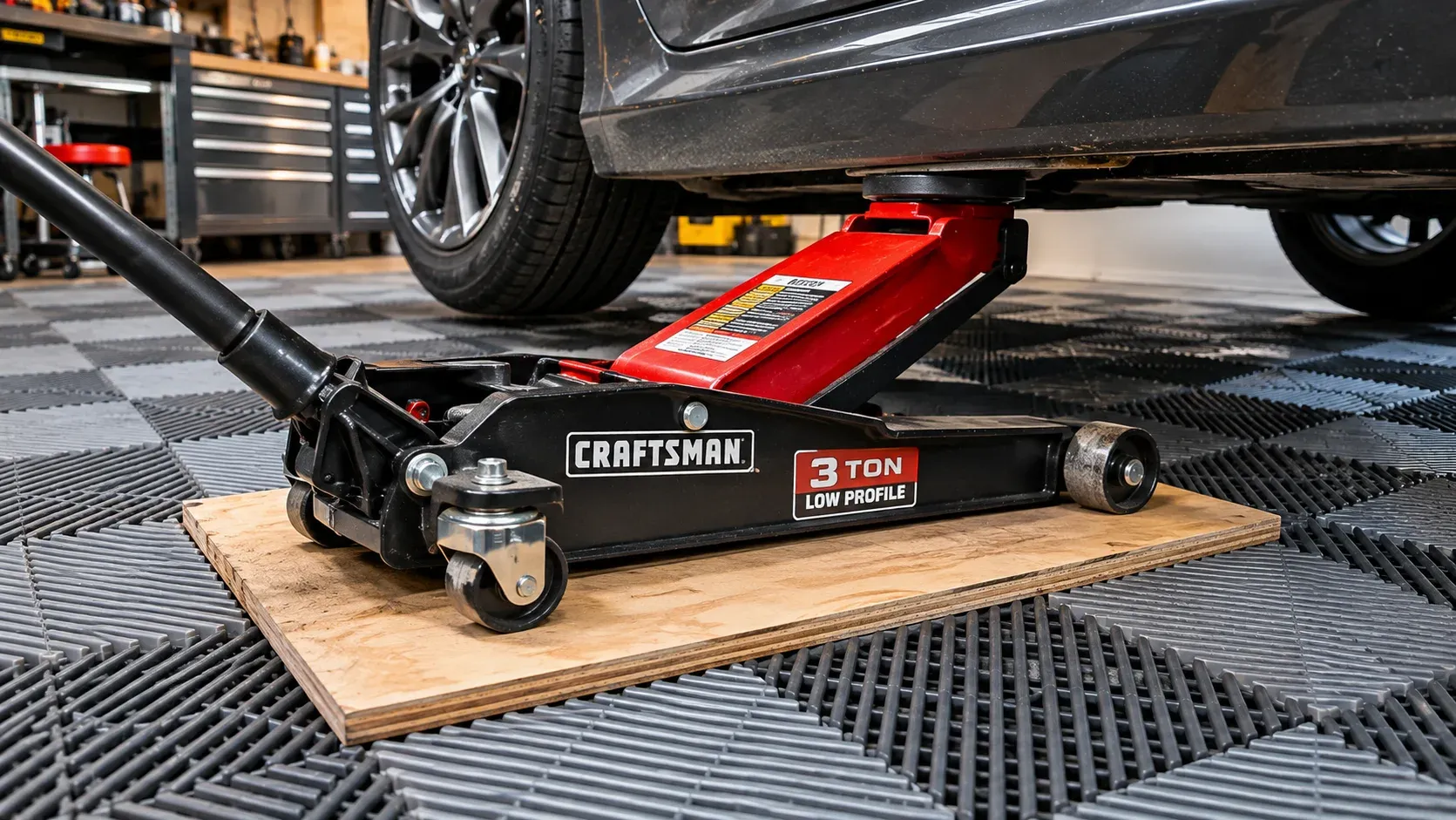
Safety demonstration photo on a Swisstrax garage floor, heavy hydraulic floor jack resting on a 1/2-inch plywood distribution board protecting the polypropylene ribs from point-load damage while lifting a vehicle, clear instructional workshop visual.
If you spill transmission fluid, engine oil, or sugary soda through the grid, the puddle sits directly on the porous concrete below the plastic tiles. You cannot clean oil spots with a rag through three-quarter-inch plastic ribs.
To manage under-tile dirt buildup, execute this maintenance protocol:
- Weekly: Run a heavy-duty shop vacuum equipped with a wide floor brush across the tile surface to pull loose grit out of the top half of the grid channels.
- Monthly: Open the main overhead garage door completely, grab a high-velocity battery-powered leaf blower, and direct a 120-mph blast of air down through the grid channels, working from the back wall toward the driveway. The airflow pushes dry silt along the bottom drainage channels and blows it out into the yard.
- Annually: Use a specialized plastic dismantling tool to pop up four-by-four tile sections in the primary tire lanes, scrub the bare concrete with floor degreaser, hose it clean, let it dry, and snap the tile sections back in place.
Gripe #2: The Floor Jack and Jack Stand Hazard
Whenever you lift a vehicle over modular tiles, never place steel feet directly on the plastic ribs. Read my field review on never getting under a car without double-locking jack stands to see why solid 3/4-inch plywood spreader pads are mandatory under lift points.
If you perform routine vehicle maintenance, you must understand a critical mechanical limitation of open-ribbed polypropylene flooring.
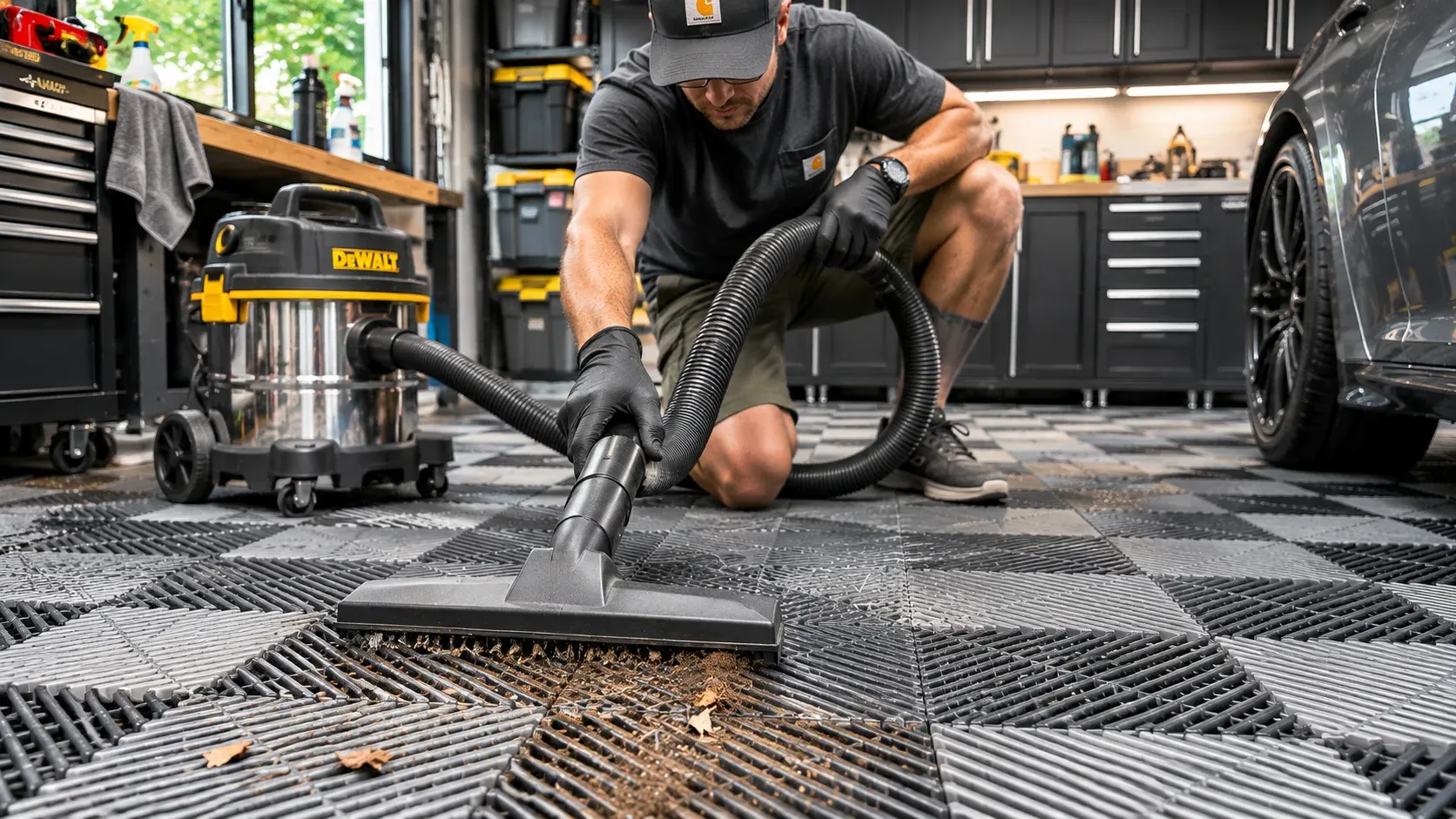
A homeowner cleaning a Swisstrax ribbed modular garage floor, using a wide wet/dry shop vacuum nozzle directly over the tile surface easily extracting trapped debris and dried mud from the sub-channel floor, well-lit modern garage setting.
When a hydraulic floor jack lifts an SUV off the ground, the jack arm swings in an upward arc. Because the lifting pad moves laterally as it rises, the steel caster wheels of the floor jack must roll forward along the floor to keep the lifting pad centered under the vehicle jacking point.
The open grid openings of Swisstrax tiles can trap small steel jack wheels. If the jack wheels catch on a plastic rib and cannot roll forward, the lifting pad begins to tilt, exerting severe side-loading forces that can kick the jack out from under the car.
Furthermore, heavy steel jack stands with narrow stamped-metal feet concentrate several thousand pounds of vehicle weight onto a tiny contact patch. That extreme pressure can bend or crack the polypropylene grid ribs.
Always slide a smooth, rigid slip sheet beneath your hydraulic floor jack and jack stands. A two-foot by three-foot piece of half-inch plywood, thick aluminum plate, or dense Coroplast sheet distributes vehicle weight safely and allows jack wheels to roll forward freely during lifting cycles.
Gripe #3: The Noise and “Barefoot Torture”
Rigid polypropylene tiles expand and contract significantly as ambient garage temperatures swing between hot summer afternoons and freezing winter nights.
When you walk across bare plastic tiles laid directly over an uneven concrete slab in hard-soled work boots, the hard plastic taps against the concrete, producing an annoying hollow clacking sound. You can eliminate this noise completely by rolling out a layer of heavy woven landscape underlayment fabric over the bare concrete before clicking the tiles together. The fabric cushions the bottom ribs and silences footsteps.
Finally, open-ribbed tiles are strictly designed for footwear. Walking barefoot or in thin socks across hard, three-quarter-inch plastic ridges is painful on the soles of your feet, and dropping tiny washers or screws requires fishing them out with a magnetic wand.
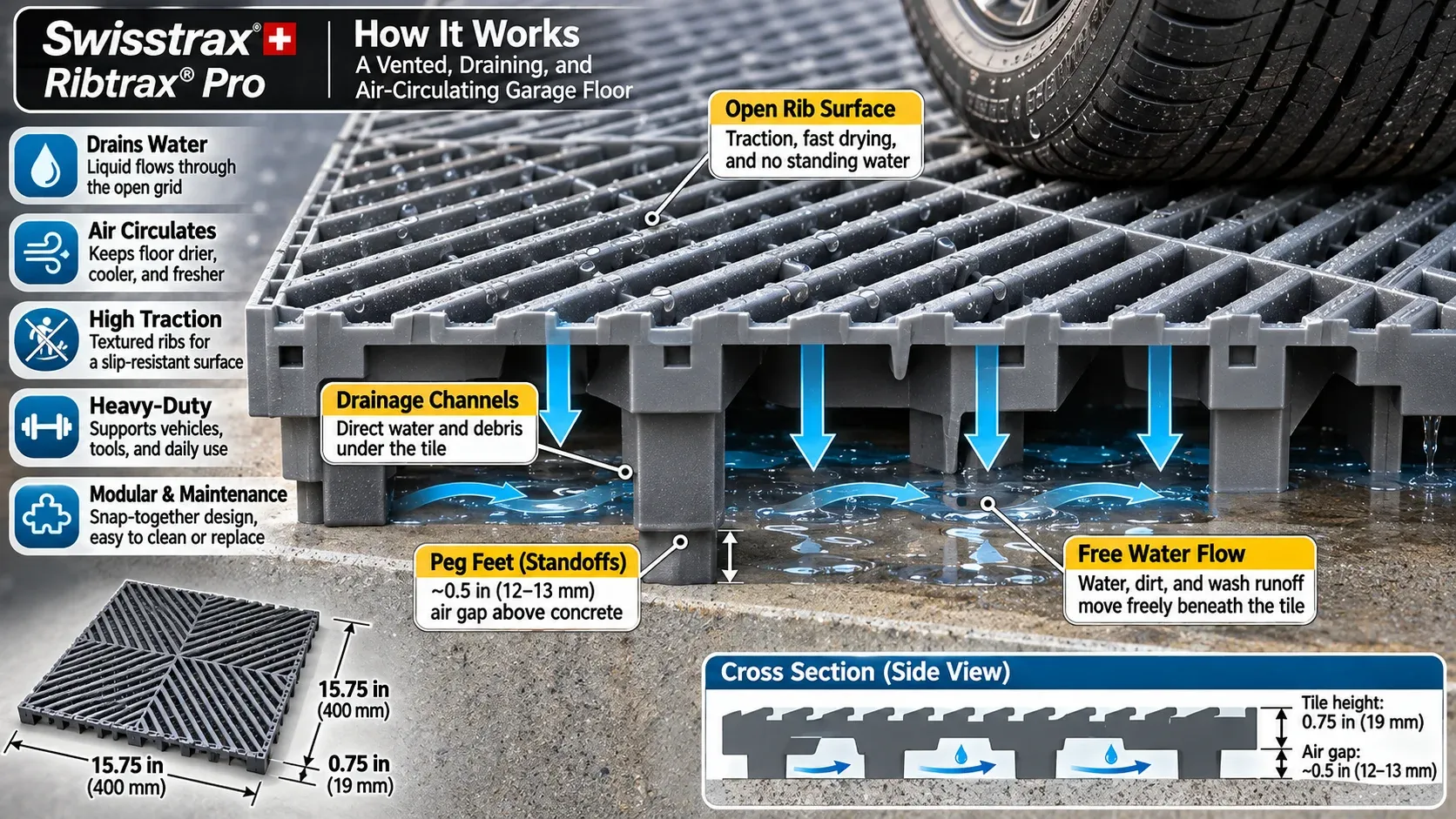
3D technical cross section illustration of Swisstrax Ribtrax modular tile, showing open top rib grid, underneath drainage channels and peg feet creating an air gap over concrete slab, dirty water draining freely beneath while surface remains dry, clean labeled callouts.
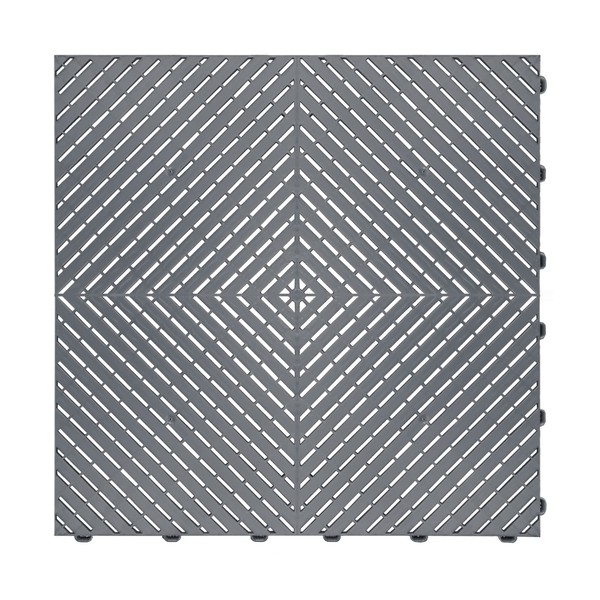
Swisstrax Ribtrax Pro Interlocking Garage Floor Tiles (15.75x15.75 in)
Best For: Garages with high winter snow melt or moisture-prone slabs
Est. Price: $4.25 - $4.75 per sq.ft
"The highest-quality open-rib modular tile on the market, completely solving moisture peeling problems if you respect its mechanical quirks."
- +0.75-inch thick open-profile design channels liquids safely beneath shoes
- +Extreme 70,000-pound rollover capacity handles heavy trucks and toolboxes
- +Thermal expansion joints accommodate large temperature swings without buckling
- -Requires high-velocity leaf blower to purge accumulated dirt from underneath
- -Demands plywood slip plates when lifting vehicles with hydraulic floor jacks
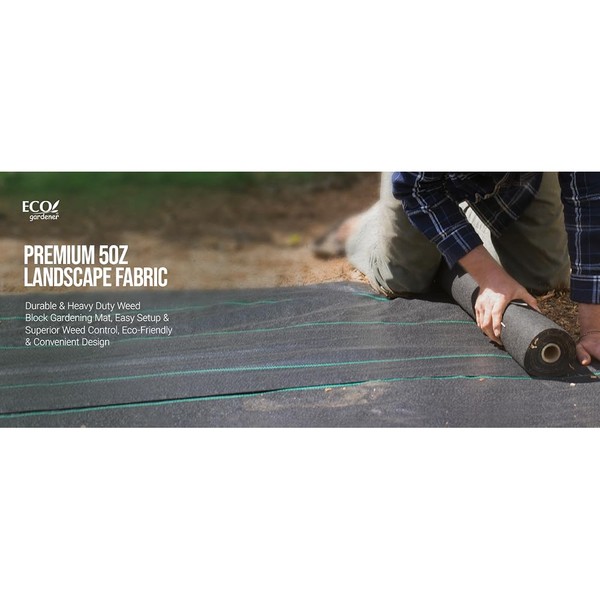
ECOgardener Premium Heavy-Duty Landscape Underlayment Fabric
Best For: Silencing plastic tile clatter over concrete slabs
Est. Price: $28 - $38 (per roll)
"A thirty-dollar acoustic underlayment upgrade that transforms noisy plastic garage tiles into a quiet, solid walking surface."
- +Dampens hollow plastic clacking noise when walking across modular tiles
- +Permeable non-woven needle-punched fabric allows water to drain freely
- +Provides a clean black barrier that obscures gray concrete beneath tiles
- -Requires rolling out and cutting to room perimeter before installing tiles
- -Should not be used on wet slabs without verifying mold resistance
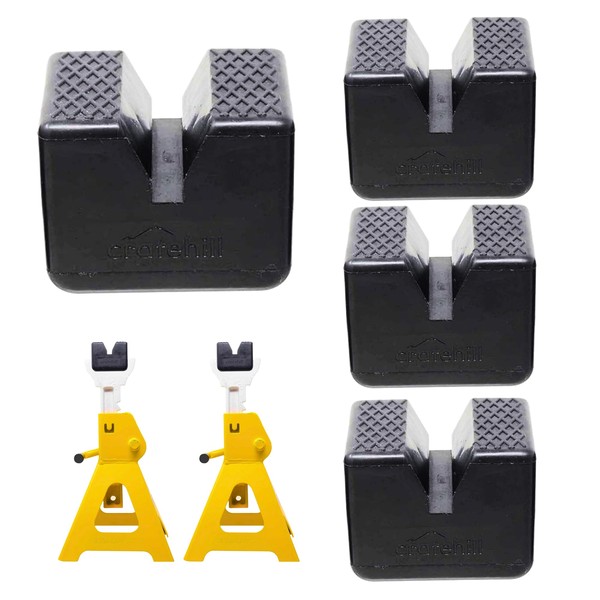
Universal Heavy-Duty Rubber Jack Stand Pads (4-Pack)
Best For: Protecting plastic tiles from sharp jack stand feet
Est. Price: $16 - $22
"An inexpensive safety accessory that prevents metal jack stand edges from gouging your modular garage flooring investment."
- +Dense molded vulcanized rubber cushions sharp metal stand bases
- +Distributes multi-ton vehicle loads across a broader surface footprint
- +Prevents stamped steel feet from digging into or cracking plastic tile ribs
- -Adds roughly half an inch to minimum jack stand collapsed height
- -Must be inspected periodically for rubber tearing under heavy loads
Preparing Your Concrete Before Laying Tiles
Although Swisstrax tiles hide ugly stained concrete from sight, you should still prepare your underlying slab properly before clicking tiles into place.
Extract old petroleum puddles so trapped oils do not produce foul odors beneath your tiles by following our guide on how to pull deep oil stains out of concrete.
If your slab suffers from deep jagged cracks that create uneven ridges across your floor, level them out first using the diamond chasing technique in our guide on how to fix cracks in a concrete garage floor before coating.

Hank Miller
Hank is a master craftsman and DIY mechanic based in Ohio. He tests workshop equipment, garage floor coatings, and power tools under brutal, real-world workshop conditions, with zero paid brand sponsorships.