How to Install a Utility Sink in an Unheated Garage (Without Bursting Pipes in Winter)

Adding running water to an unheated garage makes cleanup effortless, but freezing winters can burst rigid pipes. Here is how to install a freeze-proof PEX-A sink system.
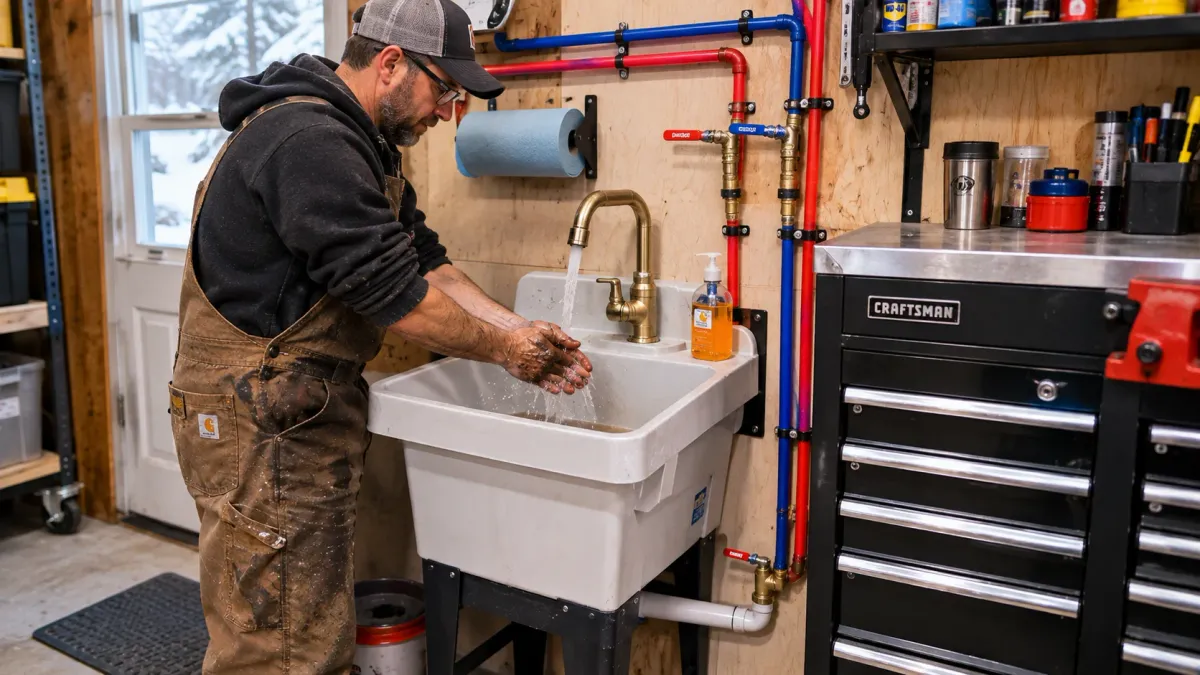
Table of Contents6 Sections
You finish changing gear oil in your rear differential on a cold Saturday afternoon. Your knuckles are raw, and your forearms are coated in black, sulfur-scented grease. You step up to your garage door, use your elbow to turn the knob, and walk into the house.
You tiptoe across clean kitchen tile, trying not to touch the walls. You reach the powder room and try to wash your hands, but thick grease transfers onto the chrome lever and stains the white porcelain basin. Your spouse walks in five seconds later, and the conversation goes downhill fast.
Every serious workshop needs a deep utility sink right next to the tool bench. However, if you pipe your garage wash station with rigid copper or standard glued PVC in an unheated space, your first sub-zero winter freeze will burst those lines and flood your shop floor.
Here is how to design a freeze-proof workshop sink using expansion PEX, frost-free valves, and proper drainage.
The 40,000 PSI Reality: How Ice Destroys Rigid Pipes
Cross-linked polyethylene tested to ASTM F876 standard specification for crosslinked polyethylene (PEX) tubing expands elastically when interior water freezes, preventing the explosive longitudinal bursts common to rigid copper and PVC.
Water expands roughly nine percent by volume when it transitions from liquid to solid ice. When that phase change occurs inside a sealed metal or rigid plastic pipe, the trapped expanding ice generates up to 40,000 PSI of internal hydrostatic pressure.
Standard Type M or Type L rigid copper tubing ruptures at roughly 3,000 to 4,000 PSI. Rigid PVC pipe shatters even faster when temperatures drop below freezing because cold plastic becomes extremely brittle.
Crucially, pipes rarely split at the exact location of the ice blockage. As an ice plug grows inward from an exterior wall, it acts like a hydraulic piston. It pushes trapped liquid water downstream against a closed faucet valve. The resulting hydrostatic spike splits the pipe wall or blows the faucet cartridge apart. When daytime temperatures climb back above 32°F, that ice plug melts, unleashing hundreds of gallons of pressurized water into your workspace.
PEX-A vs. PEX-B: The Critical Expansion Difference
Plumbers install three primary classes of cross-linked polyethylene tubing: PEX-A, PEX-B, and PEX-C. For an unheated outbuilding or detached garage, you must understand the mechanical distinction between PEX-A and PEX-B.
PEX-B tubing utilizes mechanical copper crimp rings or stainless steel pinch clamps over barbed fittings. Under extreme freeze cycles, the ice expansion stretches the brass insert fittings and distorts the crimp ring. When the ice thaws, the tubing stays loose, causing joint failure.
PEX-A manufactured via the Engel method features superior molecular cross-linking. It exhibits true thermal shape memory. When water freezes inside PEX-A, the pipe expands smoothly like a balloon to accommodate the ice core. Once temperatures rise, the material contracts back to its factory diameter without losing burst strength. Always specify PEX-A tubing with cold-expansion fittings for unheated garage runs.
Where Does the Wastewater Go?
Keep your sink splash zone away from vehicle entry doors. If exterior water seepage already plagues your garage floor, address the problem first using my guide on how to stop water coming under your garage door before installing drainage fixtures.
Supplying clean water to a utility sink is straightforward. Disposing of dirty sink drainage requires planning if your garage slab lacks an underground gravity sewer stub.
Garage Sink Drain Options Comparison
Existing In-Slab Gravity Drain
Above-Floor Utility Drain Pump
Outdoor French Drain / Dry Well
If your garage has an existing floor drain connected to your residential sewer line, tap into that branch with standard 1-1/2 inch schedule 40 PVC and a cleanable P-trap. Ensure that you maintain the trap seal as discussed in our garage floor drain odor guide.
If your garage slab sits below your home’s main sewer elevation and lacks in-slab plumbing, install an automatic utility sink drain pump. These compact systems feature a sealed collection basin that mounts directly beneath the sink tailpiece. When wastewater enters the reservoir, an internal mechanical float activates a 1/3-horsepower pump, pushing wastewater up overhead through a 1-1/4 inch discharge pipe into the house sewer main.
The Frost-Free Sillcock and Stop-and-Waste Setup
The most dependable defense against winter plumbing damage combines a long-stem frost-free valve with an indoor isolation point.
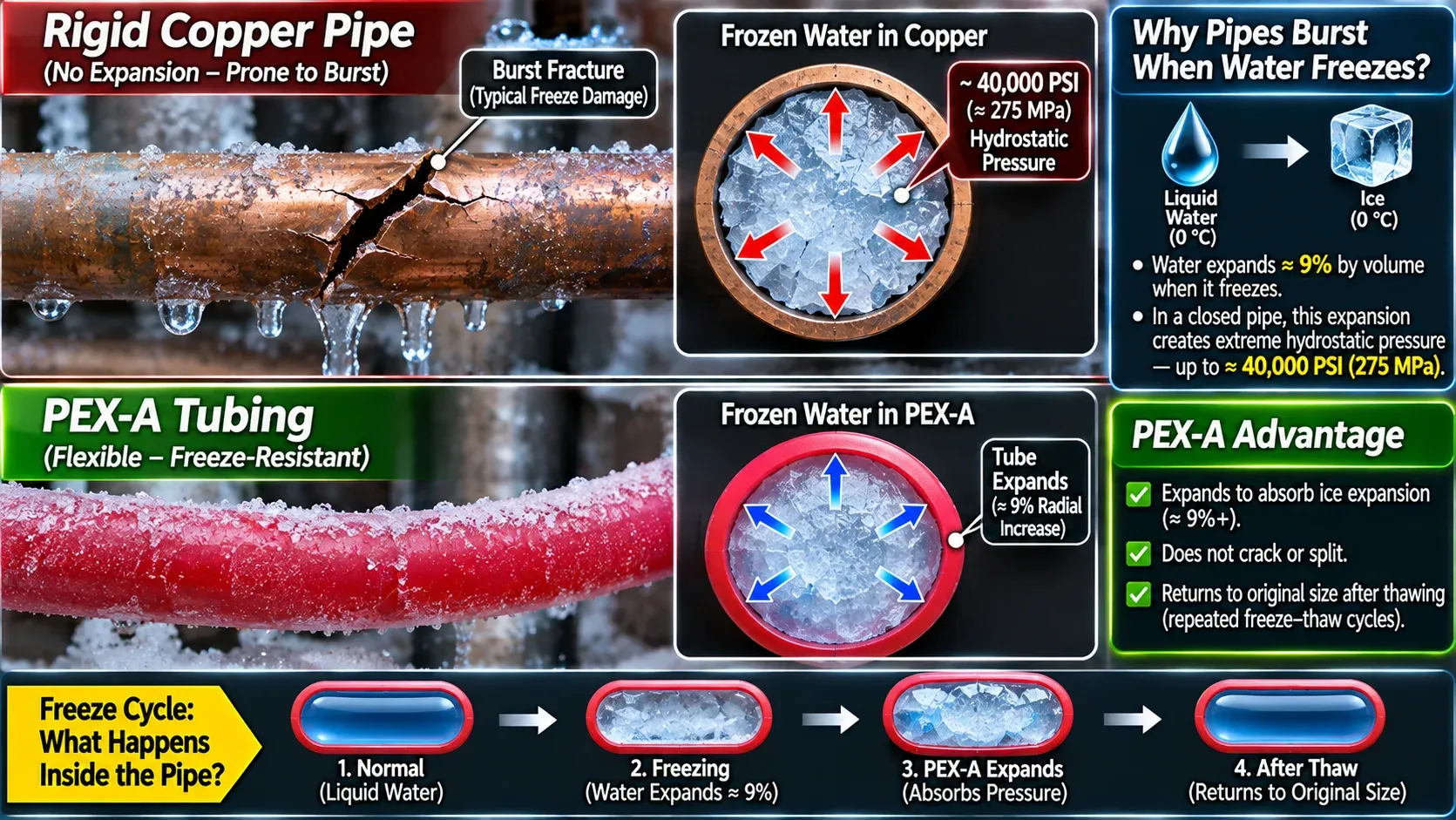
Technical scientific comparison diagram showing freeze damage in residential water pipes, top showing rigid copper pipe bursting with jagged fracture under 40,000 PSI hydrostatic ice blockage pressure, bottom showing flexible PEX-A tubing expanding radially without splitting and recovering original shape, clean educational graphics.
1. The 12-Inch Frost-Free Sillcock
Never mount a conventional brass hose bibb or faucet valve directly to an unheated garage wall. Use a 12-inch or 14-inch frost-free sillcock (such as a Woodford Model 17).
The operating handle sits inside your garage, but the physical shutoff valve seat resides at the opposite end of a twelve-inch copper stem. That valve seat sits deep within the insulated, heated wall envelope of your house. When you shut off the faucet, all residual water drains out of the long barrel, leaving zero liquid in the freezing zone.
2. Indoor Stop-and-Waste Ball Valve
Inside your heated basement or utility closet, install a dedicated quarter-turn ball valve equipped with a brass drain cap (stop-and-waste valve).
When the weather forecast calls for an extended polar vortex with temperatures dipping below 0°F, you can winterize your garage sink in sixty seconds:
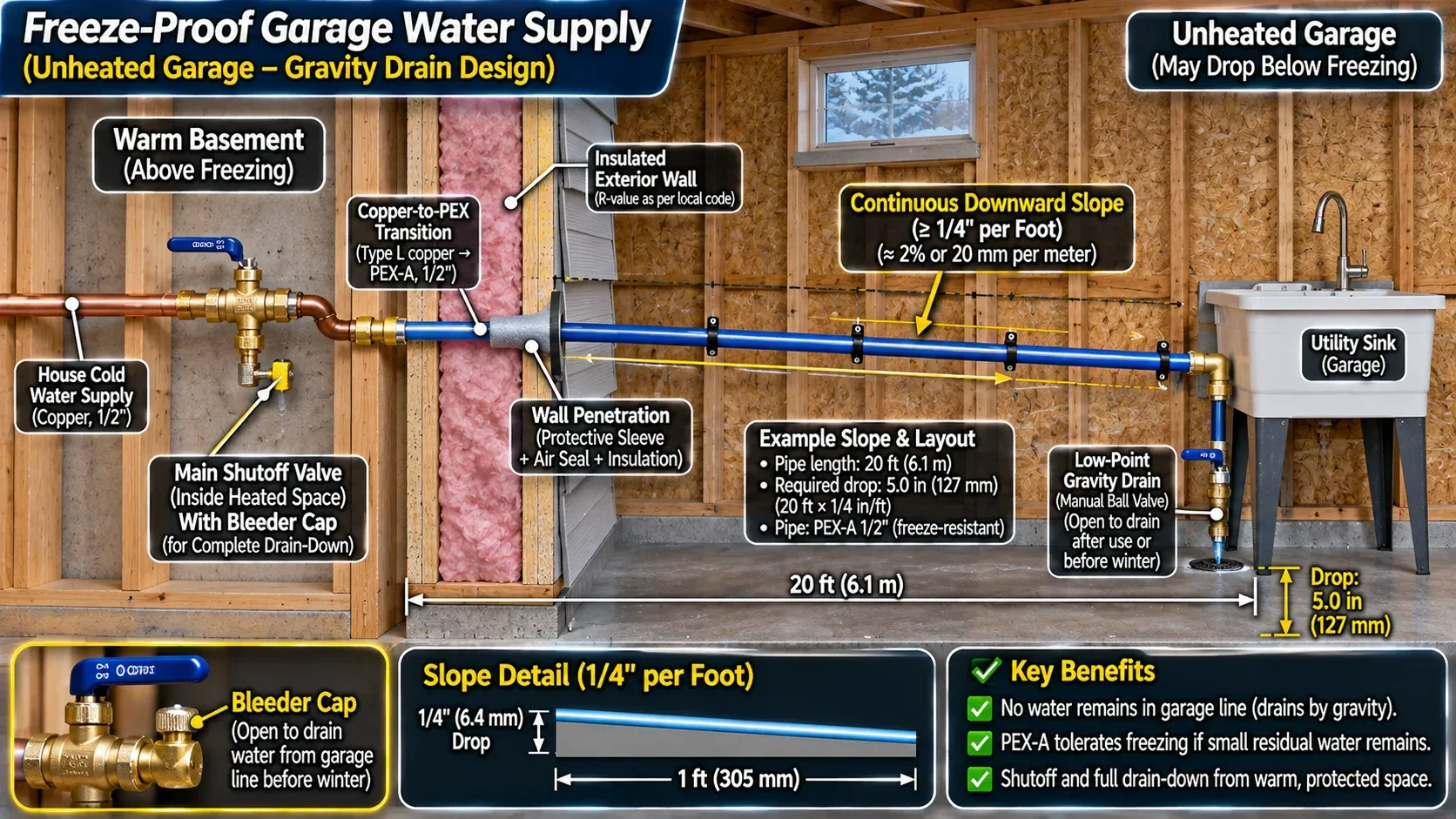
Architectural plumbing schematic of a freeze-proof unheated garage water supply, showing interior warm basement shutoff valve with bleeder cap, copper-to-PEX transition penetrating exterior insulated wall, continuous 1/4-inch per foot downward slope towards garage sink low-point gravity drain, clean CAD layout.
- Close the indoor supply ball valve.
- Open the sink faucet in the garage completely.
- Unscrew the small thumb-screw waste cap on the indoor valve body.
- Catch the cup of drainage water in a small bucket.
- All water in the supply line drains dry by gravity, leaving an empty pipe that cannot freeze.
Equipment That Survives a Tough Workshop
Do not install a delicate, shallow stamped-stainless kitchen sink in your workshop. You need a rugged thermoplastic basin, flexible PEX-A lines, and a commercial-grade frost-proof valve.
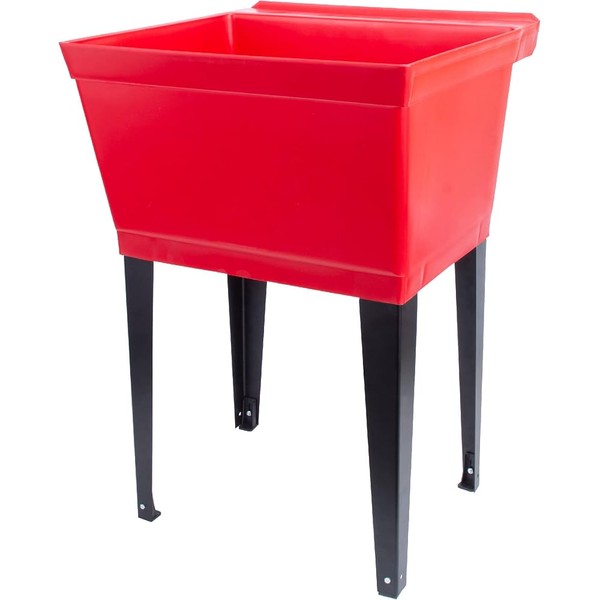
JS Jackson Supplies 19-Gallon Thermoplastic Utility Sink
Best For: Home workshops that need a rugged, deep wash station for greasy tools and muddy boots.
- +Heavy-duty thermoplastic polypropylene basin resists impacts, grease, and chemicals
- +Deep 14-inch basin prevents water splashing when scrubbing large automotive parts
- +Sturdy steel legs with adjustable leveling feet anchor firmly to uneven concrete
- +Includes pull-out chrome sprayer faucet with dual stream and spray functions
- -Plastic sink body flexes slightly under heavy metal motor assemblies
- -Supplied plastic drain tailpiece should be upgraded to Schedule 40 PVC
Thermoplastic utility sinks shrug off dropped wrenches, strong degreasers, and caustic soaps that would stain porcelain or dent thin-gauge sheet metal. The deep fourteen-inch basin lets you soak a transmission pan or wash five-gallon shop buckets without splashing water onto your floor.

Uponor ProPEX PEX-A White Tubing 1/2-Inch x 100-Ft
Best For: Plumbing water lines through unheated garages, crawlspaces, and outbuildings.
- +Superior thermal shape memory expands during freezing without structural wall failure
- +Exceptional flexibility cuts down on ninety-degree elbow fittings and joint friction
- +Engineered for cold-expansion ProPEX sleeve connections that never restrict flow
- -Requires a dedicated manual or cordless PEX expansion tool for installation
- -Must be shielded from direct UV sunlight exposure inside the workshop
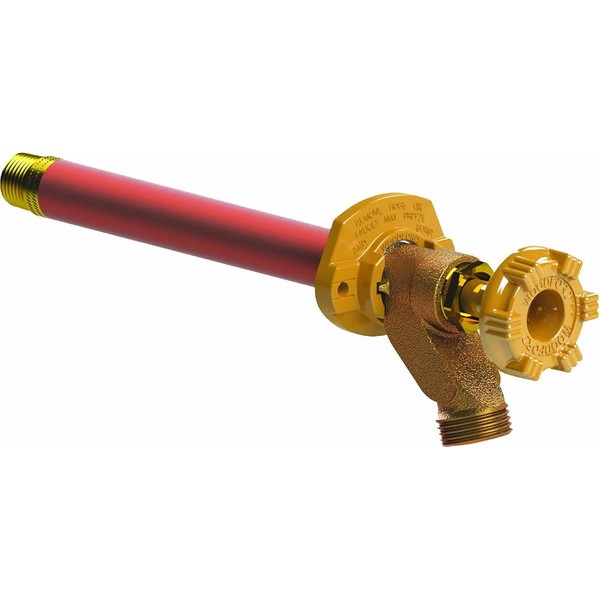
Woodford Model 17 Freezeless 12-Inch Wall Hydrant
Best For: The primary freeze-proof water supply connection to your unheated workshop wash station.
- +Placing the valve seat 12 inches deep inside warm interior framing prevents freeze damage
- +Anti-siphon atmospheric vacuum breaker prevents backflow contamination
- +Heavy forged brass body and stainless steel seat washer ensure decades of leak-free service
- -Must be pitched downward toward the garage to allow full gravity drainage
- -Requires drilling an 1-1/8 inch hole through exterior or partition wall framing
Winterization Routine: 3 Steps for Sub-Zero Weather
When winter sets in, follow this three-step seasonal routine to keep your garage sink safe:
- Shut Supply Valve: Shut the indoor supply valve and open the drain port to clear supply lines.
- Drain Faucets: Open faucet valves fully and disconnect garden hoses from threaded spigots.
- Add Antifreeze: Pour non-toxic RV plumbing antifreeze into the trap and utility pump sump.
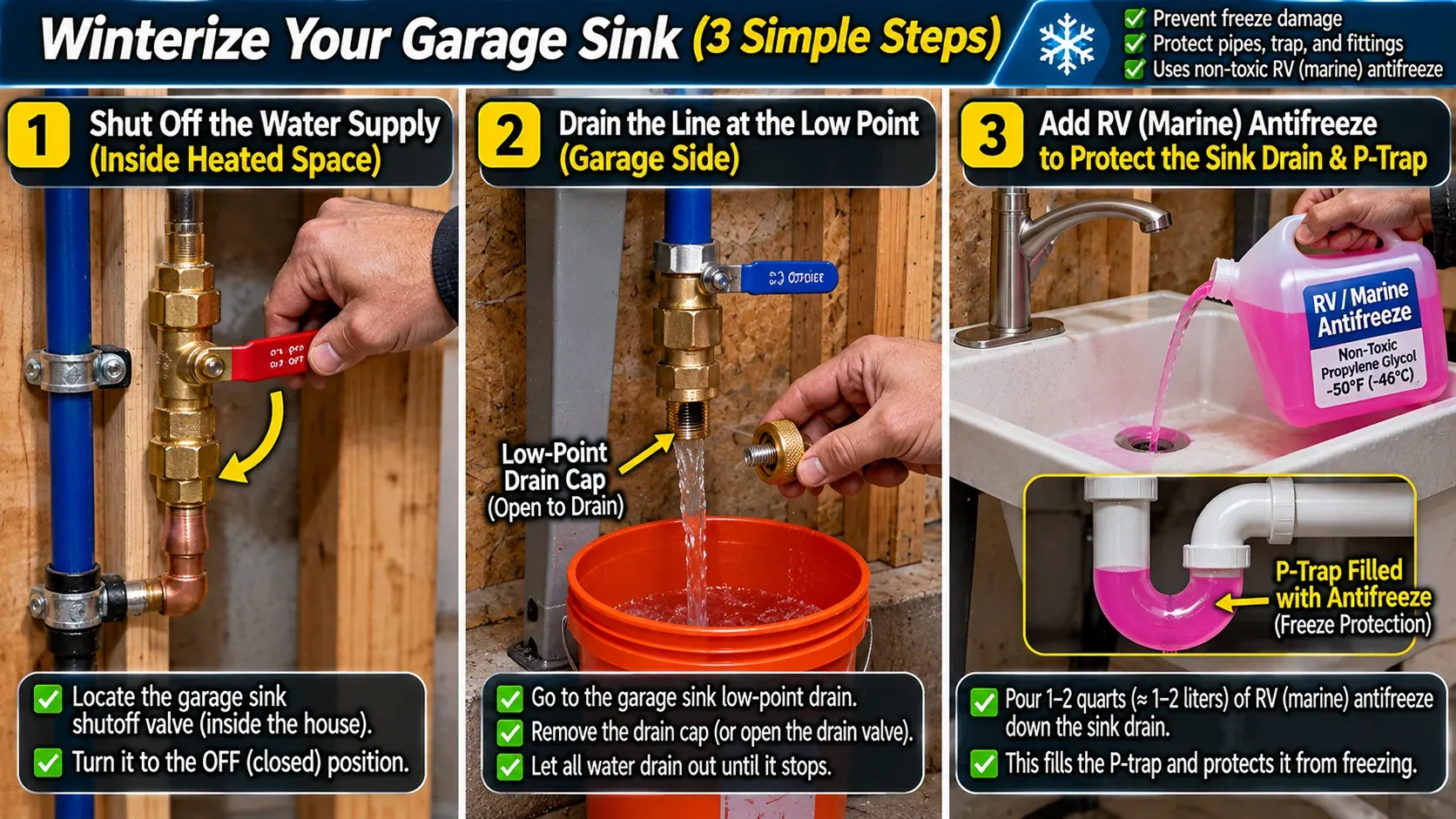
Three-panel step-by-step winterization photo guide for garage sink: panel 1 turning interior brass shutoff valve, panel 2 opening low-point drain cap draining water into a bucket, panel 3 pouring pink RV non-toxic marine antifreeze down sink drain into plastic P-trap, clear instructional sequence.
Never pour toxic automotive ethylene glycol coolant down your sink drain. Standard RV/Marine antifreeze is non-toxic, biodegradable, and displaces standing water inside the plastic P-trap so that ice does not crack the slip-joint nuts.
Position your sink basin right along your workflow path, adjacent to your main workstation. If you need a rock-solid, vibration-free work surface to pair with your wash station, follow our design steps in building a wobble-free garage workbench.
Take the time to install PEX-A tubing, pitch your lines for gravity drainage, and install a quality frost-free valve. You will enjoy effortless cleanup after every dirty repair job without dreading winter freeze damage.

Hank Miller
Hank is a master craftsman and DIY mechanic based in Ohio. He tests workshop equipment, garage floor coatings, and power tools under brutal, real-world workshop conditions, with zero paid brand sponsorships.