How to Stop Garage Floor Sweating in Winter: The 24-Hour Diagnostic Test & Fix That Actually Works

Stepped into your garage and almost wiped out on a slick concrete slab? Here is how to diagnose the moisture source and stop your floor from turning into an ice rink.
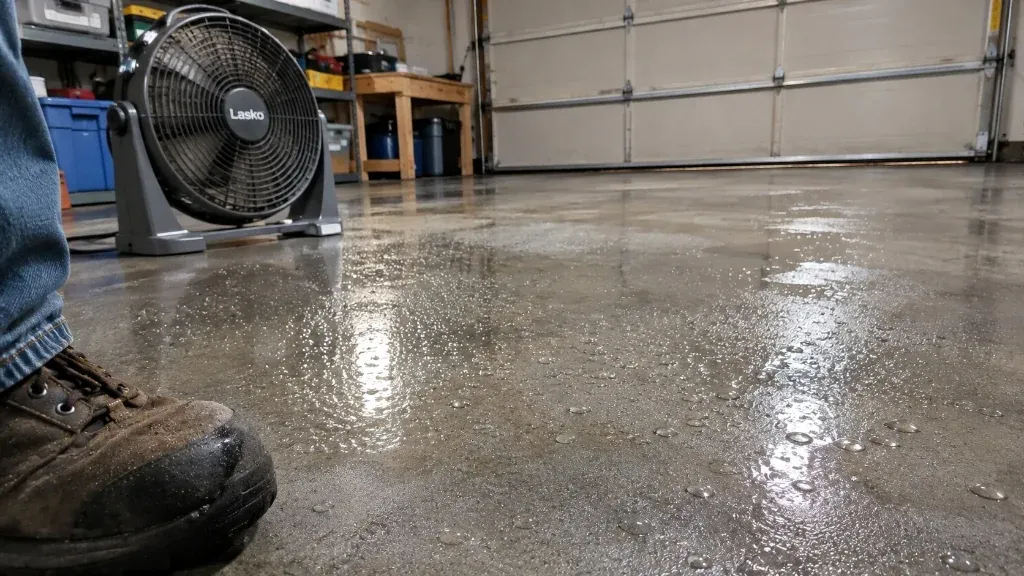
Table of Contents4 Sections
During a sudden January thaw in Ohio, outdoor temperatures jumped from 25 degrees up into the 50s overnight, and I stepped into my shop only to have my boots slide right out from under me. The overhead door had remained shut all night, yet the concrete slab looked like someone hosed it down with soapy water.
In the trades, we call this phenomenon Sweating Slab Syndrome. That slimy moisture layer ruins bottom cardboard storage boxes, rusts the kick panels on steel tool chests, and turns your workspace into an orthopedic liability.
Before you spend $300 on a portable dehumidifier or roll floor paint over damp concrete, stop right there. You must identify whether that water condenses out of warm humid air or pushes up from sub-surface soil moisture, because treating the wrong moisture source wastes serious money.
Quick-Decision Matrix: Matching the Fix to Your Diagnosis
Compare root causes, equipment trade-offs, and estimated costs at a glance.
High-Velocity Pivoting Floor Fan
Condensation spikes during quick warm fronts
- Breaks boundary layer air immediately
- Dries damp slab in 30 minutes
- Loud on high speed
- Moves air but does not extract moisture from room
Low-Temperature Commercial Dehumidifier
Sealed workshops with wood projects and precision cast iron tools
- Auto-defrost prevents frozen coils down to 41°F
- Pumps water outdoors
- High electric draw
- Requires closed garage envelope with insulated doors
Vented Ribbed Interlocking Tiles
Older slabs missing sub-slab plastic vapor barriers
- Suspends foot traffic 1/2-inch above damp concrete
- Lets moisture evaporate
- Debris drops into ribs
- Requires periodic shop-vac cleanouts
The Physics Behind Sweating Slabs: Why Concrete Turns into an Ice Rink
The American Concrete Institute (ACI 302.2R Guide for Concrete Slabs that Receive Moisture-Sensitive Flooring) explains that when warm, moist air meets a cold concrete mass whose temperature sits below the dew point, instant surface condensation occurs.
A concrete slab acts as an enormous thermal battery that absorbs ground temperatures. When deep soil stays at 38 degrees through February, hundreds of cubic feet of solid concrete remain frozen long after outside ambient air warms up.
When warm, humid air drafts into a cold garage through unsealed door seals or open doors, that air hits the cold slab. Because cold air holds far less moisture than warm air, the air layer directly touching the concrete drops below its dew point.
Water vapor immediately transforms into liquid droplets right at the floor level. This boundary layer condensation creates that treacherous, oily sheen across the surface.
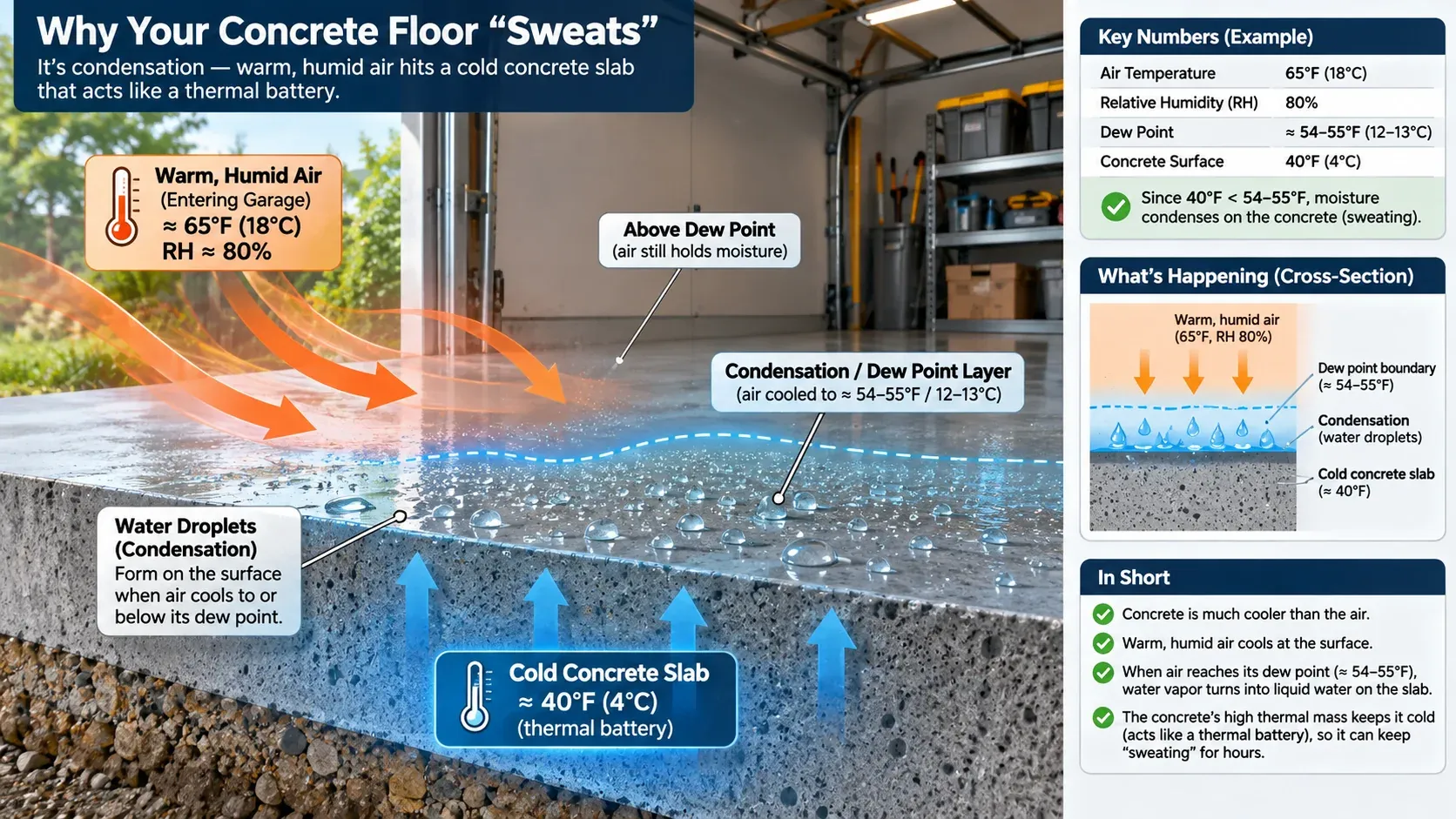
Warm, humid winter air drafts over a cold concrete slab acting as a thermal battery, triggering surface condensation at the dew point boundary layer.
Leaving moisture on your shop floor causes three expensive problems:
- Rusted tool cabinet bases: Moisture wicks into heavy steel cabinet bottoms, bubbling powder coats and rusting out leveling feet within two seasons.
- Mold colonies under stored items: Cardboard storage boxes and wood pallets act like sponges, breeding black mold against the wet slab.
- Severe slip hazards: Wet concrete exhibits an extremely low friction coefficient, making normal rubber work soles slip as if you hit black ice.
Opening your garage doors to “dry it out” on a warm, muggy winter afternoon actually worsens the problem. You pull thousands of cubic feet of moist outdoor air straight across a cold thermal mass, speeding up condensation rather than clearing it.
The 24-Hour Moisture Diagnostic Matrix
Run the 50-cent test below, peel back the cover, and match your slab condition.
Water droplets cling to the TOP of the foil; concrete underneath stays completely dry
Water pools on the BOTTOM of the foil; dark damp concrete underneath
Water appears on BOTH sides of the foil, or entire slab remains slick
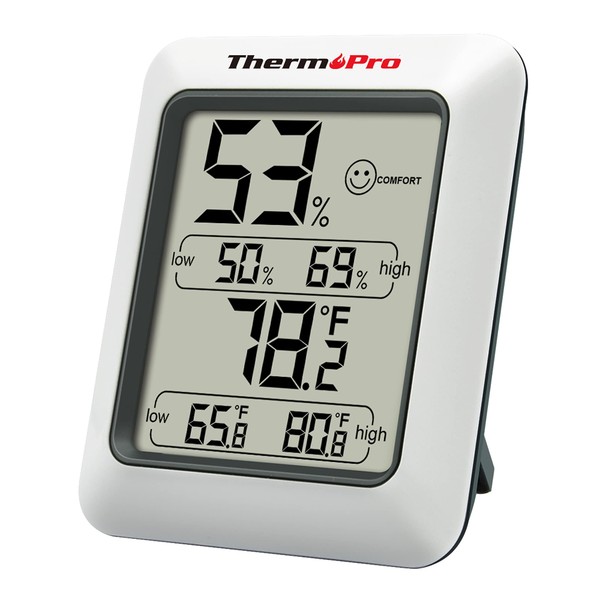
ThermoPro TP50 Digital Indoor Hygrometer and Room Thermometer
Best For: Tracking garage dew point and relative humidity shifts before condensation forms
Est. Price: $11.99
"You cannot combat sweating slab syndrome blindly; this inexpensive gauge tells you exactly when the concrete temperature drops below the air dew point."
- +High-precision humidity and temperature readings update every 10 seconds
- +Displays historical daily high and low comfort records at a glance
- +Magnetic back mounts instantly to steel toolboxes or garage door tracks
- -Screen lacks a backlight for dark shop corners
- -Uses a single AAA battery that needs annual replacement
Step 1: The 50-Cent 24-Hour Foil Test (Find the Source)
Do not buy equipment until you verify where the moisture originates. You need a roll of aluminum foil or heavy clear polyethylene plastic, plus a roll of aggressive duct tape.
- Locate a bare patch of concrete: Pick a section of floor that regularly gets slick during seasonal weather shifts.
- Dry the test zone: Wipe a two-foot square patch with clean shop rags and run a heat gun over it for 30 seconds to strip surface dampness.
- Tear a 16x16 inch square: Cut a clean square of heavy-duty aluminum foil or 6-mil poly plastic.
- Tape all four edges airtight: Press duct tape firmly around all four borders. You must create an airtight seal against the slab so outside room air cannot slip underneath.
- Wait 24 hours: Keep your garage doors closed and leave the patch alone through a full day-night temperature cycle.
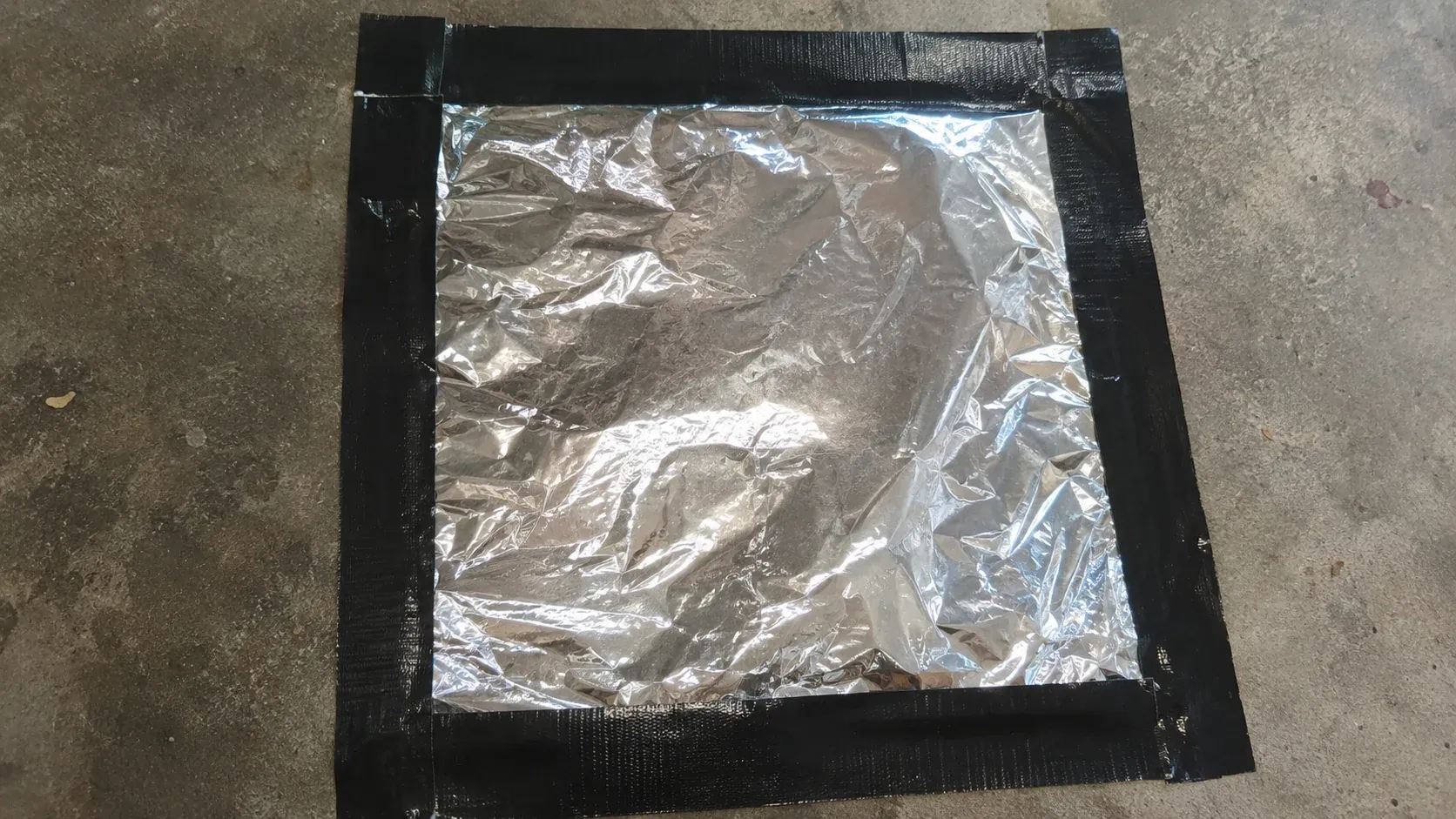
Heavy-duty aluminum foil sealed airtight on all four edges with black duct tape to isolate slab vapor drive from ambient air condensation.
Peel the tape back after 24 hours and inspect both sides:
- If the top side of the foil holds beads of water while the underside and concrete stay dry, you have an air condensation issue. Your slab is cold, your air is warm and moist, and fans will fix it.
- If the bottom side of the foil is soaked or the concrete underneath looks dark and wet, you have hydrostatic moisture transmission. Water wicks up from the ground because whoever poured the garage floor skipped the sub-slab vapor barrier.
Step 2: The Exact Fix Based on Your Test Results
If your plastic foil test pulls moisture from inside the slab itself, you have vapor transmission rather than surface condensation. In that scenario, read my guide on why your garage concrete never stops dusting to understand how deep-penetrating reactive silicates crystallize within the concrete pores to stop moisture movement.
Once you identify the moisture source, apply the matching mechanical remedy below.
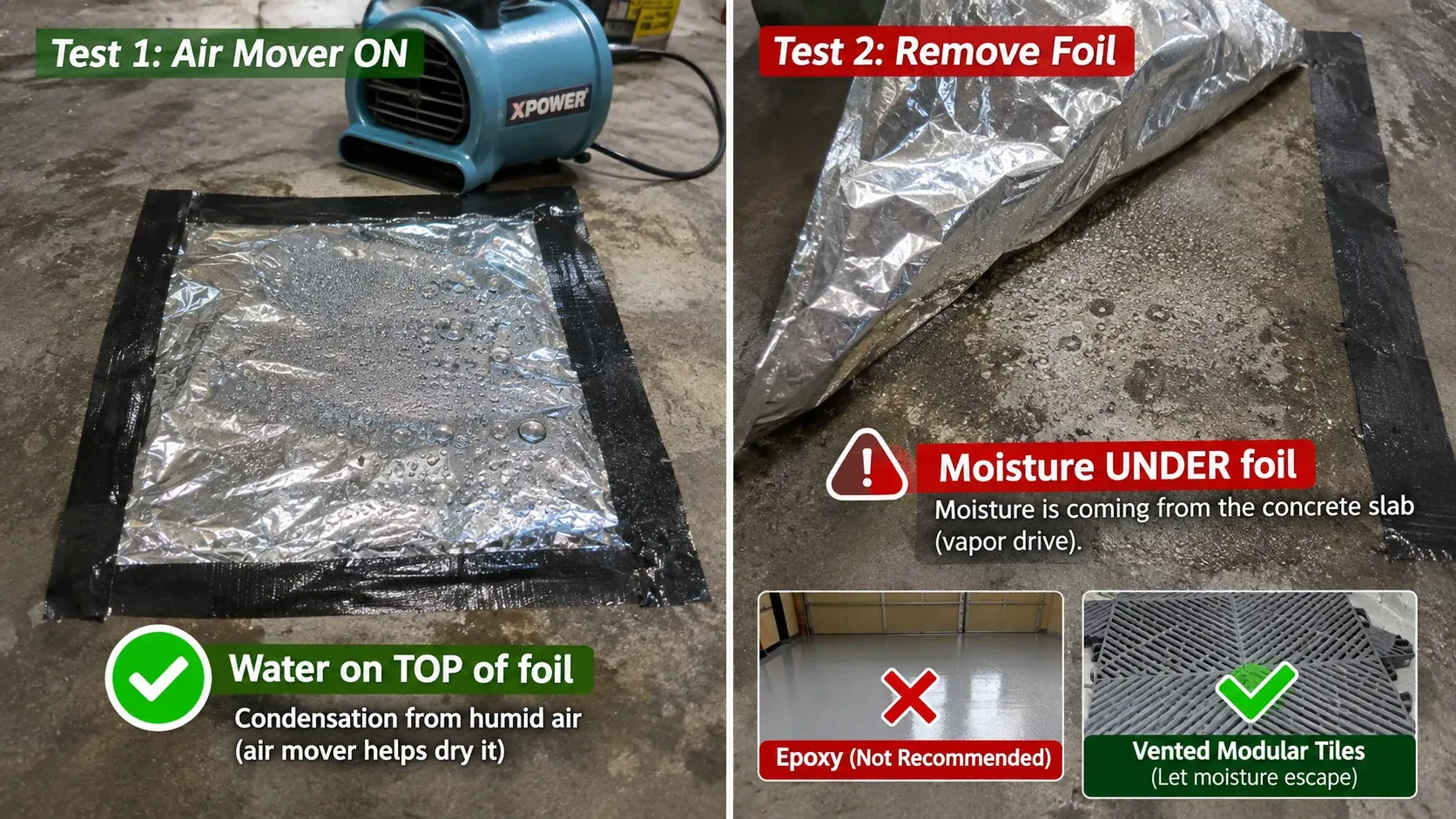
Top-side condensation requires high-velocity air movement, while sub-slab hydrostatic pressure requires free-floating vented modular tiles.
Scenario A: Your Test Proved Air Condensation
If moisture forms on top of your test sheet, stagnant boundary air causes the condensation. Warm room air hovers over cold concrete, cools down past dew point, and drops its liquid cargo.
You do not need an expensive HVAC installation to solve this. You need to keep air moving briskly across the slab floor.
High-velocity floor fans sweep away the stagnant boundary layer of cold air resting directly on the concrete. By forcing rapid air circulation, the fan raises the effective surface temperature of the concrete slab and speeds up evaporation before water droplets collect into puddles.

Lasko 20-Inch High-Velocity Pivoting Floor Fan
Best For: Breaking boundary layer air and drying concrete garage floors fast
Est. Price: $69.99
"This fan clears a slick two-car garage slab in under 45 minutes by continuously sweeping away cold boundary air."
- +Pivoting blower head aims concentrated air velocity directly at floor level
- +Three high-output speeds delivering up to 3,500 CFM of air movement
- +Durable tubular steel frame with rubber feet that stay planted on wet concrete
- -Fan motor produces noticeable background roar on highest speed setting
- -Does not extract moisture from closed garages without external airflow
Position the fan in one corner of your garage, angle the blower shroud down toward the concrete at roughly 20 degrees, and aim the airflow diagonally across the floor. This setup establishes a circular vortex that keeps the entire floor dry.
When to Upgrade to a Low-Temperature Dehumidifier
If you run high-velocity fans inside a tightly insulated garage and your cast iron tools still develop light surface rust, ambient humidity remains too high. A fan circulates moisture, but it does not remove pints of water from an enclosed space.
Standard residential dehumidifiers stop working below 65°F. Their cooling coils freeze into solid blocks of ice because cold shop air prevents refrigerant cycles from evaporating condensate cleanly.
If your garage stays between 40°F and 55°F during winter, choose a commercial dehumidifier equipped with an automatic hot gas bypass defrost valve. This valve periodically routes warm refrigerant gas through the evaporator coil to melt frost buildup in seconds, maintaining extraction efficiency without freezing up.
Scenario B: Your Test Proved Ground Moisture Wicking
If water pooled under your foil test, no amount of fan circulation or dehumidification will stop the problem. Water wicks continuously through porous concrete pores via hydrostatic capillary action.
Applying standard hardware store epoxy or acrylic floor paint over this kind of slab guarantees failure. Hydrostatic vapor pressure builds up beneath the impermeable paint film, creating bubbles that flake off in ugly patches within four to six months. Read our breakdown on why cheap garage epoxy coatings peel under tire heat to see how moisture wrecks polymer bonds.
The reliable, permanent solution for a slab with ground moisture is installing free-floating, vented modular floor tiles.
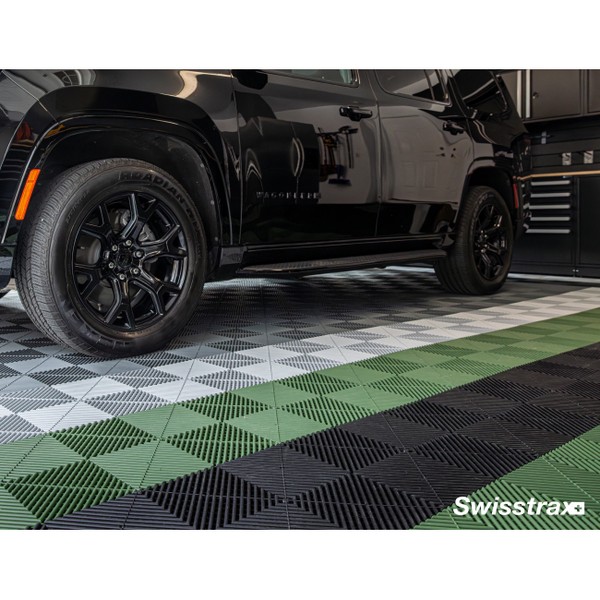
Swisstrax Ribtrax Pro Interlocking Modular Tiles
Best For: Elevating workspace flooring above chronically damp or sweating concrete
Est. Price: $3.95 / sq.ft
"The definitive fix for unsealed, damp slabs. It isolates your tools and boots from moisture without trapping vapor under a failed coat of paint."
- +Open-rib profile elevates feet and equipment 1/2-inch above cold, wet concrete
- +Channels underneath allow air circulation so the slab dries out naturally
- +Supports rolling loads up to 70,000 lbs without cracking or shifting
- -Fine saw dust and small dropped screws drop through the open grid pattern
- -Higher upfront investment than rolling a single coat of concrete sealer
Vented polypropylene tiles float freely over your concrete without adhesives. Moisture wicks out of the slab, hits the air channel underneath the tiles, and evaporates harmlessly through the open grid while your tools, boots, and storage boxes rest on a completely dry surface.
Common Pitfalls That Waste Money
Before spending money on shop upgrades, avoid these three costly mistakes:
- Throwing cheap garage paint at damp concrete: Paint cannot block ground hydrostatic pressure. It traps water beneath the film, rots the concrete surface layer into chalky dust, and costs double to strip off later with a diamond grinder.
- Running a standard home dehumidifier in an unheated shop: Household units frost over when ambient air drops below 60°F. The compressor runs nonstop, draws 500 watts, and pulls zero water. If you heat your garage occasionally, review our comparison on heating an uninsulated garage in winter to see how temperature control pairs with moisture management.
- Opening the garage doors on warm winter afternoons: Warm humid outdoor air rushes across your sub-freezing slab, accelerating condensation into puddles within minutes. Keep your doors latched until floor surface temperatures equalize with the outside air.
Start with the 24-hour foil test tonight. Once you verify whether your water comes from the sky or the dirt, pick the right tool for the job and keep your workspace dry all winter.

Hank Miller
Hank is a master craftsman and DIY mechanic based in Ohio. He tests workshop equipment, garage floor coatings, and power tools under brutal, real-world workshop conditions, with zero paid brand sponsorships.