Stop the 6-Second Garage Break-In: Why Zip Ties Are Dangerous (And the Proper Shield Fix)

Thieves bypass garage doors in six seconds using a bent coat hanger through the top weatherstrip. Learn why zip ties create deadly fire traps and how physical shields fix it.
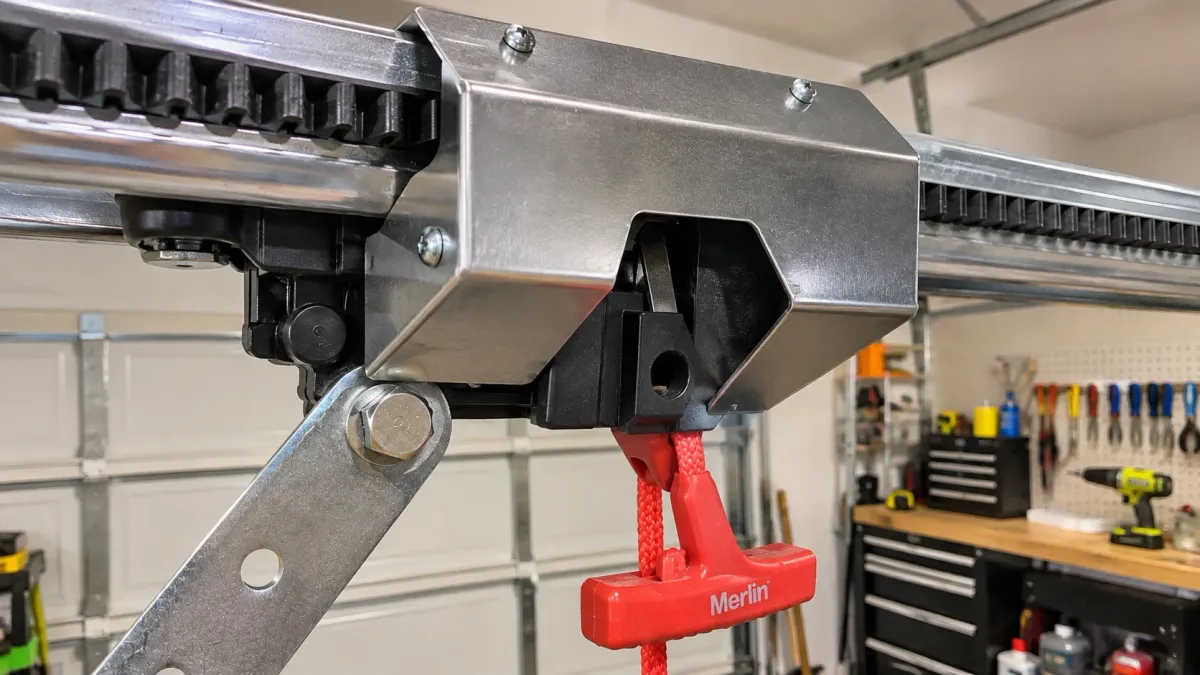
Table of Contents6 Sections
- 01.How the Coat Hanger Bypass Works (The Anatomy of the Flaw)
- 02.The Deadly Zip Tie Hack: Why It’s an Illegal Fire Hazard
- 03.Solution 1: Installing a Garage Shield (The $25 Metal Blocker)
- 04.Solution 2: The Safe Break-Away Zip-Tie Mod
- 05.Solution 3: The Electronic Lock Upgrade (LiftMaster Automatic Deadbolt)
- 06.Hardening the Rest of Your Garage Perimeter
A home security video circulating among neighborhood watch groups shows a shocking sight: a prowler approaches a suburban closed garage door at 2:00 AM, slips a stiff coat hanger wire through the rubber seal at the top of the door, and hooks the red emergency disconnect handle. With a quick pull, the overhead trolley unlatches, the burglar lifts the entire door by hand, and walks into the home in under six seconds without triggering an alarm.
Social media videos immediately offer a quick fix: take a heavy nylon zip tie from your toolbox and lash the red emergency release lever tightly to the metal trolley arm. Millions of homeowners follow this advice, unaware that locking that release lever creates an illegal fire hazard that can trap family members inside a burning garage during an electrical blackout.
I spent years inspecting industrial facility emergency egress systems and servicing residential overhead mechanisms. In this guide, I explain the mechanical vulnerability of center-trolley releases, why heavy zip ties violate life-safety codes, and how to install a dedicated metal security shield that blocks coat hangers without compromising emergency escape.
How the Coat Hanger Bypass Works (The Anatomy of the Flaw)
Burglars look for visible gaps at the top weatherstrip where they can feed stiff wire over the top panel. Follow my steps for sealing gaps around your garage door frame to eliminate exterior light gaps and prevent hook insertion entirely.
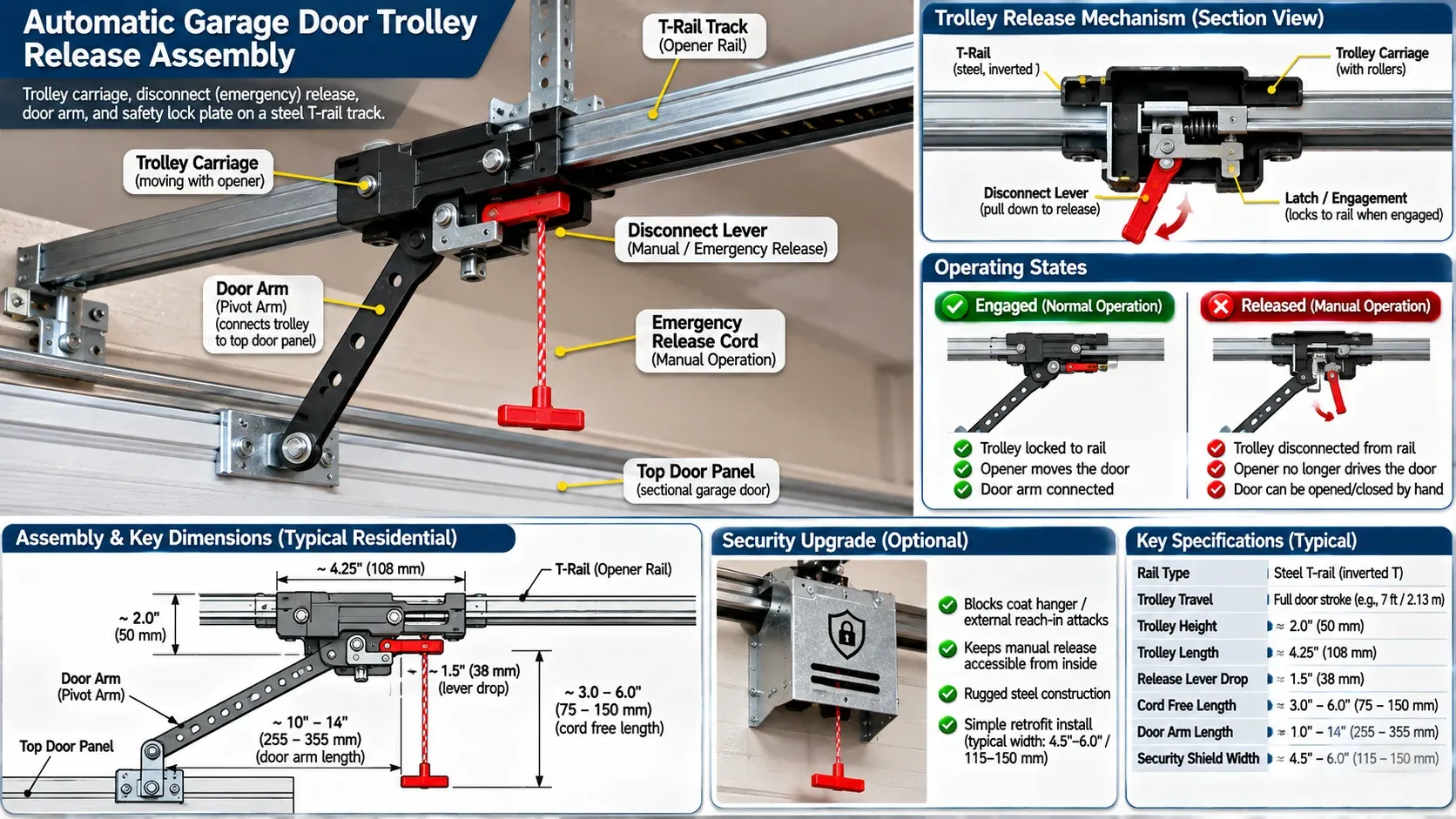
Under federal safety regulations (UL 325), every residential automatic garage door opener must feature a manual emergency disconnect mechanism. If a blackout occurs or an opener motor fails, a homeowner must be able to pull a red handle to disconnect the door from the electric trolley and roll the door open manually.
The vulnerability stems from the mechanical geometry of standard center-mounted ceiling openers. The trolley carriage rides along a steel T-rail or I-beam running down the center of the ceiling.
An angled steel arm connects that trolley to the top panel of your garage door. The spring-loaded emergency disconnect latch features an open curved lever that faces forward toward the door opening.
A thief standing outside uses a wooden wedge to push the flexible top rubber weatherstrip open by half an inch. They insert a coat hanger with a small hook bent onto the end, sight the red release rope or lever, hook the metal latch, and pull backward with roughly ten pounds of tension.
The latch pivots, disengages the drive pin from the chain or belt carriage, and releases the door completely. Because the door is counterbalanced by its overhead torsion springs, the thief simply lifts the bottom door panel from the outside and walks straight in.
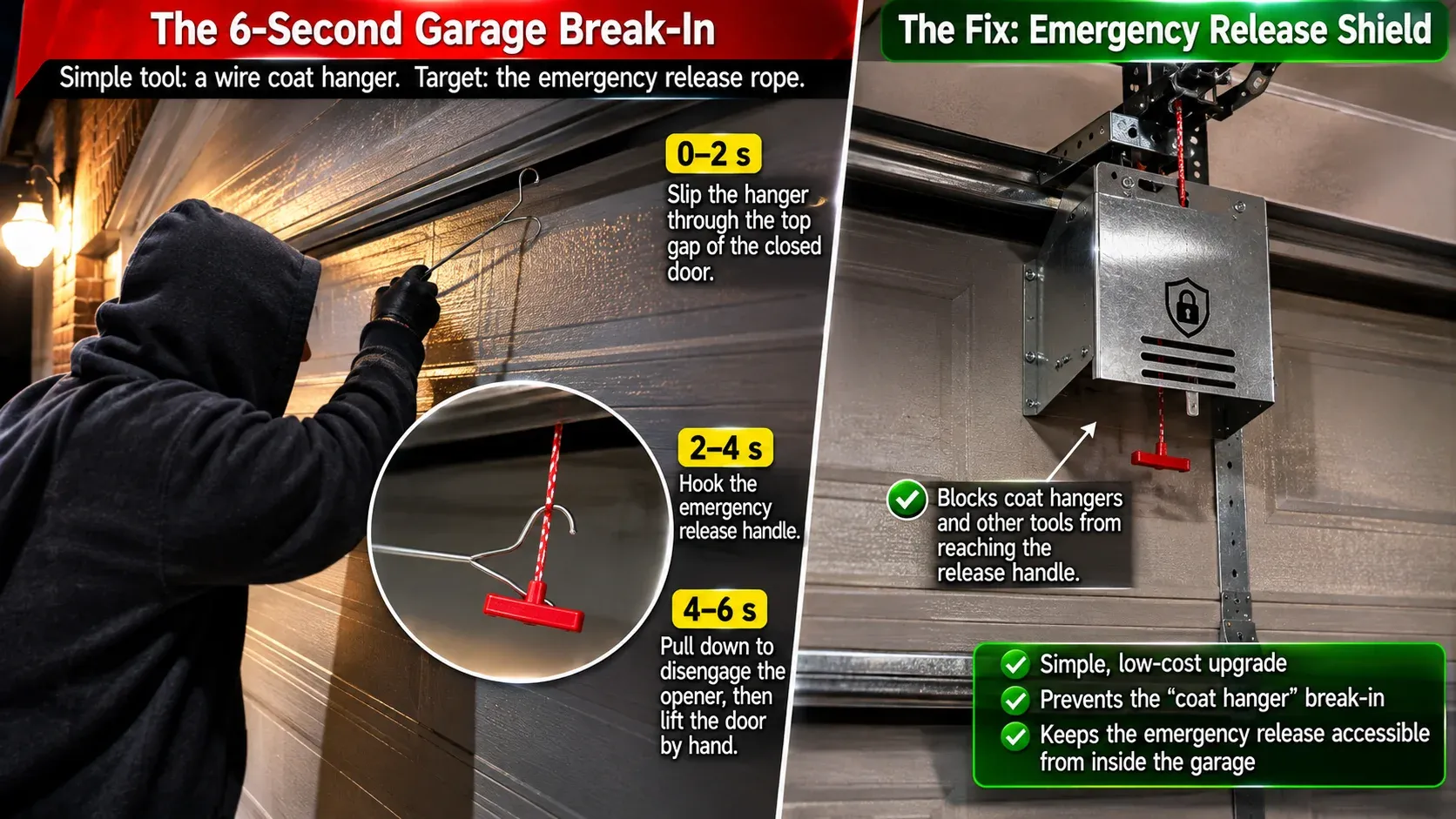
Technical architectural cross section diagram showing the 6-second coat hanger garage break-in vulnerability, wire coat hanger inserted through flexible top header weatherstrip, hooking onto the emergency trolley release lever and disconnecting door from opener rail, clear red intrusion pathway arrows.
Garage Door Break-In Risk Assessment: Auditing Your Overhead Setup
Evaluate your overhead door components to identify your vulnerability to exterior coat hanger bypass.
Clear glass decorative windows located along the top horizontal panel row
Solid steel pan door with daylight visible along the top header weatherstrip
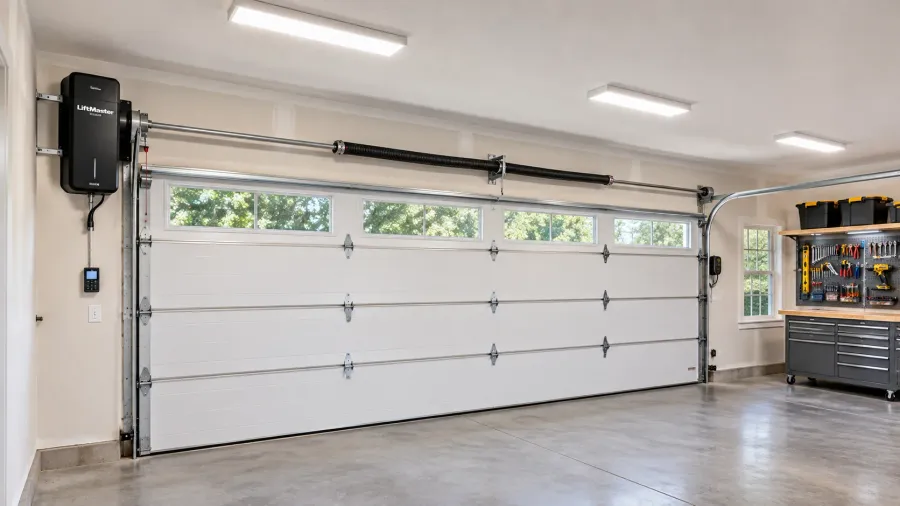
Wall-mount jackshaft opener mounted directly beside the overhead torsion spring bar
The Deadly Zip Tie Hack: Why It’s an Illegal Fire Hazard
Modifications that restrict manual door disconnects violate Underwriters Laboratories UL 325 emergency release compliance requirements, which dictate that an adult must be able to release the garage door trolley manually in under two seconds during a power outage or fire.
The viral advice recommending heavy nylon cable ties to lock the emergency release lever is dangerously shortsighted. A heavy 50-pound or 75-pound industrial zip tie cinched tightly around the carriage prevents the mechanical lever from pivoting.
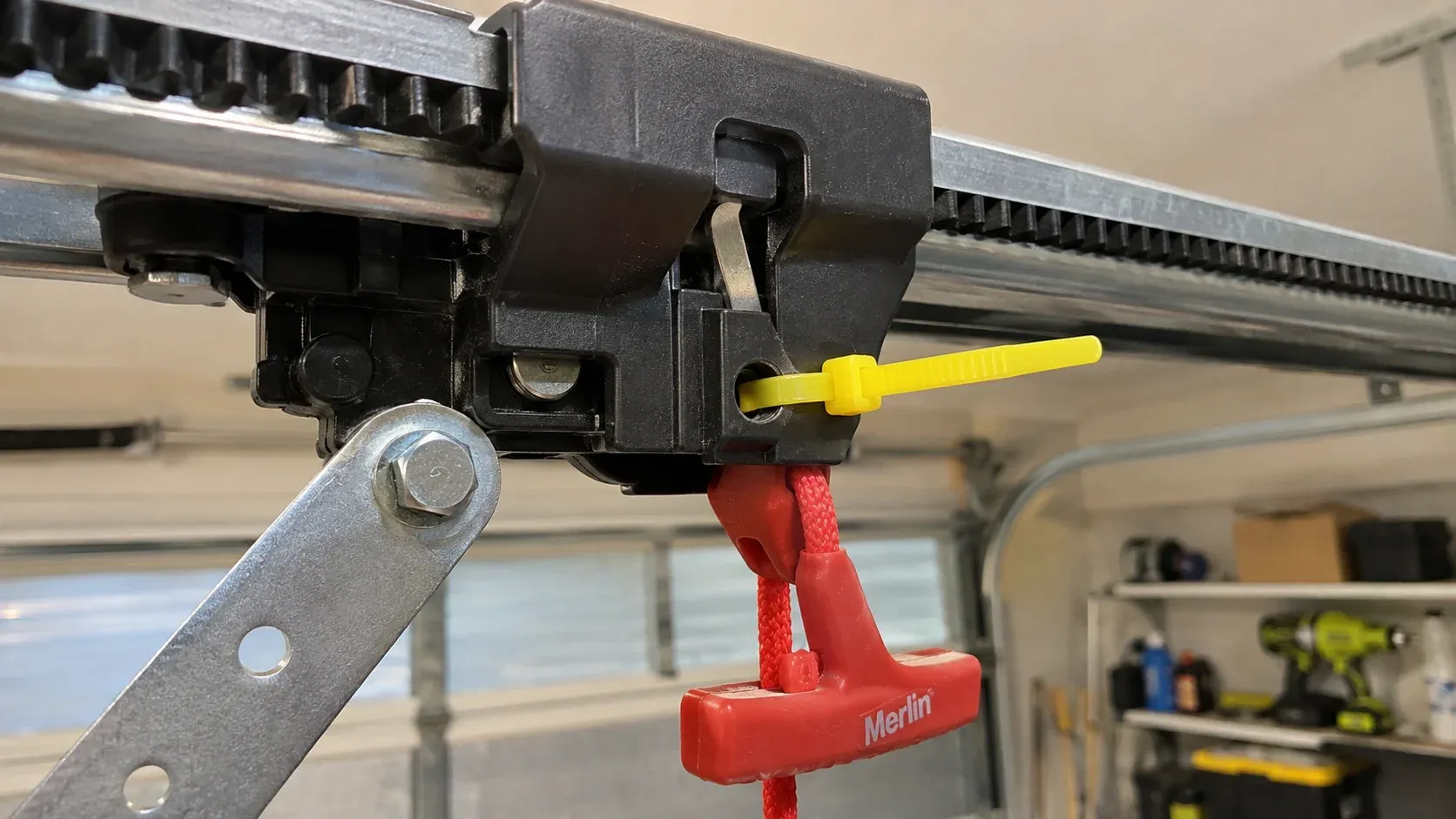
A garage door opener trolley latch locked with a single standard plastic zip-tie through the release lever pinhole, preventing horizontal pull from exterior coat hanger while maintaining emergency downward manual breakaway capability, clean focus on mechanism.
Consider a realistic residential emergency: a lithium-ion battery on an electric lawnmower malfunctions at 3:00 AM, igniting a rapid chemical fire inside the garage. The electrical circuit breakers trip instantly, killing all household power, and the garage fills with blinding, toxic smoke within sixty seconds.
Someone inside the home runs into the garage to escape or rescue pets. In the pitch blackness, they grab the red emergency rope, pull with all their weight, and nothing happens because a heavy plastic zip tie has locked the trolley solid.
Without power to run the electric motor and without the ability to release the trolley, the 150-pound steel door remains an impenetrable barrier. Building inspectors and insurance investigators classify rigid zip-tied releases as severe life-safety violations under International Residential Code (IRC) egress mandates.
Solution 1: Installing a Garage Shield (The $25 Metal Blocker)
The professional, code-compliant way to defeat coat-hanger break-ins is installing a physical barrier known as a Garage Shield.
A Garage Shield is a stamped steel or heavy composite deflector that bolts directly over the emergency release arm of your opener trolley. The shield curves forward and upward, covering the front and sides of the release lever like a protective curved dome.
Installation photo of a steel physical anti-theft shield (Garage Shield) mounted over the garage door opener J-arm connection, completely blocking any coat hanger or hook from reaching the emergency release lever from above, clean well-lit garage shot.
When a thief pushes a coat hanger wire over the top of the door, the wire strikes the smooth curved face of the metal shield and deflects away from the latch. The wire cannot physically reach or hook the lever from the outside.
Critically, the bottom of the shield remains completely open to the interior of the garage. If you stand inside and pull the red handle straight down, the mechanism operates freely without restriction, providing instant manual egress in under one second during a fire.
Solution 2: The Safe Break-Away Zip-Tie Mod
If you need immediate security tonight while waiting for a commercial shield to arrive, you can implement a modified break-away zip-tie technique safely.
Never use thick, heavy-duty black cable ties. Purchase the smallest, thinnest 4-inch miniature nylon ties rated for a maximum tensile breaking strength of only ten to twelve pounds.
Loop the light miniature tie through the trolley latch holes loosely, leaving slight slack. A ten-pound tie provides enough mechanical resistance to defeat the light, indirect lateral tug of a flexible coat hanger wire hooked over a distant door.
However, if an adult inside the garage pulls down firmly on the red emergency release handle, their downward body weight generates fifty to eighty pounds of vertical shearing force, snapping the thin plastic tie instantly and releasing the door for emergency escape.
Solution 3: The Electronic Lock Upgrade (LiftMaster Automatic Deadbolt)
For absolute security that renders physical latch attacks obsolete, consider upgrading to an opener system that incorporates an automatic motorized power deadbolt, such as the LiftMaster 841LM.
This heavy-duty motorized deadbolt mounts to the vertical track just above one of the door rollers. Every time the door closes and the opener motor shuts off, the unit drives a solid steel deadbolt pin through a pre-punched hole in the track.
Even if an intruder were to cut through a panel or access the release trolley, the door remains physically locked to the track framing by solid hardened steel. When you press your remote or wall button to open the door, the opener automatically retracts the deadbolt pin a half-second before starting the drive motor.

The Garage Shield Original Emergency Release Blocker
Best For: Blocking coat-hanger bypass attacks while preserving emergency egress
Est. Price: $22 - $28
"The industry-standard mechanical defense that permanently closes the 6-second break-in vulnerability without violating life safety codes."
- +Blocks external wire hooks from reaching the trolley release latch
- +Allows 100 percent unrestricted vertical emergency release from inside
- +Installs in five minutes using basic hand tools with zero drilling required
- -Compatible with standard T-rail trolleys; verify model fitment prior to ordering
- -Slightly visible from inside the garage above the top panel
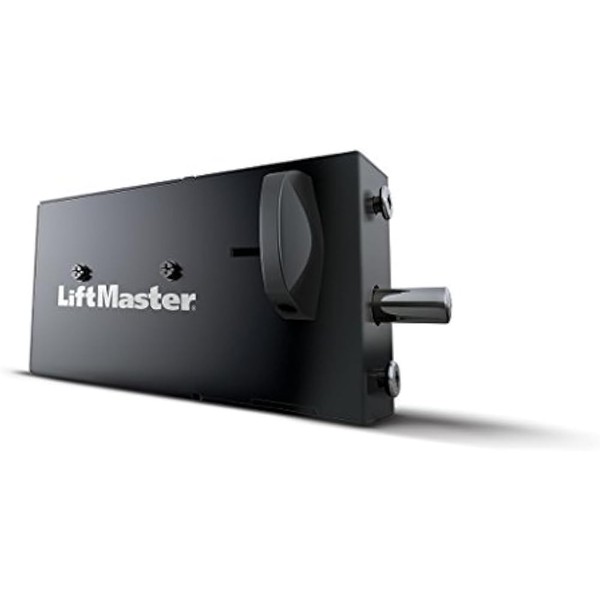
LiftMaster 841LM Automatic Garage Door Deadbolt Lock
Best For: Compatible LiftMaster and Chamberlain smart openers
Est. Price: $85 - $110
"The most secure physical barrier available, locking your overhead door into a solid fortress whenever the motor is parked."
- +Shoots a solid steel deadbolt pin through track whenever door shuts
- +Physically prevents prying or manual lifting even if trolley is disconnected
- +Syncs wirelessly with compatible modern Chamberlain and LiftMaster drives
- -Only works with modern Security+ 2.0 openers equipped with lock control boards
- -Requires mounting on track and routing low-voltage communication wire
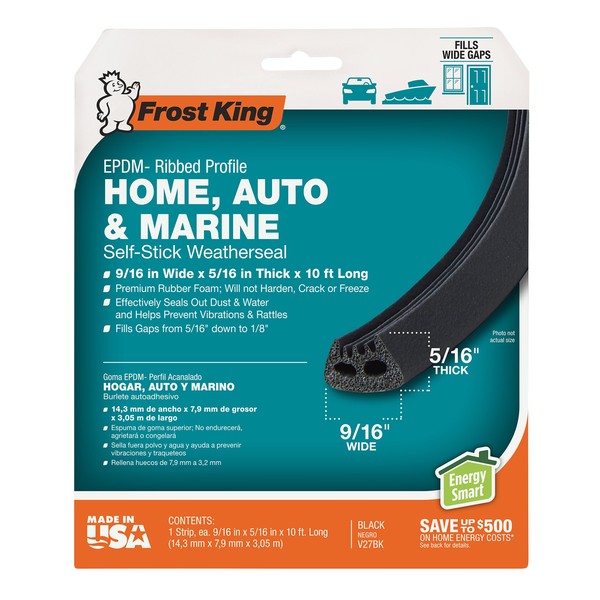
Frost King EPDM Heavy-Duty Top & Side Weatherstrip (30 ft)
Best For: Closing top gaps that allow coat-hanger insertion
Est. Price: $24 - $30
"A rugged exterior weather seal that eliminates the gap prowlers need to slide wires into your overhead track system."
- +Wide flexible vinyl flap seals tightly against the exterior top door panel
- +Blocks wire tools from slipping over the header while stopping winter drafts
- +Heavy-gauge aluminum carrier pre-drilled for straightforward installation
- -Requires trimming to exact doorway width with a hacksaw
- -Must be adjusted carefully to avoid excessive friction against moving panels
Hardening the Rest of Your Garage Perimeter
Securing your overhead emergency release trolley stops the most common fast-entry burglary technique, but complete security demands sealing the floor boundary as well.
Prevent intruders from prying the bottom panel open with a flat pry bar by installing a heavy-duty floor barrier, as outlined in our guide on how to stop water coming under your garage door.
If you are planning to upgrade your entire overhead system to eliminate center ceiling rails permanently, read our opener drive comparison on chain vs. belt vs. wall-mount jackshaft openers.

Hank Miller
Hank is a master craftsman and DIY mechanic based in Ohio. He tests workshop equipment, garage floor coatings, and power tools under brutal, real-world workshop conditions, with zero paid brand sponsorships.